When Freedom of Contract Yields: Article 1306, Public Markets, and the Lessons from Baguio

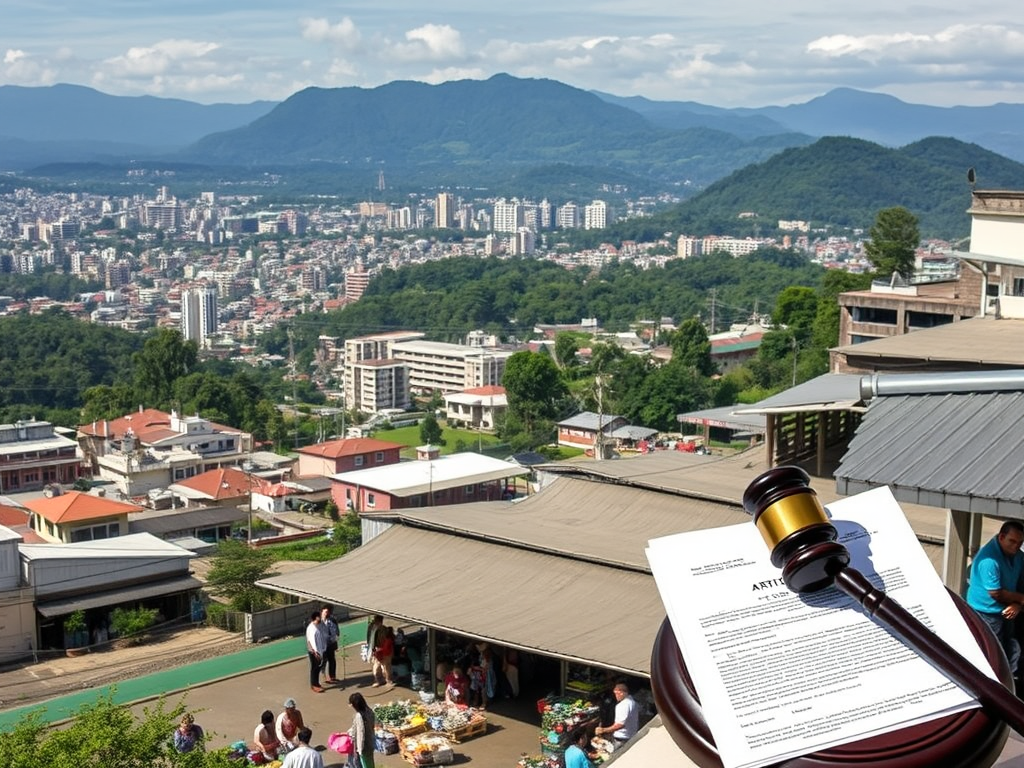
The withdrawal of SM Prime Holdings from the proposed public market redevelopment in Baguio City has often been framed as a failed deal or a breakdown in negotiations. In truth, it offers a far more instructive lesson—one rooted in contract law, urban planning, and the statutory nature of public markets. It shows how freedom of contract, when confronted with planning policy and public welfare, is legally designed to yield.

At the center of this lesson is Article 1306 of the Civil Code, which enshrines freedom of contract but only within firm boundaries. Parties may stipulate as they see fit, but only so long as their agreements are not contrary to law, morals, good customs, public order, or public policy. This conditional structure matters greatly in contracts that affect public interest. Public market redevelopment is one such contract.

Public markets are not ordinary commercial properties. Under Section 17(b)(2)(viii) of the Local Government Code (RA 7160), public markets are expressly classified as basic services, on the same statutory footing as health and welfare facilities. This classification is decisive. Once an activity is defined as a basic service, it cannot be governed solely by profit logic or treated like a private mall. The law itself embeds a social function into the space.

The Local Government Code reinforces this social character through the general welfare clause in Section 16, which authorizes local governments to exercise police power to promote public welfare, social justice, and economic stability. This power includes regulating stall rentals, fees, access, and conditions of use in public markets—even when a private entity is involved through a public–private partnership. Sections 147 and 151 further authorize LGUs to impose reasonable fees and charges, a standard that is explicitly normative, not market-driven. Reasonableness is measured against livelihood capacity and public welfare, not revenue maximization.

When these statutory provisions are read together with Article 1306, the legal architecture becomes clear. Freedom of contract exists, but only within a planning and policy framework already defined by law. Contracts governing public markets are therefore not insulated private arrangements. They are subordinate to public policy as articulated in statutes, urban plans, and zoning ordinances.

In Baguio’s case, the public market has long functioned as a livelihood hub and cultural anchor. Planning objectives—affordability, protection of long-time vendors, and preservation of the market’s public character—were not incidental concerns raised late in the process. They are inherent in how the space is planned and governed. Once these planning constraints were asserted, the scope of permissible contractual discretion narrowed, exactly as Article 1306 anticipates.

From a legal standpoint, SM Prime’s withdrawal was not a failure of freedom of contract. It was a recognition of its limits. Article 1306 does not guarantee that a contract affecting public interest will remain commercially viable under all conditions. It guarantees only that parties may contract subject to existing and continuing public policy constraints. When those constraints—rooted in the Local Government Code and the city’s planning framework—made mall-type economics incompatible with the social function of the public market, withdrawal became the lawful and rational outcome.

This dynamic carries important implications for other cities contemplating similar redevelopments. In places like Cebu, where public markets are likewise embedded in CLUPs and governed by zoning ordinances, contracts cannot be used to bypass planning intent or displace intended beneficiaries through pricing and access mechanisms. Article 1306 ensures that contractual autonomy remains a tool for implementing urban policy, not a mechanism for undoing it.

Ultimately, the Baguio market episode affirms a principle that is often overlooked in infrastructure and redevelopment debates: not all urban spaces are meant to behave like malls. Public markets are planned spaces with statutory social functions. When private contracts collide with those functions, the law does not bend planning to contract. It bends contract to the plan. That is not an aberration in the legal system—it is the system working exactly as designed.

In this sense, the Baguio case demonstrates that Article 1306 does not guarantee the profitability or finality of a public-market contract. What it guarantees is a framework within which private agreement must remain aligned with law and public policy. When alignment becomes impossible—when the commercial model required by the private party cannot coexist with the social function of the public market—the legally correct outcome is not coercive enforcement, but withdrawal.

This dynamic is precisely why the Baguio withdrawal is instructive for other public market projects. It shows that contracts over public markets survive only if contractual autonomy serves, rather than defeats, livelihood, equity, and the common good. Article 1306 does not compel private parties to stay in such contracts at all costs; it simply ensures that they cannot insist on terms that override public policy. Where those terms are essential to the private party’s participation, exit becomes the lawful and rational option.

Seen this way, the Baguio market episode is not an anomaly. It is a practical manifestation of Article 1306’s deeper logic: freedom of contract exists, but in public-interest settings, it yields to social regulation—and when that yield is too great for commercial viability, withdrawal is the system working as designed, not failing.

How CLUPs and Zoning Ordinances Set the Real Limits of Freedom of Contract

Urban planning gives concrete institutional form to the limits that Article 1306 places on contractual autonomy, and this is most clearly expressed through the Comprehensive Land Use Plan (CLUP) and the Zoning Ordinance. These planning instruments are not merely technical documents; they are the local government’s formal articulation of public policy in space. When a contract concerns land or facilities governed by an approved CLUP and zoning ordinance, the contract does not operate above these instruments—it operates within them.

Under Philippine planning law and practice, the CLUP establishes the intended social, economic, and spatial function of land. Zoning then translates that intent into binding regulatory controls on use, intensity, and character of development. When a public market is designated in the CLUP as a civic, institutional, or special commercial use—particularly one oriented toward livelihood and public service—that designation carries legal consequences. It signals that the area is not meant to function as a purely market-driven commercial zone akin to a mall district. Instead, it is planned as livelihood infrastructure, embedded in the city’s social economy.

This is where Article 1306 and planning law converge. Article 1306 allows parties to stipulate freely, but only so long as those stipulations are not contrary to law or public policy. In the urban planning context, the CLUP and zoning ordinance are the most authoritative local expressions of public policy. A redevelopment contract that effectively transforms a public market—planned and zoned as a socially oriented urban facility—into a space governed by mall-type economics may comply with the text of the contract, yet still conflict with the CLUP’s planning intent. When that happens, Article 1306 ceases to protect contractual discretion and instead becomes the legal basis for regulation, recalibration, or even non-continuance of the agreement.

The Baguio public market episode illustrates this clearly. While the proposed contract with SM Prime Holdings may have been commercially sound, it ran into a planning reality grounded in Baguio City’s land-use objectives. The public market’s role in the city’s CLUP—as a livelihood hub, cultural space, and civic anchor—meant that zoning and planning policies necessarily imposed limits on rental structures, vendor displacement, and land-use intensity. Once the city asserted these planning constraints, the contract could no longer be treated as a purely private commercial arrangement. Under Article 1306, stipulations inconsistent with those planning objectives lost their normative force.

From an urban planning standpoint, this outcome is not accidental; it is structural. CLUP and zoning compliance function as ex ante filters on what kinds of contracts are viable in particular locations. They ensure that cities do not contract away their planning mandate through long-term agreements that lock in spatial outcomes contrary to adopted plans. Article 1306 provides the legal bridge that makes this possible by subordinating contractual freedom to public policy as expressed through planning instruments.

This has important implications for other cities contemplating public market redevelopment, including Cebu City. If the CLUP and zoning ordinance characterize Carbon Market as a public market, special commercial zone, or civic space with explicit livelihood and social functions, then any PPP or joint venture must be interpreted—and if necessary, regulated—through that planning lens. Contracts cannot be used to bypass zoning intent, intensify commercial use beyond what the CLUP envisions, or displace intended beneficiaries without violating public policy. When conflicts arise, Article 1306 does not protect the contract; it protects the plan.

In this sense, CLUP and zoning compliance are not secondary considerations that follow contract execution. They are preconditions that define the legal environment in which contracts operate. The Baguio withdrawal shows that when planning objectives are clear and consistently enforced, private parties make rational decisions: they either adapt their contractual expectations to the plan or withdraw. Both outcomes preserve the integrity of the planning system.

Ultimately, the lesson for urban governance is clear. Planning leads; contracts follow. Article 1306 ensures that freedom of contract remains a tool for implementing the CLUP, not a mechanism for undoing it. When cities take their planning instruments seriously, contractual autonomy aligns with urban policy—or yields to it.
How Econometric Analysis Solved a Client’s Valuation Challenge in BGC

In today’s volatile property market, even fully leased buildings can face uncertainty when interest rates rise and yields compress. One of our clients is a developer with a 30-storey, 76-unit office tower in Bonifacio Global City. They sought clarity on whether their investment was still performing as expected. Through econometric analysis, we transformed complex market data into actions. This gave them financial insight that helped them see beyond occupancy rates. They focus on true value, risk, and return.

The Client’s Challenge

A private developer approached our team with a critical question:

“Is our 30-storey, 76-unit office building in Bonifacio Global City still financially viable under current market conditions?”

The client had completed construction two years earlier. The building was fully leased. They were concerned about rising interest rates. Modest rental escalations are eroding investment returns.

The property’s leasing structure appeared competitive. It includes a mix of bare-shell and fitted office units. These units range from PhP1,500 to PhP1,800 per sqm per month. However, management wanted to know if the building’s cash flows truly reflected its economic value. They questioned whether adjustments in pricing, escalation, or capital structure were necessary.

In short, the challenge was not occupancy — it was understanding profitability in a tightening capital market.

Our Approach

Instead of relying on conventional yield assumptions, our team applied econometric modeling. This is an analytical framework that links property-level performance to measurable macroeconomic drivers.

We began by reconstructing the building’s income statement. We also reconstructed rental schedules across 76 office units and all 30 floors. We factored in current lease terms and 3% annual escalations. Additionally, we used observed market data from Pinnacle Real Estate Consulting and Arcadis Philippines.

From there, we derived two distinct discount rates using both finance-based and property-specific risk models:

MethodFormulaResult
Finance-Based (CAPM)R=Rf+β(ERP)+SRP17.40%
Real Estate Build-UpR=Rf+∑RiskPremiums13.16%

Each parameter was anchored to empirical data. This includes the risk-free rate, beta, and risk premiums. These were tied to data from the Bangko Sentral ng Pilipinas, PSA inflation series, and Damodaran’s country risk tables.

By integrating these variables, we aligned the building’s valuation with economic reality rather than static, one-size-fits-all assumptions.

Findings: Translating Data into Decision

Our projection model covered a 10-year period, reflecting the economic life of the building’s interior improvements.

Discount RatePresent Value of Cash Flows (PhP)Fit-out & Equipment Cost (PhP)NPV (PhP)Interpretation
13.16%11,801,35812,472,358–671,000Breakeven (stabilized scenario)
17.40%10,655,64612,472,358–1,816,000Slightly negative (equity scenario)

Despite the modest NPV results, the cash inflows were sufficient to recover the capital outlay within the project’s economic life. This indicated a financially balanced asset — not speculative, but self-sustaining and capital-preserving.

The key insight for the client was that profitability was not being lost. It was simply redefined by changing macroeconomic conditions. In other words, the property’s yield had adjusted to reflect a maturing market.

We extended the analysis to examine how the project would perform under various economic shocks:

  • A 1% increase in the discount rate (e.g., due to rising interest rates) would reduce the property’s value by approximately PhP700,000.
  • A 1% increase in rental escalation would improve valuation by about PhP500,000.

This confirmed that interest-rate and capital-market movements have a greater effect on value than marginal rental adjustments.

The adopted PhP1,800 per sqm rate for fitted offices is advantageous. It places the property squarely within the prime BGC rental range of PhP1,400–PhP1,900. The effective yield is 7–8% per annum. This is a level consistent with institutional benchmarks in Metro Manila’s investment-grade office sector.

The results of the econometric analysis allowed the client to make well-informed and financially sound decisions. Our findings confirmed the current rental rate structure of PHP 1,500 to PHP 1,800 per square meter per month. This rate was aligned with prevailing market conditions. These rates match the conditions in Bonifacio Global City. Attempting to increase the rates further would risk higher tenant turnover without producing a proportional increase in building value. Hence, the most strategic course was to maintain existing rents, ensuring consistent occupancy and stable revenue streams.

Second, the study validated the client’s 3% annual escalation policy. It demonstrated that this policy accurately reflected the average inflation rate. It also matched the standard lease renewal adjustments in the area. This approach ensured that income growth would remain sustainable and competitive, balancing tenant affordability with long-term asset performance.

Finally, we advised the client to reclassify the building’s investment profile—from a short-term growth-driven asset to a core income property. This repositioning recognized that the building had already reached stabilization, with 100% occupancy and predictable cash inflows. The property could now serve as a capital preservation anchor within the client’s portfolio. It would provide reliable income to offset higher-risk, higher-yield developments elsewhere.

What initially seemed like a modest or even negative Net Present Value (NPV) was reinterpreted. It became a measure of financial efficiency. The building’s inflows matched its cost of capital. This indicated that it was performing exactly as expected in a mature market like BGC. Through this shift in perspective, the client gained a clearer understanding of the property’s value. The client also gained a more strategic framework for portfolio management, anchored in data, discipline, and economic logic.

This case highlights how econometric reasoning transforms real estate valuation from a static appraisal into a dynamic decision-making tool. We treated rents, yields, and escalation rates as variables linked to broader economic conditions. This approach helped us uncover not just the property’s value but also the logic behind it. The client learned that a neutral or breakeven NPV is not necessarily a weakness. It can signify equilibrium and maturity in a market. In this market, stability is the new form of strength.

For investors, the key takeaway is that macro-driven valuation brings clarity in times of uncertainty. Understanding how discount rates move with monetary policy provides a sharper sense of timing. Recognizing how escalation aligns with inflation sharpens your understanding of risk and opportunity. For developers, the lesson is strategic. Once a building reaches full occupancy and stable returns, it should be viewed as a core income asset. This asset anchors the portfolio and preserves capital rather than being seen as a speculative venture.

Ultimately, the study demonstrates that data and discipline lead to confidence. In Bonifacio Global City, every percentage point of yield and risk can mean millions in value. Econometric analysis offers a distinct advantage. It gives clients the ability to move beyond intuition. Consultants can also ground their investment strategies on measurable, defensible evidence.

By: AB Agosto, JD, REA, REB, REC, MA Economics (University of San Carlos)
Paralegal – Real Estate, Environmental & Corporate Law

Property Identification: The Sacred Foundation of Real Estate Appraisal

In the meticulous world of real estate appraisal, one principle stands above all others: you cannot value what you cannot identify correctly. Whether working on a condominium in Makati, a farmland in Bukidnon, or a contested estate in Cebu, the first and most sacred duty of any appraiser is to accurately and defensibly identify the subject property. This is not just a technical requirement—it is the foundation of credibility, legality, and fairness in valuation. A mistake in property identification is not a small error. It invalidates every step that follows: the market comparison, highest and best use analysis, risk assessment, and final value estimate. Simply put, wrong property means wrong valuation.

Property identification involves several components. It means correctly determining the legal identity of the land—via Transfer Certificate of Title (TCT), technical description, and lot number. It also means identifying the actual physical location and ensuring it matches the documents, zoning classification, and any physical improvements or encumbrances. Every valuation method—whether it’s the market approach, cost approach, or income approach—relies on this first step. If you appraise the wrong lot, all your calculations, assumptions, and conclusions become legally and factually meaningless.

This is why misidentification carries not only technical consequences but also legal and ethical ones. A wrong appraisal can lead to court rejection of the report, denial of loans by banks, and even legal liability for misleading courts or clients. Under Article 19 of the Civil Code of the Philippines, professionals have a duty to act with justice, give everyone their due, and observe honesty and good faith. The Philippine Valuation Standards likewise emphasize that appraisers must exercise due diligence and care—beginning with accurate property identification.

Some of the most common pitfalls in this process include relying solely on the owner’s verbal claim without matching it against documentary evidence, misplotting technical descriptions, failing to check for easements or encroachments, and confusing adjacent lots with similar features. These errors are preventable with a disciplined and documented approach. A responsible appraiser will cross-check TCT data with the tax map and zoning ordinance, conduct field validation through site visits, use geotagged photos or drones, and even consult barangay officials or boundary markers when in doubt.

The risks of inaccuracy are very real. Imagine an appraiser tasked to value Lot 6 but instead inspects and reports on Lot 5. If Lot 5 is under threat of expropriation or prone to flooding, while Lot 6 is not, the valuation will be drastically wrong. In judicial proceedings, such a mistake may result in an unjust award of compensation or legal challenge. In lending, it may lead to defective collateralization. The appraiser’s name—and the integrity of the profession—are on the line.

I always emphasize that property identification is not just a preliminary step—it is the moral compass of professional practice. It sets the tone for the accuracy, fairness, and trustworthiness of the entire report. Real estate is a high-stakes industry. The margin for error is slim, and the cost of error is great. That is why we say: Property identification is sacred. Wrong property is wrong valuation. Always.

BLGF Invites Prof. Agosto in RPVRA IRR Workshop

The Bureau of Local Government Finance (BLGF), a key agency responsible for overseeing local government revenue collection and fiscal policies, recently invited Gus Agosto, the President of the Society of Litigation Valuation Experts (SOLVE), to participate in a significant event aimed at shaping the future of property valuation in the Philippines. This event was the Workshop for the Implementing Rules and Regulations (IRR) of the Real Property Valuation and Reassessment Act (RPVRA), held from August 20 to 23, 2024 at Dusit Thani in Lapu-Lapu City, Cebu.

The workshop’s primary objective was to finalize the Implementing Rules and Regulations (IRR) for the RPVRA, a groundbreaking piece of legislation aimed at reforming real estate property valuation practices across the country. The RPVRA’s provisions are geared toward:

  • Standardizing real property valuation across Local Government Units (LGUs),
  • Strengthening the efficiency of property tax collection,
  • Enhancing transparency in government-led real estate transactions,
  • Establishing a National Valuation Database.

Given the far-reaching implications of the RPVRA, this workshop was crucial for ensuring that the IRR accurately reflected the spirit of the law while considering the practical realities of its implementation.

Prof. Gus Agosto, representing Group 1 in the discussions, played a central role in examining and debating key provisions of the RPVRA, particularly those affecting litigation-related valuation issues. His expertise as the President of SOLVE, an organization specializing in property valuation in legal disputes, added valuable insights into the drafting process. Group 1 likely focused on technical aspects of valuation practices, dispute resolution, and how to ensure the law’s provisions are consistently applied across regions.

His participation underscored the importance of collaboration between government bodies, private sector experts, and organizations such as SOLVE, as they worked to ensure that the IRR would be both legally sound and implementable at the local level.

The workshop was attended by a diverse group of stakeholders from the Visayas and Mindanao regions, representing both the public and private sectors:

  • Government Agencies:
    • Bureau of Local Government Finance (BLGF): Ensures local government revenue collection aligns with new valuation standards.

    • Bureau of Internal Revenue (BIR): Guides interactions of RPVRA with tax administration.

    • Philippine Tax Academy: Supports training for assessors and tax officers.

    • Local Government Assessors: Implement new valuation standards at local levels.

    • Phividec Industrial Authority: Focuses on how the new valuation law affects industrial property valuations.


      Private Sector:


    • Real estate practitioners, property developers, and valuation experts shared insights on the law’s impact on real estate and investments.

During the workshop, various provisions of the RPVRA were debated, including:

  1. Valuation Standards:
    • Ensuring uniformity in real property valuation across all LGUs, addressing long-standing issues with inconsistent property assessments in different regions.
  2. Creation of the National Valuation Database:
    • Discussing the technical requirements, privacy concerns, and the operational framework of the database, which would be central to transparent and reliable valuation practices.
  3. Periodic Revaluation Requirements:
    • The IRR’s requirement for LGUs to conduct regular updates to property valuations would address the issue of outdated valuations that impact fair taxation and public transactions.
  4. Appraisers’ and Assessors’ Qualifications:
    • Emphasis was placed on professionalizing the appraisal practice through standardized training and certification programs, with contributions from the Philippine Tax Academy.
  5. Litigation-Related Provisions: Mr. Agosto’s involvement focused on mechanisms for resolving valuation disputes, particularly in cases of eminent domain, where the government acquires private property for public use, and determining just compensation becomes critical.

The workshop was pivotal for finalizing the IRR, which would serve as the guiding document for the implementation of the RPVRA across the country. This collaborative effort between the government and the private sector aims to ensure that real estate valuation practices in the Philippines align with international standards, promote transparency, and support the fair and equitable taxation of real properties.

The participation of key government bodies such as the BIR and the BLGF, alongside valuation experts like Gus Agosto, ensures that the IRR addresses both the technical and practical aspects of real estate property valuation, enhancing the law’s chances of being effectively implemented across the country’s LGUs.