Ten Questions to Ask Before Accepting an Expropriation Assignment

By Augusto B. Agosto, REA, REC, REB, EnP, JD

This morning, a newly licensed appraiser asked me a question:

“How do I start an expropriation appraisal assignment?”

Many appraisers immediately think about comparable sales, market data, or valuation methodology. While these are important, I believe the first steps occur long before the valuation process begins.

Expropriation is not a simple and ordinary appraisal assignment. It is a judicial proceeding involving property rights, public interest, legal procedures, and the constitutional requirement of just compensation. An appraiser appointed by the court, whether as Commissioner or member of a Board of Commissioners, carries a responsibility that extends beyond determining market value.

Over the years, I have developed a series of questions that I ask myself before accepting an expropriation assignment.

1. Am I a Disinterested Person?

The first document I request from the client is a copy of the Complaint.

Before discussing value, I want to know:

  • Who are the parties?
  • What property is involved?
  • What is the nature of the taking?
  • Do I have any relationship with the parties?

This allows me to determine whether there is any actual or perceived conflict of interest.

The Rules of Court require a Commissioner to be a disinterested and competent person. Independence is therefore not merely an ethical consideration—it is a legal requirement.

2. Am I Competent to Accept This Assignment?

The next question is equally important.

Do I possess the competence required by the Court for this particular case?

Expropriation requires more than valuation knowledge. An appraiser must understand the legal framework governing the proceeding.

Among the important laws and rules that should be familiar to an expropriation appraiser are:

  • Rule 67 of the Rules of Court (Expropriation)
  • Rule 32 of the Rules of Court (Commissioners)
  • RA No. 8974 and its amendments
  • RA No. 12001 RPVARA
  • The ARROW Act and its Implementing Rules
  • Comprehensive Agrarian Reform Law
  • Local Government Code
  • Relevant jurisprudence on just compensation and property rights

Understanding these laws allows the appraiser to appreciate the broader litigation process, the role of the parties, the duties of the commissioners, and the standards by which the court evaluates evidence.

3. Who Is the Expropriating Authority?

Another important question is:

Who is exercising the power of eminent domain?

Is it:

  • A national government agency?
  • A government-owned or controlled corporation?
  • A local government unit?
  • A utility company exercising delegated eminent domain powers?
  • Another entity authorized by law?

The answer helps determine the applicable legal framework, the procedures involved, the source of funding, and the nature of the project.

For example, national government infrastructure projects may involve RA No. 8974, RA No. 12001, the ARROW Act, and related regulations. Local government expropriations may involve different statutory requirements under the Local Government Code. Utility companies and government corporations may likewise operate under special laws.

Before determining value, the appraiser must first understand who is taking the property and under what authority such taking is being exercised.

4. What Property Right Is Being Taken?

One of the most common mistakes is assuming that every expropriation involves the acquisition of full ownership.

Not all takings are the same.

The government may acquire:

  • Fee simple ownership
  • Right-of-way
  • Easement
  • Transmission line corridor
  • Temporary construction easement
  • Access rights
  • Portions of improvements

Before value can be determined, the property right being acquired must first be identified.

You cannot value what you have not properly defined.

5. What is the Time of Taking?

One of the most important questions in any expropriation assignment is:

What is the legally recognized date of taking?

Many appraisers mistakenly assume that valuation is always based on the current value of the property or that the date of taking is uniform across all compulsory acquisitions. In reality, the applicable valuation date often depends on the governing law, the nature of the acquisition, and the circumstances of the case.

For example, infrastructure right-of-way acquisitions, traditional expropriation proceedings under Rule 67, and agrarian reform acquisitions may involve different legal frameworks and different approaches in determining the relevant date for valuation.

In agrarian reform cases, the issuance of a Notice of Coverage does not automatically constitute the date of taking. While it marks the commencement of the acquisition process, jurisprudence has recognized that the determination of the date of taking requires an examination of when the landowner was effectively deprived of ownership rights, possession, use, enjoyment, or economic benefits of the property, as contemplated by the governing agrarian laws.

Similarly, in infrastructure and right-of-way acquisitions, the legally relevant date may be influenced by statutory provisions governing possession, entry, deposits, negotiated acquisition, and expropriation proceedings.

The valuation date is not merely a procedural matter. It is often one of the most significant legal issues in the determination of just compensation. A difference of several years between the date of taking and the date of appraisal can substantially affect the value conclusion and the amount ultimately awarded by the court.

Before determining value, the appraiser must first determine the applicable law, identify the legally relevant date of taking, and understand the jurisprudence governing that acquisition.

The question is not:

“What is the property worth today?”

The more important question is:

“What was the property worth on the date recognized by law for purposes of determining just compensation?”

6. What Standard of Value Is Required?

Many appraisers immediately think in terms of market value.

However, the court is often concerned with just compensation.

The two concepts are related but not always identical.

An appraiser must understand:

  • Market value
  • Just compensation
  • Consequential damages
  • Consequential benefits
  • Compensation for improvements
  • Compensation for crops and other affected interests

Understanding the applicable legal standard is essential.

7. What Evidence Supports My Opinion?

The first question should not be:

“What comparables are available?”

The better question is:

“What evidence is available?”

Comparable sales are important, but they are only one form of evidence.

The appraiser must also examine:

  • Property characteristics
  • Property rights
  • Legal conditions
  • Planning evidence
  • Economic evidence
  • Market evidence

A valuation that relies solely on comparable sales may fail to capture the broader realities affecting value.

8. How will I personally inspect the Property?

No amount of documentation can replace actual inspection.

Titles, plans, and tax declarations provide information.

Site inspection provides understanding.

Actual inspection often reveals:

  • Existing access
  • Physical conditions
  • Occupation
  • Improvements
  • Constraints
  • Opportunities

Many critical valuation issues are discovered only in the field.

9. Can the Judge Understand My Report?

One of the purposes of a Commissioner’s Report is to assist the court.

A technically correct report that cannot be understood by the judge has failed in one of its essential functions.

The appraiser must be able to explain:

  • The facts
  • The evidence
  • The reasoning
  • The conclusions

in a clear and understandable manner.

10. Can I Defend My Opinion Under Oath?

Every valuation submitted to the court will be examined, questioned, and challenged.

Ask yourself:

  • Are my comparables defensible?
  • Are my adjustments supported?
  • Is the highest and best use justified?
  • Have I verified the title?
  • Have I disclosed limitations and assumptions?

A report should be prepared with the expectation that it will be scrutinized by lawyers, judges, and other experts.

Before submitting any report, I ask myself one final question: If I am placed on the witness stand tomorrow, can I confidently explain every assumption, adjustment, conclusion, and recommendation contained in this report?

If the answer is no, more work is required.

The report is not yet ready.

Conclusion

Expropriation appraisal is not merely an exercise in determining value.

It is the process of assisting the court in determining just compensation for the taking of private property.

The appraiser’s role therefore extends beyond market analysis. It requires competence in property rights, valuation, evidence, legal procedure, and professional judgment.

In my experience, the most important question is not:

“Can I determine value?”

The more important question is:

“Can my valuation withstand the scrutiny of the court?”

That is where expropriation appraisal truly begins.

When an Easement Right-of-Way Creates Millions in Value: The Hidden Power of Property Rights

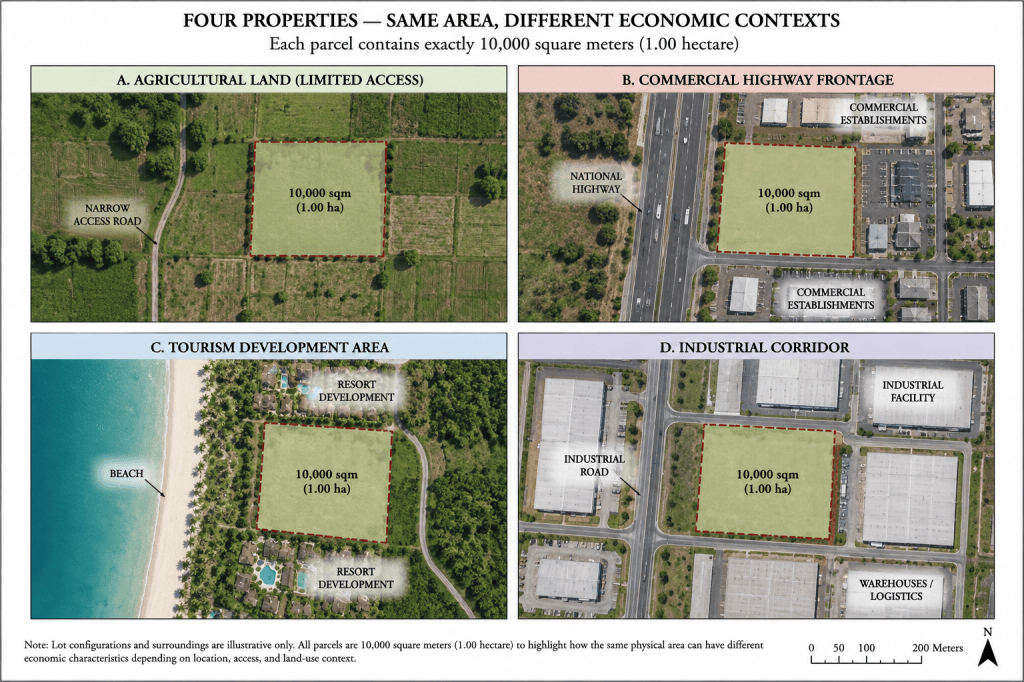
Most people think property value comes from land area, location, or improvements. While these factors are important, one of the most overlooked drivers of value is the existence—or absence—of property rights.

A recent property rights assignment involving an interior urban property illustrates this principle.

The assignment initially appeared straightforward. The property itself was an interior parcel located within an established urban area. At first glance, the issue seemed to involve only a narrow access corridor used for ingress and egress. The physical area involved was relatively small compared to the overall property.

Yet as the investigation progressed, it became apparent that the dispute was not really about land.

It was about rights.

For many years, neighboring property owners had relied on a shared access arrangement that allowed vehicles and pedestrians to reach the interior property. The arrangement had existed for so long that it became part of the ordinary use of the area. Access was rarely questioned because it was always available.

Over time, however, questions emerged regarding the legal basis of the access. Could the arrangement continue? Was the right enforceable? Could it be withdrawn? If access were restricted, what would happen to the value and utility of the property behind it?

At first glance, these appear to be legal questions.

In reality, they are also valuation questions.

Because the moment access becomes uncertain, the economic character of a property changes.

A parcel of land may remain in the same location. Its boundaries may remain unchanged. Its area may remain exactly the same. Yet the usefulness, marketability, financing potential, and development opportunities associated with that property may increase or decrease dramatically depending on the rights attached to it.

This is a reality often overlooked in conventional real estate analysis.

Many valuation discussions focus on square meters, comparable sales, and market trends. These are important considerations. However, some of the most valuable attributes of a property are not visible on the ground. They exist in the form of property rights.

A right-of-way.

An easement.

A development permit.

A zoning entitlement.

A water right.

A development restriction.

Each of these rights can significantly influence value without changing the physical characteristics of the property.

As our analysis progressed, it became evident that the access corridor was doing something extraordinary.

It was unlocking the economic potential of an entire property.

Without secure access, the property’s utility would be substantially impaired. Marketability would decline. Financing options could become limited. Development opportunities would be constrained.

With access, however, the property could fully participate in the market.

The difference in value was measured not merely in terms of land area, but in terms of economic opportunity.

The assignment reinforced a lesson that I have repeatedly encountered throughout my professional career.

Whether dealing with easements, expropriation, water rights, development restrictions, estate settlements, or land use planning, the most important issue is often not the land itself.

The real issue is the bundle of rights attached to the land.

Who owns those rights?

Who may exercise them?

Who benefits from them?

Who bears the burden?

And ultimately, who captures the value they create?

These questions are becoming increasingly important as infrastructure projects, urban development, environmental regulations, and land use policies continue to reshape the economic landscape.

At AA+ Appraisal & Consultancy, Inc., we believe that before value can be measured, rights must first be understood.

This is why our work extends beyond traditional appraisal.

We examine ownership rights, access rights, development rights, planning constraints, legal restrictions, and economic opportunities. We seek to understand not only what a property is worth, but why it is worth that amount.

Because in many cases, the most valuable part of a property is not the land.

It is the rights attached to it.

And when those rights are properly understood, protected, and analyzed, hidden value often becomes visible.

That is where meaningful property advice begins.


Value is created by rights, not merely by land.

Evidence-Based Valuation: Reconciling Property, Planning, Economic, and Market Evidence

On June 18, 2026, I had the privilege of speaking before the members of the Philippine Real Estate Service Practitioners, Inc. (PhilRES) – Mandaue City Chapter during its 6th General Membership Meeting held at Mandani Bay, Mandaue City. My presentation focused on a subject that has occupied much of my professional work in recent years: Evidence-Based Valuation (EBV) for Litigation, Expropriation, and Just Compensation.

For decades, real estate valuation has relied heavily on the Sales Comparison Approach. Comparable sales remain an important source of market evidence and continue to be one of the most widely accepted methods of determining value. However, in many assignments—particularly expropriation cases, litigation matters, infrastructure projects, and complex property disputes—the question often arises: Is market evidence alone sufficient to explain value?

The traditional appraisal process frequently emphasizes numerical adjustments derived from comparable transactions. While mathematically sound, such an approach may not fully capture the broader factors that influence value. Infrastructure investments, zoning regulations, land use policies, economic growth, scarcity, accessibility, environmental conditions, and development potential all contribute to the creation of value long before they are reflected in actual market transactions.

This observation led to the development of a framework I refer to as Evidence-Based Valuation (EBV).

The central premise of EBV is straightforward: value conclusions should not rely solely on comparable sales but should be supported by the reconciliation of multiple forms of evidence. These include:

Property Evidence – the physical characteristics of the property such as location, area, shape, topography, accessibility, improvements, and development potential.

Planning Evidence – land use plans, zoning classifications, infrastructure projects, government policies, and regulatory controls that influence future utility and development.

Economic Evidence – demand and supply conditions, growth trends, scarcity, investment activity, income potential, and broader economic drivers.

Market Evidence – comparable sales, listings, market transactions, and investor behavior.

These forms of evidence are not independent of one another. Rather, they interact to influence the highest and best use of a property, which ultimately forms the basis of value.

The concept is equally relevant in both ordinary valuation assignments and special-purpose engagements. Evidence-Based Valuation strengthens the foundation of value conclusions by integrating multiple forms of evidence beyond comparable sales alone. Even in ordinary market valuations, appraisers are expected to provide conclusions that are not only supported by comparable sales but also grounded in a thorough understanding of the property’s characteristics, planning context, and economic environment. Courts are often asked to determine compensation that is fair not only to the government but also to the property owner. In such situations, the challenge is not merely selecting a comparable sale but reconciling all available evidence to arrive at a value conclusion that is credible, transparent, and defensible.

Evidence-Based Valuation does not seek to replace established valuation approaches. Instead, it seeks to strengthen them by expanding the evidentiary foundation upon which value conclusions are formed. Comparable sales remain important, but they should be viewed as one component of a broader evidentiary framework rather than the sole determinant of value.

As valuation professionals, we are increasingly called upon to explain not only what a property is worth, but also why it is worth that amount. This requires a deeper examination of the factors that create, sustain, and influence value.

The EBV framework remains a continuing work in progress. Future developments will explore its application to litigation valuation, water rights valuation, infrastructure projects, feasibility studies, market analysis, and just compensation determinations. The objective is not to create complexity for its own sake, but to improve transparency, strengthen professional judgment, and provide decision-makers with more defensible valuation conclusions.

Ultimately, valuation is not merely a mathematical exercise. It is the process of evaluating evidence, reconciling competing perspectives, and arriving at a reasoned conclusion. In that sense, evidence is not an alternative to valuation—it is the foundation upon which valuation rests.

Value is created before it is measured.

The Cebu City Real Property Tax Shock: Why Market Modernization Must Not Kill the “Actual Use” Doctrine

Cebu City has undergone an undeniable spatial and economic transformation over the past two decades. From the gleaming corporate towers of Cebu Business Park and IT Park to the booming residential subdivisions in Guadalupe and the expanding luxury hillsides of Busay, our metropolitan footprint has expanded at a breathtaking pace.

But behind this economic success story lies a frozen fiscal reality: our local tax assessment schedules haven’t been updated since 2003.

Now, under the mandatory directive of Republic Act No. 12001, otherwise known as the Real Property Valuation and Assessment Reform Act (RPVARA), Cebu City is preparing to unleash one of the most sweeping real property tax recalibrations in its contemporary history.

As an appraiser, environmental planner, and economist, I know firsthand that updating these ancient schedules is a statutory necessity to wipe out passive land speculation. But the sheer velocity and underlying philosophy of Cebu City’s proposed Schedule of Market Values (SMV) and Schedule of Base Unit Construction Cost (SBUCC) should make every property owner stop and look at the fine print.

Here is why the current draft framework is setting up an explosive collision between aggressive market-driven valuation and your statutory rights as a taxpayer.

1. The Core Legal Battle: Market Appraisal vs. “Actual Use” Taxation

The ultimate friction point in the city’s new plan is a fundamental misinterpretation of how RPVARA interacts with the long-standing “Actual Use” Doctrine codified under Section 217 of the Local Government Code of 1991.

The law states with absolute clarity:

“Real property shall be classified, valued and assessed on the basis of its actual use regardless of where located, whoever owns it, and whoever uses it.”

For decades, this rule has protected long-time citizens from being taxed out of their own neighborhoods. It dictates that you must be taxed on how you are currently using your land, not on what your land could be worth if you knocked it down and built a commercial shopping mall.

While RPVARA introduces international appraisal standards to calculate true, prevailing market values, it did not repeal Section 217 of the Local Government Code. The city is legally bound to a clear, harmonious tax formula:

$$\text{Assessed Value} = \text{Prevailing Market Value} \times \text{Assessment Level based on Actual Use}$$

Unfortunately, the proposed SMV drafts effectively look past this formula, shifting the assessment framework away from actual-use taxation toward speculative, redevelopment-based valuation.

2. The Guadalupe Architecture: Slicing Up Streets into Hyper-Granular Tax Traps

Nowhere is this shift more evident than in the raw data for Barangay Guadalupe. By moving away from a flat-rate model, the City Assessor has introduced an aggressive spatial architecture that uses rigid distance thresholds to maximize tax extraction.

Instead of an entire street sharing a uniform baseline, the new schedule implements a mathematical proximity-distance rule: properties on secondary interior roads are slammed with Commercial C-7 rates (Php30,000/sqm) if they fall within a strict 120-to-160-meter radius of a major transit junction. Cross that invisible line by a single meter, and the value drops to residential rates (PhP25,000/sqm).

   [PRIMARY URBAN CORRIDOR]
              │
              ├─► WITHIN 120–160 METERS ──► Classified as C-7 Commercial (₱30,000/sqm)
              │
              └─► BEYOND 120–160 METERS ───► Drops to R-2 / RS-4 Residential (₱25,000–₱20,000/sqm)

This creates an alarming scenario. If you own an ancestral family home that has been strictly residential for half a century, but your front door happens to fall inside that high-intensity 140-meter commercial box, your baseline land value automatically balloons by hundreds of percent. The city is essentially taxing your property based on its speculative development capacity and “Highest and Best Use” potential—running directly counter to actual-use statutory protection.

3. The Upland Speculative Paradox: Triggering Environmental Chaos

In our fragile upland districts, such as Barangay Busay and Barangay Babag, the proposed SMV spikes pose a serious policy contradiction that threatens our metropolitan climate resilience.

Historically, these areas have served as critical protected watersheds and ecological reserves. The city’s draft introduces staggering valuation jumps: a 900% spike along the Transcentral Highway and up to a 1,025% surge (reaching PhP45,000/sqm) in the premium hillside enclaves of Busay.

Here lies the paradox:

  • Keeping values artificially low allows passive land speculators to buy up vast tracks of environmental land for cheap and sit on them at zero cost, waiting to flip them to high-density developers.
  • However, spiking values by thousands of percent overnight creates an unsustainable tax burden for long-time upland residents and transitional properties. To survive the financial shock, they are forced to sell out or actively convert their eco-sensitive lands into intense, high-yield commercial tourism ventures and concrete developments.

Without targeted tax credits for environmental preservation, the city’s tax code will transform from a tool of revenue generation into a primary driver of upland urban sprawl and watershed degradation.

4. Turning a Cost Schedule into a Density Tax

The adjustments to the Schedule of Base Unit Construction Cost (SBUCC) display the exact same revenue-driven philosophy. Over the last 23 years, cumulative inflation trends in the Philippines justify a standard 2.1x to 2.4x increase in baseline construction material inputs.

While horizontal residential structures reasonably mirror this trend, high-density vertical condominiums face a jaw-dropping increase of 558% to 577% (surging up to PhP65,000/sqm for Category V-A).

The city is no longer using the SBUCC as a conservative structural replacement-cost index. Instead, it is factoring in the investment yield and vertical productivity of the real estate market. An inflated SBUCC that ignores real-world economic depreciation risks turning into a punitive penalty on urban modernization, driving up rental costs and business overhead across the board.

The Path Forward: Revenue with Equity

Modernizing Cebu City’s revenue system is necessary and long overdue to protect our local economy from predatory land hoarding. However, fiscal progress must not be achieved by executing a de facto repeal of taxpayer protections.

To ensure a balanced, lawful, and socially sustainable transition under RPVARA, the City Council and the Bureau of Local Government Finance (BLGF) must adopt structural safeguards:

  1. Codify Actual Use Discount Factors: Pass an explicit ordinance protecting frontage and proximity-split lots, ensuring that properties continuing low-density residential, institutional, or industrial operations are insulated from speculative commercial benchmarks.
  2. Establish Protected Subclasses: Introduce distinct categories for “Residential Frontage” and “Eco-Sensitive Upland Reserves” to shield vital watersheds and middle-income families from aggressive land capitalization.
  3. The Immediate Shield (The 6% Cap): For the first year of implementation, the city must implement a strict 6% cap on the total tax due compared to the previous year. This acts as an immediate safety valve for family checkbooks, ensuring that no matter how high the land’s theoretical value has risen, the actual cash leaving the taxpayer’s pocket remains manageable.
  4. The Structural Step-Up (The 3-to-5-Year Phase-in): While the true market value is locked into the city’s database from day one to keep speculators at bay, the actual taxable baseline should be phased in gradually over three to five years ( 40\% in Year 1, }70\% in Year 2, and 100\% in Year 3).
  5. Phase in Collection over 3-to-5 Years: Implement a gradual, step-up percentage layout to prevent a sudden economic shock from destabilizing the local housing market and displacing vulnerable populations.

Taxation must remain uniform, equitable, and progressive. If Cebu City allows its property assessment system to prioritize revenue maximization over structural fairness, it will score a temporary fiscal victory at the absolute cost of public confidence, environmental safety, and constitutional due process. It’s time for our policymakers to look past the valuation maps and protect the actual use of the people.

Beyond Metropolitan Concentration: Why Central Visayas Must Think Like an Archipelagic Economy

I recently wrote a comment on the Central Visayas Regional Development Plan 2023–2028 examining the region from the perspective of regional economics, spatial planning, and archipelagic development. The paper has likewise been formally transmitted to the Regional Development Council (RDC-VII) and the Department of Economy, Planning, and Development (DepDev) Region VII for their consideration as part of the broader discussion on the future development trajectory of Central Visayas.

I believe that sharing these discussions with the broader public is equally important. Regional development planning should not remain confined solely within technical institutions, planning agencies, or government offices. The future of Central Visayas affects communities, businesses, local governments, professionals, environmental sectors, transport systems, housing systems, and the broader regional economy itself. Public discussion, academic engagement, and policy discourse are therefore essential in strengthening long-term regional planning and institutional decision-making.

For decades, development in Central Visayas has largely been driven by infrastructure expansion, metropolitan growth, and connectivity. In many ways, this strategy worked. Metro Cebu emerged as the country’s second major metropolitan economy outside Metro Manila, supported by expanding ports, airports, logistics systems, tourism, and commercial activity.

But beneath this success lies a deeper regional challenge.

Central Visayas is not simply a metropolitan corridor—it is an archipelagic regional economy composed of fragmented island systems heavily dependent on transportation, maritime connectivity, logistics, and coastal urbanization. Cebu and Bohol alone consist of hundreds of islands and islets linked through ports, ferry systems, airports, tourism corridors, and inter-island transportation networks.

In archipelagic economies, infrastructure plays a dual role. Connectivity strengthens mobility, trade, tourism, and economic integration. At the same time, however, it also concentrates economic activity around dominant urban-maritime nodes. In the Visayas, that node became Metro Cebu.

Over time, Metro Cebu evolved into the region’s dominant metropolitan intermediary, integrating transportation systems, labor mobility, logistics networks, tourism activity, and higher-order urban functions across interconnected island economies. This generated rapid economic growth, with Central Visayas becoming one of the Philippines’ fastest-growing regional economies.

Yet the same concentration dynamics also intensified traffic congestion, infrastructure saturation, housing pressures, rising land values, flooding vulnerability, watershed encroachment, and ecological stress. Many peripheral territories likewise became increasingly dependent upon Metro Cebu for employment, transportation access, investment flows, logistics systems, and higher-order services.

The long-term challenge confronting Central Visayas is therefore no longer simply how to expand infrastructure or accelerate metropolitan growth. The deeper issue concerns whether regional integration can generate more territorially distributed, ecologically sustainable, climate-responsive, and production-oriented development across the broader Visayas archipelago.

Ultimately, the future of Central Visayas may depend not merely upon building a stronger metropolis, but upon building a stronger and more resilient archipelagic regional economy.

You may access a copy from this link:

Beyond Metropolitan Concentration: A Regional Economics and Spatial Planning Critique of the Central Visayas Regional Development Plan 2023–2028

 Central Visayas Regional Development Plan (RDP) 2023-2028 

Clarifying “Market Value” in the Supreme Court’s Pasay–Arellano Decision Post

The Supreme Court of the Philippines recently released a press statement. It is titled “SC: Just compensation in land expropriation must consider all relevant factors, not just market value.” This statement refers to its decision in G.R. No. 260038 (City Government of Pasay v. Arellano University).

The ruling reiterates a fundamental principle in expropriation law. Just compensation must be real, full, and fair. It is determined not by a single administrative figure, but through judicial evaluation of all circumstances surrounding the property.

However, the Court’s post also offers a chance to clarify a common terminological confusion. The use of “market value” as cited in the post does not refer to true open-market value. Instead, it refers to the Schedule of Market Values (SMV). Local assessors use this administrative instrument for taxation purposes.

Arellano University owned an 805-square-meter parcel of land in Barangay San Isidro, Pasay City. The City Government turned this property into a public road. It is now known as Menlo Street. This was done without expropriation proceedings or payment of just compensation.

The Pasay City Assessor’s Office had assigned the land a value of Php200 per square meter. This was based on its 1978 Schedule of Market Values. The trial court later used this figure to compute compensation.

The Supreme Court, however, clarified that such assessor-based valuations are not determinative of just compensation. They can guide fiscal assessments, but they are not substitutes for market evidence or judicial determination.


Market Value vs. Schedule of Market Values

This distinction lies at the heart of both valuation and constitutional law.

ConceptMeaningPurposeAuthority
Market ValueThe price a willing buyer would pay to a willing seller in an open market. Both parties act knowledgeably and without compulsion.Reflects real market behavior, used in appraisals, investments, and expropriation.Defined under PVS 102 and IVS 104; affirmed in Republic v. CA, G.R. No. 146587 (2002).
Schedule of Market Values (SMV)A uniform benchmark value prepared by the local assessor for tax assessment purposes.Ensures equity in real property taxation under the Local Government Code.Authorized under Sections 212–216, LGC of 1991.

The PVS (Philippine Valuation Standards) and IVS (International Valuation Standards) define market value as:

The estimated amount as the price for which an asset exchanges between a willing buyer and a willing seller. This occurs in an arm’s-length transaction after proper marketing. The parties act knowledgeably, prudently, and without compulsion.

In contrast, the Schedule of Market Values is an administrative tool. It is updated every few years. It is designed to standardize taxation but not to represent real-time market dynamics.

The Supreme Court has consistently drawn this line in cases such as NPC v. Manubay Agro-Industrial Corp. and Republic v. CA: the SMV may be indicative. However, it cannot replace the judicial process of valuation. This process ensures constitutionally mandated just compensation.

My Letter to the Supreme Court

To support accurate public understanding of this distinction, I have respectfully written to the Supreme Court Public Information Office.
My letter explains that the “Php 200 per square meter market value” is mentioned in the decision. It comes from the 1978 Schedule of Market Values. This should not be mistaken for actual market value as understood in valuation and jurisprudence.

You may read my full letter here.

In essence, my correspondence acknowledges the Court’s sound reasoning. It emphasizes the need to maintain terminological precision. This principle is crucial not only to valuation professionals but also to the legal system itself.

The phrase “market value” may appear technical. However, in matters of public taking, it defines the line between administrative convenience and constitutional fairness.
When government takes private property, just compensation must reflect the property’s true worth—its economic value, not its tax-assessed figure.

Ensuring this distinction honors both the rule of law and the integrity of valuation practice. It safeguards landowners’ rights and guides courts, assessors, and appraisers toward a shared language of fairness and precision.

The City of Pasay v. Arellano University decision reinforces a timeless principle:

Just compensation is not a matter of administrative convenience—it is a constitutional right grounded in fairness and factual valuation.

As valuation professionals, we have a responsibility to ensure that public discourse around “market value” remains technically accurate. It must also be legally sound. Clarity in language leads to clarity in justice.

How Econometric Analysis Solved a Client’s Valuation Challenge in BGC

In today’s volatile property market, even fully leased buildings can face uncertainty when interest rates rise and yields compress. One of our clients is a developer with a 30-storey, 76-unit office tower in Bonifacio Global City. They sought clarity on whether their investment was still performing as expected. Through econometric analysis, we transformed complex market data into actions. This gave them financial insight that helped them see beyond occupancy rates. They focus on true value, risk, and return.

The Client’s Challenge

A private developer approached our team with a critical question:

“Is our 30-storey, 76-unit office building in Bonifacio Global City still financially viable under current market conditions?”

The client had completed construction two years earlier. The building was fully leased. They were concerned about rising interest rates. Modest rental escalations are eroding investment returns.

The property’s leasing structure appeared competitive. It includes a mix of bare-shell and fitted office units. These units range from PhP1,500 to PhP1,800 per sqm per month. However, management wanted to know if the building’s cash flows truly reflected its economic value. They questioned whether adjustments in pricing, escalation, or capital structure were necessary.

In short, the challenge was not occupancy — it was understanding profitability in a tightening capital market.

Our Approach

Instead of relying on conventional yield assumptions, our team applied econometric modeling. This is an analytical framework that links property-level performance to measurable macroeconomic drivers.

We began by reconstructing the building’s income statement. We also reconstructed rental schedules across 76 office units and all 30 floors. We factored in current lease terms and 3% annual escalations. Additionally, we used observed market data from Pinnacle Real Estate Consulting and Arcadis Philippines.

From there, we derived two distinct discount rates using both finance-based and property-specific risk models:

MethodFormulaResult
Finance-Based (CAPM)R=Rf+β(ERP)+SRP17.40%
Real Estate Build-UpR=Rf+∑RiskPremiums13.16%

Each parameter was anchored to empirical data. This includes the risk-free rate, beta, and risk premiums. These were tied to data from the Bangko Sentral ng Pilipinas, PSA inflation series, and Damodaran’s country risk tables.

By integrating these variables, we aligned the building’s valuation with economic reality rather than static, one-size-fits-all assumptions.

Findings: Translating Data into Decision

Our projection model covered a 10-year period, reflecting the economic life of the building’s interior improvements.

Discount RatePresent Value of Cash Flows (PhP)Fit-out & Equipment Cost (PhP)NPV (PhP)Interpretation
13.16%11,801,35812,472,358–671,000Breakeven (stabilized scenario)
17.40%10,655,64612,472,358–1,816,000Slightly negative (equity scenario)

Despite the modest NPV results, the cash inflows were sufficient to recover the capital outlay within the project’s economic life. This indicated a financially balanced asset — not speculative, but self-sustaining and capital-preserving.

The key insight for the client was that profitability was not being lost. It was simply redefined by changing macroeconomic conditions. In other words, the property’s yield had adjusted to reflect a maturing market.

We extended the analysis to examine how the project would perform under various economic shocks:

  • A 1% increase in the discount rate (e.g., due to rising interest rates) would reduce the property’s value by approximately PhP700,000.
  • A 1% increase in rental escalation would improve valuation by about PhP500,000.

This confirmed that interest-rate and capital-market movements have a greater effect on value than marginal rental adjustments.

The adopted PhP1,800 per sqm rate for fitted offices is advantageous. It places the property squarely within the prime BGC rental range of PhP1,400–PhP1,900. The effective yield is 7–8% per annum. This is a level consistent with institutional benchmarks in Metro Manila’s investment-grade office sector.

The results of the econometric analysis allowed the client to make well-informed and financially sound decisions. Our findings confirmed the current rental rate structure of PHP 1,500 to PHP 1,800 per square meter per month. This rate was aligned with prevailing market conditions. These rates match the conditions in Bonifacio Global City. Attempting to increase the rates further would risk higher tenant turnover without producing a proportional increase in building value. Hence, the most strategic course was to maintain existing rents, ensuring consistent occupancy and stable revenue streams.

Second, the study validated the client’s 3% annual escalation policy. It demonstrated that this policy accurately reflected the average inflation rate. It also matched the standard lease renewal adjustments in the area. This approach ensured that income growth would remain sustainable and competitive, balancing tenant affordability with long-term asset performance.

Finally, we advised the client to reclassify the building’s investment profile—from a short-term growth-driven asset to a core income property. This repositioning recognized that the building had already reached stabilization, with 100% occupancy and predictable cash inflows. The property could now serve as a capital preservation anchor within the client’s portfolio. It would provide reliable income to offset higher-risk, higher-yield developments elsewhere.

What initially seemed like a modest or even negative Net Present Value (NPV) was reinterpreted. It became a measure of financial efficiency. The building’s inflows matched its cost of capital. This indicated that it was performing exactly as expected in a mature market like BGC. Through this shift in perspective, the client gained a clearer understanding of the property’s value. The client also gained a more strategic framework for portfolio management, anchored in data, discipline, and economic logic.

This case highlights how econometric reasoning transforms real estate valuation from a static appraisal into a dynamic decision-making tool. We treated rents, yields, and escalation rates as variables linked to broader economic conditions. This approach helped us uncover not just the property’s value but also the logic behind it. The client learned that a neutral or breakeven NPV is not necessarily a weakness. It can signify equilibrium and maturity in a market. In this market, stability is the new form of strength.

For investors, the key takeaway is that macro-driven valuation brings clarity in times of uncertainty. Understanding how discount rates move with monetary policy provides a sharper sense of timing. Recognizing how escalation aligns with inflation sharpens your understanding of risk and opportunity. For developers, the lesson is strategic. Once a building reaches full occupancy and stable returns, it should be viewed as a core income asset. This asset anchors the portfolio and preserves capital rather than being seen as a speculative venture.

Ultimately, the study demonstrates that data and discipline lead to confidence. In Bonifacio Global City, every percentage point of yield and risk can mean millions in value. Econometric analysis offers a distinct advantage. It gives clients the ability to move beyond intuition. Consultants can also ground their investment strategies on measurable, defensible evidence.

By: AB Agosto, JD, REA, REB, REC, MA Economics (University of San Carlos)
Paralegal – Real Estate, Environmental & Corporate Law

The Impact of the WorldRisk Report on Philippine Real Estate

The Philippines, a nation of islands situated in the typhoon belt, remains one of the world’s most disaster-prone countries. The WorldRisk Report 2025 is a publication of Bündnis Entwicklung Hilft. It is also published by the Institute for International Law of Peace and Armed Conflict (IFHV) of Ruhr-University Bochum. It places the country among those with the highest global risk exposure. This conclusion is once again highlighted. The report has a special focus on floods. Floods are the most frequent and destructive natural hazard worldwide. Between 2000 and 2009, floods accounted for 44 percent of all global catastrophes, affecting more than 1.6 billion people and causing losses exceeding USD 650 billion. In the Philippines, flood vulnerability continues to rise because of climate-related rainfall intensification. Unregulated urbanization contributes to the risk. The degradation of natural buffers such as wetlands and mangroves exacerbates the situation.

These recurring flood events are no longer isolated environmental phenomena. They are now central to understanding how real estate functions. They are also central to understanding how real estate is valued. Climate risk directly influences property demand, development feasibility, and investment decisions. What once defined value purely in economic terms—location, accessibility, and market trends—now includes resilience, adaptability, and sustainability. Floods not only damage structures and displace communities but also recalibrate the long-term performance and desirability of land.

The Real Property Valuation and Assessment Reform Act (RA 12001), enacted in 2024, reflects this changing reality. It establishes a uniform national valuation framework, standardizes market-based approaches, and introduces mechanisms for adaptive reassessment. Among its provisions, Section 18 explicitly recognizes that disasters and calamities can alter property market values. It authorizes local government units to revise their Schedules of Market Values. This occurs whenever “significant changes” happen due to calamities or disasters. These changes can be man-made or natural. This provision marks a significant legal milestone. It integrates disaster risk into valuation governance. It acknowledges that climate events are legitimate economic variables. These variables can affect land and building worth.

This legal recognition aligns with the 2025 WorldRisk Report findings. The report calls for an integrated response. It combines four key perspectives: political, technological, social, and ecological. Political measures emphasize decentralized governance and the inclusion of risk management in land-use planning. Technological innovation encourages the use of satellite data, LiDAR mapping, and AI-based flood forecasting to inform planning and decision-making. Social resilience underscores community preparedness and traditional knowledge systems that reduce vulnerability. Ecological solutions advocate for mangrove reforestation, wetland restoration, and nature-based flood control, which simultaneously protect biodiversity and buffer human settlements.

In real estate valuation, these four dimensions translate into practical implications. Under the cost approach, flood exposure accelerates physical deterioration. It shortens the remaining economic life of improvements. Appraisers must apply higher depreciation rates. They also need to use more conservative estimates of useful life. The income approach must consider flood-induced operating expenses. It should also factor in reduced rentability and risk-based capitalization rates. These considerations help to account for uncertainty in income streams. Meanwhile, the market approach must segregate comparable sales based on hazard exposure. This is important since properties within flood-prone zones typically transact at discounted prices. These properties also exhibit longer marketing periods.

Beyond appraisal technique, the relationship between flood risk and property value also reflects broader behavioral and institutional adjustments. Developers now prioritize elevation, drainage systems, and green design. Lenders are requiring flood-risk assessments before approving mortgages. Insurers have introduced differentiated premiums based on hazard classification. These market adjustments demonstrate that resilience has become a form of economic capital—one that safeguards value and attracts investment.

Yet the transformation brought by the WorldRisk Report and RA 12001 extends far beyond valuation methodology. It is reshaping the Philippine real estate sector as a whole. Urban planning now integrates flood risk into Comprehensive Land Use Plans (CLUPs). Developers incorporate retention ponds and elevated designs as standard practice. Financial institutions are embedding environmental risk into credit assessments. The convergence of scientific data, legal frameworks, and market adaptation signals a new era in property governance. In this era, resilience is not peripheral but central to defining and protecting value.

In this evolving landscape, real estate valuation has likewise been methodologically reshaped. It is no longer a static appraisal of economic worth but a dynamic assessment of risk, sustainability, and adaptive capacity. Properties are now judged by their performance under pressure. This includes how they resist, how they recover, and how they remain useful during climate events. The very meaning of “value” has expanded: it now includes the ability to endure.

Ultimately, the 2025 WorldRisk Report and RA 12001 together redefine the fundamentals of real estate in the Philippines. The former provides the global scientific context for understanding hazard exposure. The latter establishes the national legal mechanism to respond to this exposure. Together, they transform how property is developed, managed, financed, and valued. In the age of climate uncertainty, the true measure of real estate is no longer limited to its square meters. It is also not defined by its location. Instead, it lies in its resilience per square meter.

In this century of rising tides and shifting ground, resilience is not just protection—it is value itself.


References

Bündnis Entwicklung Hilft & IFHV Ruhr-University Bochum. WorldRiskReport 2025. Available at: https://weltrisikobericht.de/worldriskreport/
Republic Act No. 12001. Real Property Valuation and Assessment Reform Act of 2024. Official Gazette of the Republic of the Philippines.
Department of Finance – Bureau of Local Government Finance. Philippine Valuation Standards (PVS 2023).

The ARROW Act (RA 12289): A Promise of Reform or Another Risk of Corruption?

The ARROW Act (RA 12289) promises faster infrastructure and fairer compensation for landowners — but will it curb corruption or create new risks? Learn what appraisers and property owners must know.

Massive infrastructure projects in the Philippines often carry a double meaning. On one hand, they symbolize progress — roads that connect markets, airports that open trade, and power lines that electrify communities. On the other, they are dogged by delays, undervaluation of property, and allegations of corruption in right-of-way (ROW) spending. For property owners, expropriation has too often meant dispossession without fair payment. For taxpayers, billions intended for development sometimes disappear into inefficiency or worse, into private pockets.

The Accelerated and Reformed Right-of-Way (ARROW) Act (RA 12289) was passed to address these longstanding problems. It is framed as both accelerated — ensuring faster delivery of projects through calibrated deposits, ex parte writs of possession, and anti-delay rules — and reformed — standardizing valuations, expanding compensation, and mandating transparency. In theory, the law promises to close the loopholes that have long made ROW a breeding ground for corruption.

What Appraisers Must Know

For appraisers, the Accelerated and Reformed Right-of-Way (ARROW) Act (RA 12289) raises the bar of professional responsibility in ways that cannot be overstated. Under this law, the appraisal report is no longer just a supporting document — it is the linchpin of fairness in the determination of just compensation.

Valuation now begins with the Schedules of Market Values (SMVs) prepared by local government units under RA 12001, the Real Property Valuation and Assessment Reform Act. These SMVs are intended to provide an updated, standardized baseline to reduce arbitrary valuations. In the absence of updated SMVs, zonal values from the Bureau of Internal Revenue or assessed values may be used. However, these figures are only starting points. The law explicitly requires courts to weigh comparable sales data, sworn valuations by property owners, and independent appraisal reports. This keeps professional appraisers at the very center of the process: their expertise bridges the gap between mass appraisal (which may lag behind the market) and the constitutional requirement of “just compensation,” which demands property-specific fairness.

Beyond land valuation, the ARROW Act recognizes the full range of compensable interests that appraisers must document and value. Improvements, machinery, and structures must be valued at 100% of their replacement cost, subject to depreciation when determining deposits but fully recognized in final compensation. Crops and trees must be valued at market rates based on species, maturity, and productive potential. Partial takings — where only part of a parcel is acquired — require an assessment of the diminution in value of the remaining property, a task that often calls for a before-and-after analysis. The law also expressly allows for subsurface rights acquisition (for tunnels, pipelines, and conduits), which appraisers must value as easements or partial restrictions rather than outright takings.

This broadened scope makes appraisal practice more demanding but also more consequential. Appraisers must now master not only the sales comparison and cost approaches, but also agricultural valuation, easement analysis, and diminution-in-value methodologies. They must be familiar with engineering cost indices, Department of Agriculture commodity pricing, and even geotechnical impacts in subsurface cases. Every omission or weak assumption in a report may directly affect landowners’ rights and project budgets — or worse, provide room for undervaluation schemes.

What Landowners Must Know

For landowners, the Accelerated and Reformed Right-of-Way (ARROW) Act (RA 12289) is both a protection and a challenge. On the one hand, it expands what counts as compensable property. On the other, it requires vigilance to make sure rights are not overlooked or eroded.

The law broadens the scope of compensation significantly. Landowners are no longer limited to being paid for the bare land alone. They are entitled to just compensation that covers the value of the land, the 100% replacement cost of improvements and machinery, the fair market value of crops and trees, and even the diminution in value of partially affected parcels. This is critical because many families rely not only on their land but also on the homes, shops, or farms built upon it. Under RA 12289, these are recognized as integral to livelihood and must be paid for.

Importantly, the law also protects those who do not yet have formal titles. Long-time possessors of untitled land can still be compensated, provided they can present evidence such as tax declarations, DENR certifications declaring the land alienable and disposable, survey plans, and affidavits from disinterested persons or barangay officials. This closes a long-standing gap where informal but legitimate claimants were previously left without remedies.

However, landowners must also recognize the practical limits built into the law. Initial deposits made by the government when filing for expropriation are deliberately modest: only 15% of the land’s market value, but 100% of the replacement cost of improvements and 15% of crops. While this ensures that owners with houses, factories, or crops receive upfront money, those whose property is land-heavy but improvement-light may feel underpaid at the start. The balance is determined later by the courts as final just compensation, but this process takes time, and owners must be prepared for the cash flow gap.

The law also introduces a two-year freeze rule. Once a notice of taking is issued, any improvements added to the property may not be recognized for compensation. This rule is meant to discourage speculative or last-minute construction intended to inflate claims. For landowners, this is a warning: avoid sinking new investments into a property already tagged for acquisition, as they will not be reimbursed.

Promise or Risk?

Here lies the central tension of the Accelerated and Reformed Right-of-Way (ARROW) Act (RA 12289). The law is carefully crafted to accelerate infrastructure delivery while at the same time protecting landowners. By anchoring valuations to Schedules of Market Values (SMVs), it seeks to bring predictability to a process that used to be haphazard. By mandating public disclosure of right-of-way transactions, it holds agencies accountable in ways that past laws never did. By imposing sanctions on officials or private entities who delay or manipulate acquisition, it promises to bring discipline to a sector notorious for inefficiency and abuse. On paper, these reforms appear to strike the balance between speed and fairness.

But every promise also carries its shadow. SMVs, while standardized, remain products of mass appraisal. If they are outdated, they can undervalue land and deprive owners of just compensation. If manipulated at the local level, they can be skewed to benefit certain political or commercial interests. The ex parte writ of possession, designed to give the State quick access to property, is a powerful tool — but it can weaken a landowner’s leverage if the final fixing of just compensation drags on. Transparency requirements are strong in theory, but history has shown that agencies often find ways to delay, obscure, or underpublish the data the public needs to verify compliance.

The ARROW Act, then, stands at a crossroads. If implemented with integrity, it could finally provide a solution that curbs corruption, ensures fair compensation, and restores trust in public projects. But if captured by vested interests, it could just as easily become another source of corruption — with mass appraisal abused to justify lowball offers, safeguards ignored in practice, and speed used as a cover for unfairness.

The outcome depends not only on the text of the law but on the people who live under it. For appraisers, professionalism, independence, and defensibility are now essential, because their reports are the first line of defense against undervaluation and collusion. For landowners, preparation and vigilance are key — they must safeguard documents, assert their rights in negotiations, and demand the transparency that the law promises. For institutions, the challenge is consistent enforcement: ensuring that timelines are met, disclosures are made, sanctions are imposed, and that the balance between public need and private rights is respected.

In the end, the ARROW Act is not just a piece of legislation but a test of political will and civic vigilance. It challenges the Philippines to prove that it can build fast without breaking trust, that progress does not have to come at the expense of justice, and that corruption does not have to be the inevitable cost of development. Whether it fulfills its promise or slips into risk will depend on how well all actors play their part in the years ahead.

Why Title Annotations and Encumbrances Matter in Property Appraisal

In valuation, the fine print on the title can be as valuable—or as dangerous—as the land itself.

In real estate appraisal, numbers alone do not tell the whole story. A property’s legal status—particularly the annotations and encumbrances appearing on its title or tax declaration—can drastically alter its worth. While some may view these legal markings as mere notarial footnotes, a seasoned property appraiser understands that such entries are crucial to determining the property’s true value, marketability, and risk profile.  One of the most important but sometimes overlooked aspects of valuation is the presence of annotations and encumbrances on the property’s Transfer Certificate of Title (TCT), Original Certificate of Title (OCT), or Tax Declaration. These annotations—whether involving tax delinquency, pending litigation, or other restrictions—can drastically alter a property’s value, marketability, and highest and best use (HBU). For the professional appraiser, understanding and correctly interpreting these legal markings is essential, not optional.

Why Appraisers Must Pay Attention

There are several compelling reasons why a diligent appraiser must care about annotations and encumbrances.

First, these legal burdens directly affect market value—the core product of any appraisal. Buyers in the open market are generally unwilling to pay full price for a property encumbered by unresolved claims, legal disputes, or forfeiture risks. Appraisers must therefore consider how each annotation may cause potential buyers to either walk away or demand a discount.

Second, legal risk translates to value risk. Annotations such as a lis pendens, adverse claim, or a writ of attachment signal potential issues with ownership, possession, or future usability. Even if a property looks physically sound, a legal cloud on its title will make it less attractive and inherently riskier. Prudent appraisers account for this by adjusting their valuation assumptions, often applying a discount or issuing a qualified opinion.

Third, these annotations frequently affect the property’s highest and best use (HBU)—a foundational concept in valuation. If a property is subject to restrictive covenants, reversionary clauses, or foreshore lease limitations, its legal permissibility for development or other productive use may be severely constrained. The appraiser must therefore revise the HBU analysis and its associated value estimate accordingly.

Fourth, annotations impair a property’s marketability. For instance, a property that has been auctioned off for tax delinquency but is still within the redemption period cannot be sold with confidence. Similarly, if a property was inherited but the title transfer is not yet perfected, there may be co-heir disputes or administrative delays. In both cases, the property may be legally transferable only in theory, but not in practice—at least not without cost or time delays.

Fifth, annotations affect the property’s loanable value or equity value. Banks and other financial institutions are wary of lending against titles that carry risks. For example, a property mortgaged beyond its current market value or encumbered with a lien from unpaid taxes may only be eligible for partial financing, or worse, may be rejected altogether as loan collateral. This has direct implications for the appraiser’s task in estimating not just market value, but the net realizable or mortgageable value.

Finally, ignoring these factors may violate the appraiser’s professional and legal responsibilities. Under the Real Estate Service Act (RA 9646), the appraiser is required to exercise due diligence and report all material conditions that affect the value of the property. International Valuation Standards (IVS) and the Uniform Standards of Professional Appraisal Practice (USPAP) similarly require full disclosure and the proper interpretation of legal burdens. Failing to do so may expose the appraiser to liability, loss of license, or reputational damage.

Understanding the Specific Impact of Common Annotations

To make these risks and responsibilities more concrete, let’s examine how common annotations and encumbrances impact valuation:

A Notice of Tax Delinquency or Forfeiture carries a negative impact on value and significantly impairs marketability due to the risk of government seizure. When a Certificate of Sale appears on the title—typically following a tax auction—the buyer only has conditional ownership until the redemption period lapses. This also warrants a discounted valuation and caution in reporting.

A Lis Pendens indicates that the property is subject to ongoing litigation. Its presence severely impairs marketability and imposes legal uncertainty, which in turn reduces value. An Adverse Claim similarly signals a third-party interest in the property that contradicts the titleholder’s claim. While not always litigated, it still creates hesitation for buyers and lenders, pulling values downward.

A Levy or Writ of Attachment represents a judicial restriction. Courts attach the property to secure a possible judgment, and while the property is not yet seized, its transferability is legally curtailed. This justifies a risk adjustment in the valuation.

If the title carries a Foreshore Lease or a Department of Environment and Natural Resources (DENR) annotation, it usually means that the property is within the public domain (such as coastal or reclaimed land). Ownership is limited to leasehold rights, not fee simple. This not only reduces the appraised value to the leasehold interest but also conditions its use based on government regulation.

An Affidavit of Loss or Reconstitution of title temporarily affects the property’s marketability, especially if the reconstitution process is incomplete. Although this may only have a neutral to slightly negative impact on value, it still warrants disclosure and may be included as a limiting condition in the report.

A Real Estate Mortgage (REM), if current and performing, generally has a neutral impact on market value, assuming the appraisal is for market purposes and not equity extraction. However, the appraiser must still distinguish between total market value and the equity portion when applicable.

An Easement or Servitude, such as a right of way or drainage restriction, slightly reduces the value and may condition the property’s utility. If the easement affects buildable area or accessibility, this becomes a material consideration.

Reversion clauses or restrictive covenants are more serious. These limit future development, prohibit certain uses, or allow the property to revert to a former owner under certain conditions. As these significantly constrain HBU and market flexibility, they usually result in a negative value adjustment.

Lastly, annotations involving Deeds of Donation, Inheritance, or Partition may suggest that the property was recently transferred or is part of a co-ownership arrangement. If the legal transfer is incomplete or the estate is unsettled, the title remains in flux. This affects both value and marketability, particularly if there is a risk of future claims or if the sale requires consent from multiple parties.

In real estate valuation, legal clarity is just as important as physical condition. Title annotations and encumbrances represent real risks, limitations, and burdens that influence the value of a property. Whether through discounted sales, delayed transactions, restricted use, or diminished loanability, these legal notations affect how market participants perceive and engage with real estate assets.

The professional appraiser must go beyond mere physical inspection and apply legal awareness, risk sensitivity, and valuation expertise to provide credible, well-supported opinions of value. Every annotation tells a story—of ownership, encumbrance, or uncertainty—and the appraiser must read, interpret, and reflect that story in the appraisal report.