In the aftermath of Typhoon Tino, we demanded answers. We sought accountability. We refused to accept that flooding, landslides, and danger were “normal.”
Through our collective effort—and through the letter we sent to the Cebu City Council, to the Mayor, and to the Vice Mayor—the City has taken notice.
Because of this united action, a proposed resolution has now been filed calling for a full, urgent review of the Comprehensive Land Use Plan (CLUP) and Zoning Ordinances (ZO) of Cebu City.
This is a direct response to your concerns, your pleas, your stories, and your courage to speak out.
This is our first victory.
But it is only the beginning.
We Need Every Cebuano Now to Push This to Completion
A proposed resolution is not yet an approved resolution. It is a seed—planted because of our effort. For it to grow, we must stand together, louder and stronger.
This CLUP/ZO review is critical for Cebu’s future. It will shine light on:
Upland developments that altered natural slopes
Flood-prone subdivisions allowed in hazardous areas
Blocked rivers and ignored waterways
Environmental oversight failures
The outdated planning that failed to protect our communities
This is our chance to correct decades of harmful decisions and bring back safety, logic, and environmental balance to our city.
We Started the Ball Rolling—Now We Need You to Roll It Forward
We call on every Cebuano:
Homeowners and families
Professionals and students
Barangays and community leaders
Survivors of Typhoon Tino
Everyone who believes Cebu deserves a safer future
Stand with us. Raise your voice. Tell the City Council: Approve the resolution. Begin the review. Protect the people.
The government has heard us once. Let’s make sure they hear us all the way to the finish line.
A United Cebu Is Stronger Than Any Storm
Typhoon Tino may have awakened our pain, but it also awakened our strength.
We showed that ordinary citizens can move City Hall. Now let us show that we can move Cebu toward a safer, more sustainable, and more just future.
This is no longer just my cause, or your cause— This is Cebu’s cause.
Let us finish what we have begun.
Padayon, Sugbo. Dili ta mosurrender. Dili ta magpabilin nga hilom. Let us stand as one and demand the future that our people deserve.
—Gus Agosto For a Safer, Smarter, and Sustainable Cebu
The upland regions of Cebu represent the island’s watersheds, recharge zones, forests, limestone formations, and mineral deposits. These regions are the ecological backbone of the province. These areas perform critical hydrological functions, anchor biodiversity, and mitigate the worst impacts of storms, flooding, and extreme weather events. Yet, from a political economy perspective, the control, use, and allocation of upland spaces reveal deep asymmetries of power. There are persistent institutional weaknesses. Long-standing tensions exist between economic extraction and ecological stability. Understanding who controls the uplands is essential. Additionally, knowing how these controls shape risks and vulnerabilities is crucial. This knowledge helps explain why Cebu is increasingly prone to catastrophic flooding. Moreover, it explains the occurrences of slope failures.
Historically, Cebu’s uplands were governed under a fragmented regime of land classifications. These included forestlands, timberlands, alienable and disposable lands, ancestral domains, and protected areas. This system was established by national decrees and colonial land laws. Presidential Decree No. 705 (Revised Forestry Code) and Presidential Decree No. 1998 put most upland forests under State ownership. This pertains to lands with an eighteen percent slope or more in the provinces of Cebu and Benguet. However, weak enforcement gradually eroded these controls. Unregulated settlements and local political brokerage also contributed to this erosion.
In the 1980s and 1990s, selective logging, quarrying, and small-scale mineral extraction expanded. These activities were often facilitated by patronage ties. The growing political influence of local business groups also played a role. Super Typhoon Ruping (Typhoon Mike) struck in November 1990. It demolished 60% of Cebu’s buildings. Additionally, it displaced over 80,000 people in the province and sank 88 ships in Cebu Harbor. This should have been a watershed moment for upland governance. Yet despite the catastrophe, extractive pressures not only continued but also intensified. This occurred in the decades that followed. Quarrying and mining became intertwined with urban growth, cement production, and construction demand.
An examination of official records shows that Cebu’s uplands today are substantially shaped by the extractive sector. Based on the Directory of Operating Mines and Quarries (2024), the province has 81 active quarry and mining operators. They cover a total of 31,853.0599 hectares. This footprint exceeds the combined land areas of several Cebu municipalities. These operators extract a wide range of commodities. The commodities include limestone, shale, basalt, greywacke, clay, dolomite, and bentonite. They also extract sandstone, copper, gold, and silver.
Large-scale corporate players dominate, among them Republic Cement & Building Materials Inc. These include Solid Earth Development Corporation and Apo Land & Quarry Corporation. South Western Cement Corporation and Dolomite Mining Corporation also play a role. Additionally, there are Carmen Copper Corporation and JLR Construction & Aggregates Corporation. Their operations span from Asturias and Danao to Naga and Toledo. They also operate in Malabuyoc, San Fernando, Alcoy, Dalaguete, and Minglanilla. These operations cover vast sections of Cebu’s upland landscapes.
These companies hold long-term Mineral Production Sharing Agreements (MPSAs). Some of them extend into the year 2048. An example is the 607-hectare operation of Quarry Ventures Phils., Inc. The largest individual MPSAs include 2,551 hectares (Republic Cement – Danao & Carmen) and 2,383 hectares (Republic Cement – Asturias). Other significant MPSAs are 1,492 hectares for Solid Earth – San Fernando. 648 hectares are for Carmen Copper – Toledo. 524 hectares are for Dolomite Mining – Alcoy & Dalaguete. From a political economy standpoint, long-term control over upland spaces has significant implications. These mineral extraction regimes have locked in decades of upland land use patterns. This process effectively privileges corporate economic interests over watershed protection. It also undermines forest integrity and climate resilience.
This raises fundamental questions: Who benefits from the current upland configuration, and who suffers from its consequences? The primary beneficiaries are, unsurprisingly, the large corporations with long-term extraction rights. They benefit from mineral resources, cement production, and quarrying royalties. These corporations also gain from upland-to-lowland value chains. Local governments also generate revenues from extraction fees, business taxes, and employment opportunities, albeit often limited to short-term financial gains.
However, upland communities bear the environmental and social costs disproportionately. So do downstream barangays, riverine settlements, and informal households. Ultimately, the broader Cebuano public is affected as well. These populations endure increased flooding, faster runoff, declining groundwater recharge, degraded watershed capacity, and heightened risks of landslides and subsidence.
The pattern becomes even clearer when viewed against Cebu’s recent experience with disasters. In the last two decades, the province suffered recurrent catastrophic events. These include floods in Mandaue and Cebu City (2020, 2024), and multiple landslides. The deadly 2018 Naga City landslide killed at least 53 people. These events underscore a disturbing trajectory: hydrological systems strained by decades of upland extraction are progressively failing. Typhoon Kalmaegi (“Tino”) struck Cebu in November 2025. It caused some of the worst flooding in local history. Dozens were dead, thousands displaced, and the lowlands were submerged. This made the role of altered upland landscapes indisputable. And yet, the political economy driving upland control remains intact.
Super Typhoon Ruping serves as a historical anchor for understanding this trajectory. Ruping revealed, as early as 1990, the catastrophic vulnerability of Cebu’s built and ecological systems. The storm’s devastation was immense. It flattened structures, disabled utilities, and caused unparalleled maritime losses. These impacts were rooted in a combination of extreme climatic hazard and fragile landscape integrity. The subsequent “CEBOOM” era of reconstruction accelerated economic growth. However, it did not adequately address upland deforestation. There were also shortcomings in addressing watershed degradation and land-use mismanagement. What followed was a pattern in which Cebu’s economic expansion deepened its ecological vulnerability.
Thus, a political economy analysis of Cebu’s flooding problem is necessarily an analysis of upland control. State authority, corporate extraction, and local political networks are involved. Land use decisions and regulatory gaps play a role too. Together, they have produced a landscape where the uplands—meant to protect the island from hydrological extremes—have been systematically weakened. The result is a province increasingly exposed to the combined pressures of climate change, urban expansion, and ecological degradation.
Addressing Cebu’s flooding crisis requires engineering interventions and urban drainage upgrades. It also demands a structural rethinking of upland governance. This includes a reassessment of long-term extraction contracts, stricter enforcement of environmental laws, transparent land-use planning, and hazard-informed zoning. Additionally, public welfare must be prioritized over private extraction.
The question of who controls the uplands is not merely academic. It is central to Cebu’s survival in an era of intensifying climate risks.
The recent announcement by newly inaugurated U.S. President Trump, suggesting a move to end birthright citizenship through an executive order, has sparked widespread debate. The proposal, targeting children born on U.S. soil to non-citizens or undocumented immigrants, challenges the long-standing application of the jus soli principle enshrined in the 14th Amendment of the U.S. Constitution. While the political and legal implications of this development have dominated headlines, the potential economic ripple effects are just as significant—not only in the United States but also for nations like the Philippines, where jus sanguinis governs citizenship by bloodline.
The jus soli principle grants citizenship to nearly anyone born within a country’s borders, while jus sanguinis, as applied in the Philippines, ties citizenship to one’s parents rather than birthplace. For Filipinos in the U.S., stricter birthright citizenship rules could mean diminished opportunities for their children to acquire U.S. citizenship automatically. This could deter future migration, affect job stability, and influence long-term investment behavior—including decisions to invest in Philippine real estate.
Filipino Migration and U.S. Immigration Data
As of 2022, about 4.1 million Filipino Americans lived in the United States, making up 17% of the nation’s total Asian American population, according to the U.S. Census Bureau. Philippine Ambassador to the United States, Jose Manuel Romualdez, recently highlighted that approximately 350,000 Filipinos are currently living illegally in the U.S. Since 2001, a total of 9,597,961 cases have been filed across all U.S. immigration courts, with only 25,301 of those involving Filipinos, including just 723 who entered without inspection (EWI). Of the 3,716,106 cases still pending in immigration court (most of which involve EWI), only 1,218 involve people born in the Philippines. This data reveals that despite Filipino Americans constituting roughly 1% of the U.S. population, they represent only 0.002% of deportation proceedings, which is a notably low percentage.
The majority of Filipinos in removal proceedings are facing deportation for overstaying their visas, with two-thirds (16,844) of these cases linked to visa overstay. An additional 3,342 are in proceedings due to committing aggravated felonies, and 3,955 have been convicted of other criminal charges. There are also 12 individuals charged with national security violations and one Filipino charged with terrorism.
The Housing Paradox and its Economic Impact
In the Philippines, the housing market is already dealing with the dual challenges of oversupply and a significant housing backlog—issues that have long plagued the country’s real estate sector. Despite efforts to address these concerns, access to affordable housing remains a critical issue. However, amid this ongoing struggle, the sector faces another blow. The potential changes in U.S. birthright citizenship policy will exacerbate the situation.
Overseas Filipino Workers (OFWs) and Filipino Americans are major drivers of real estate demand in the Philippines, sending billions of dollars in remittances annually to finance property purchases. OFWs based in the United States were the leading source of remittances received by the Philippines in 2023, amounting to around 13.71 billion U.S. dollars. However, if U.S. policy changes reduce the economic security tied to citizenship for these communities, their capacity and willingness to invest in Philippine properties could decline. This could further exacerbate the existing inventory challenges faced by real estate developers.
A reduction in U.S.-based remittances could also impact housing affordability and market segmentation. Developers, already grappling with oversupply, may need to pivot towards affordable housing to cater to the domestic market—a sector marked by intense competition. The increased supply targeting this sector could drive price corrections, creating both opportunities and risks for local buyers and investors.
Beyond the market dynamics, stricter U.S. citizenship policies could have sociopolitical implications for the Philippines. If long-term U.S. migration is discouraged for Filipinos, a potential increase in skilled professionals returning to the Philippines may reshape urban housing demand. The rental market and demand for mixed-use developments could see shifts, though it may take years for these changes to offset the current oversupply.
This issue is critical for Filipinos because migration, remittances, and real estate are deeply interconnected. The Philippine government, developers, and financial institutions must consider the potential consequences of global policy shifts, as these could have far-reaching effects on the local economy and housing market.
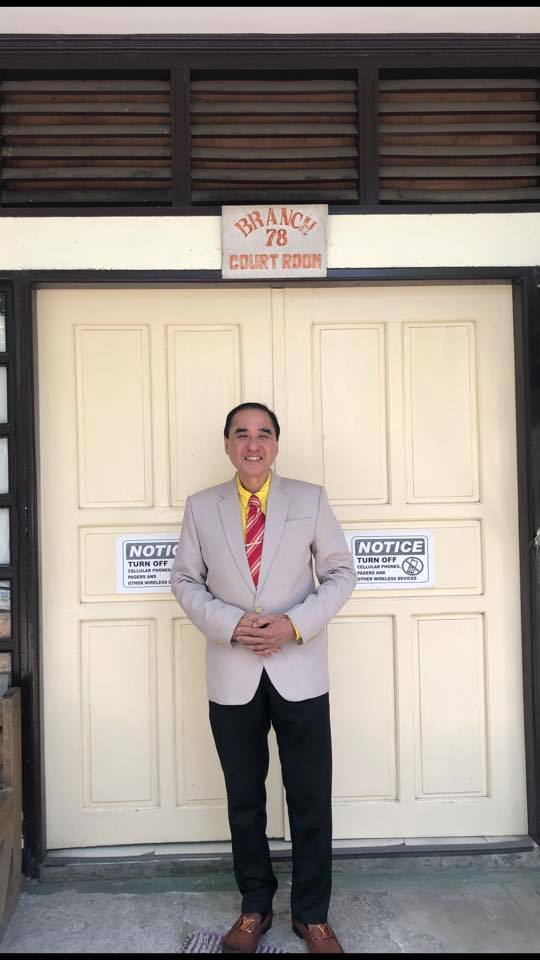
The Inspiring Story of Atty. Filomeno A. Arteche III
For over four decades, Atty. Filomeno A. Arteche III has dedicated his life to the legal profession. His journey, marked by dedication, discipline, and an unbreakable commitment to excellence, has led him to represent some of the Philippines’ most notable figures, from Ramon Ang of San Miguel Corporation to the renowned architect Jun Palafox. Today, he stands as one of the most respected figures in private practice, but behind the titles and accolades, he is a family man, a mentor, and a person who values life’s simpler pleasures. Here, Atty. Arteche reflects on his career, the influences that shaped him, and the lessons he wishes to pass on to aspiring lawyers.
Early Beginnings
Atty. Arteche’s path to the legal profession was inspired by his father, a former mayor of Tacloban City and past president of the Integrated Bar of the Philippines Leyte Chapter. “I knew in high school that I would be a lawyer,” he recalls. His father’s influence was profound, taking him to court hearings and client meetings, sparking in him a fascination with the legal process. Coming from a family with a strong legal tradition, including two lawyer siblings, he pursued his ambition with vigor.
He began his academic journey as a top student, graduating as the valedictorian of his pre-law class at the University of the Philippines. In law school, he continued to excel, graduating as second honor from the Ateneo de Manila School of Law in 1981. His commitment to hard work and diligence laid the foundation for a successful legal career that spans more than four decades.
Career and Growth
Atty. Arteche launched his legal career with the prestigious Angara, Concepcion, Regala & Cruz (ACCRA) Law Offices, where he worked as a Junior Associate for 14 years. His early experiences provided a wealth of knowledge, but it was also during this time that he honed his specialization and became a recognized expert in litigation and corporate law.
Later, he transitioned to corporate roles, serving as Corporate Secretary, Legal Counsel, and Personnel Manager at Philippine Solid Finance and Credit Corporation and as a Corporate Lawyer for Philippine Investment Management Consultants, Inc. (PHINMA). By 2003, he established his firm, Filomeno A. Arteche III and Associates, embodying his entrepreneurial spirit and desire to chart his path in the legal world.
A Day in the Life of a Lawyer
As a seasoned litigator, Atty. Arteche spends much of his day in court, meticulously reviewing cases, jurisprudence, and strategies. His day begins with a clear plan, reviewing schedules and visualizing the tasks ahead. “In life, there must be a plan,” he emphasizes, reflecting his disciplined approach. Whether preparing for a court appearance or strategizing with clients, he is deeply committed to his work, driven by a desire to achieve the best outcomes for those he represents.
Memorable Cases and Professional Impact
One significant moment in his career was defending a mayor from Sagiaran, Lanao del Sur, who had been wrongly accused and included in a “narco list” of the Duterte Administration. Facing immense pressure, Atty. Arteche handled media interviews and worked tirelessly to clear his client’s name. Cases like these, where trust and integrity were on the line, shaped his view on the importance of being a trustworthy advocate.
He also recounts an early encounter with a prominent client, the owner of PHINMA, wearing an exquisite Patek Philippe watch. The moment left an impression on the young Arteche, symbolizing the rewards that hard work and dedication could bring. Today, he proudly owns six Patek Philippe watches, a reminder of the goals he set for himself early in his career.
Balancing Career and Family Life
For Atty. Arteche, family comes second only to God. He proudly speaks of his achievements, not in terms of wealth but in the memories he has created with his family. A memorable example is the time he took his entire family, including in-laws and grandchildren, on a European vacation, following a successful case. “Money can still be recovered, but the bonding, the memory—you cannot buy that,” he says. His family’s happiness and well-being remain his top priority, and he is proud to see all his children now as successful professionals and businesspeople.
He is deeply involved in the Rotary, an organization dedicated to community service, where he actively contributes to helping those in need, particularly the less fortunate. For him, the true essence of making a difference does not lie in holding a political office. He believes that one does not need to be a politician to make a meaningful impact on others’ lives. He is critical of politics, viewing it not only as a chaotic environment but also as a field where corruption often prevails. His passion for community service remains rooted in direct action and philanthropy rather than in the political arena.
Reflections and Regrets
Looking back, Atty. Arteche’s only regret is that his father did not live to see his success. While his mother witnessed and celebrated his achievements, he wishes his father could have been there to see how his influence and mentorship shaped him into the lawyer he became. He values hard work and independence, not relying on inheritance but on personal dedication and a drive to succeed.
Advice for Aspiring Lawyers
For those considering a career in law, Atty. Arteche offers several guiding principles. “Lawyering is a noble profession,” he says, emphasizing the need for passion, commitment, and discipline. He advises aspiring lawyers to develop “Smooth Interpersonal Relationships” (SIR), avoid arrogance, and cultivate good public relations. Personal presentation also matters; he believes a lawyer should always present themselves professionally, starting with a well-tailored barong.
Networking and community service are equally important. By joining civic organizations and serving the community, lawyers can build a reputation that extends beyond the courtroom. Atty. Arteche believes success is a matter of attitude as much as aptitude. “Remember, it’s not simply your aptitude but your attitude that will determine your altitude in life,” he shares.
Legacy and Living Life Fully
At the core of Atty. Arteche’s philosophy is the belief that life is about choices. His journey exemplifies resilience, dedication, and a passion for the law, shaped by the people he has served and the family he cherishes. Beyond his professional accomplishments, he is proud to be a caring son, loving husband, proud father, doting grandfather, reliable brother, and loyal friend.
Atty. Arteche’s story serves as an inspiration, not only for lawyers but for anyone who values hard work, integrity, and family. His advice and example underscore the belief that a life well-lived is one dedicated to both professional excellence and personal fulfillment. (To be continued)






 Real LexEcon