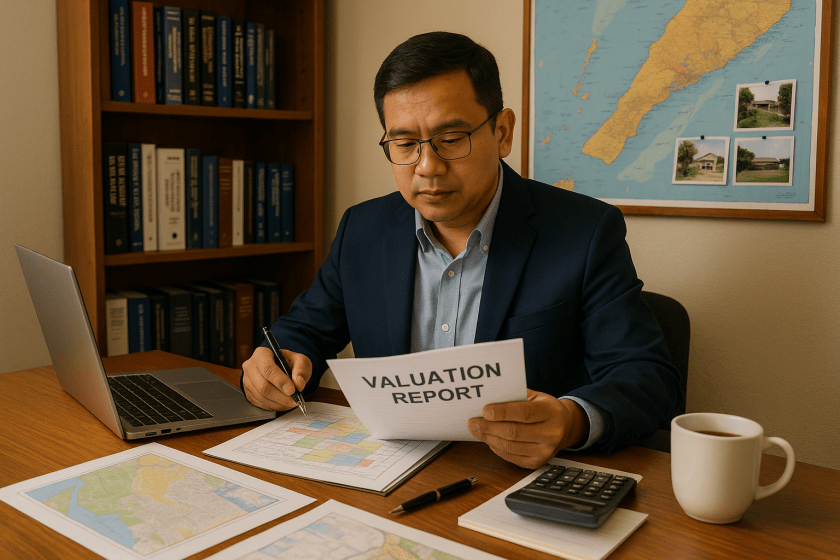
“Work to Learn, Then Earn”: An Appraiser’s Story

An excerpt from an interview with Appraiser Gus Agosto

In this special feature, a Bachelor of Science in Real Estate Management (BSREM) student sits down with Appraiser Gus Agosto to learn about his early journey into the world of real estate appraisal. From his first spark of interest to navigating the challenges of starting, Appraiser Agosto shares how his background in economics, passion for learning, and hands-on experience shaped his professional path. This insightful conversation offers valuable lessons and inspiration for students and aspiring appraisers alike.

Interviewer:

Welcome, Appraiser Gus Agosto. We’re excited to learn more about your journey into the world of real estate valuation. Let’s begin with your early inspiration.

1. What initially drew you to the field of real estate appraisal, and can you recall the moment you decided to pursue it as a career?

Appraiser Gus Agosto:

My journey into appraisal began during my time as a real estate salesperson and property investment specialist. More than a decade has passed since then. One vivid memory stands out: I was in a developer’s office when I met a gentleman who was reviewing for the appraiser’s licensure exam. I watched him work through a complex mathematical problem and admired the analytical skill involved. That moment sparked a deep curiosity in me, one that never left.

Later, during my broker’s review, I began to understand the nuances of the different professions within real estate. Our lecturers were very encouraging, and I gravitated toward appraisal because of its close ties to economics and mathematics—two subjects I’ve always been passionate about. Given my background as a researcher, writer, and a graduate in economics, the transition felt natural. That’s when I firmly decided to pursue a career in real estate appraisal.

2. How did your educational background or early professional experiences prepare you for the demands of property valuation work?

Appraiser Gus Agosto:

I hold a degree in economics and spent several years engaged in research before entering real estate. I conducted studies on local economies, enterprises, and development trends—work that laid the groundwork for the analytical mindset essential in valuation.

My stint as a real estate salesperson further broadened my understanding. I was exposed to different types of properties and transactions, attended seminars, and got to know the real-world workings of the industry. Steve Jobs once said, “You can only connect the dots looking backward.” In my case, those dots connected my work as a researcher, writer, lecturer, and a real estate practitioner, all of which converged toward a solid foundation in appraisal.


3. What challenges did you face when you were just starting out as an appraiser, and how did you overcome them?

Appraiser Gus Agosto:

Like many beginners in the field, I faced the usual questions: Where do I begin? How do I get clients? One piece of advice from a lecturer stuck with me—start with your “KKK”: Kamag-anak, Kliyente, at Kakilala—your natural network. That became my launching pad.

At one professional association event, I met a fellow appraiser who owned an appraisal firm. She invited me to join their Cebu branch, and I accepted without hesitation. It was a valuable opportunity. The company had a structured system, an established client base, and a culture of mentorship. We focused on the core operations—site inspections, analysis, and report writing. Each report we submitted was reviewed by seasoned appraisers, turning every assignment into a learning experience.

Later on, I had the opportunity to work with another appraisal firm in Metro Manila whose clients included major banks and large corporations. There, I learned the discipline of working in a highly coordinated team with tight turnaround times—often just three days per report. The volume of work was intense, but it sharpened my ability to deliver accurate reports under pressure, without compromising quality.

When I returned to Cebu, I reconnected with mentors who were among the pioneering appraisers in Visayas and Mindanao—back when there were only about five of them in the region. They welcomed me into their practice without formal discussions about fees. For me, the priority was learning. I was exposed to a different side of the profession: that of the individual practitioner. Besides Cebu and nearby provinces, I handled assignments even in remote areas such as Kapatagan in Lanao del Norte, Ozamis, and Clarin. I also had the opportunity to appraise properties of prominent Cebuano families and large-scale developments. That phase lasted for at least two years and deepened my understanding of valuation beyond the corporate environment.

Eventually, a batchmate invited me to serve as an appraiser for a nationwide cooperative, marking the start of my independent practice. I traveled to various locations, encountered a wide range of property types and development conditions, met people from all walks of life, and balanced time in the field with desk work in the office. Those routines became the rhythm of my early appraisal career.

In those formative years, I worked with at least three appraisal firms and three respected individual appraisers. My guiding principle was simple: “Work to learn, and earning will follow.” I was driven by a deep eagerness to grow in the profession, more than anything else.

Looking back, my journey—from economic researcher to real estate salesperson to hands-on valuation—was a kind of “gestation period.” Each phase played a vital role in sharpening my skills and shaping my professional identity as a full-fledged appraiser.

4. Looking back at your first appraisal assignment, what lessons did you learn that still guide your practice today?

Appraiser Gus Agosto:

I’ll never forget my first assignment—it was a warehouse in Pagsabungan, Mandaue. My buddy and I were eager and nervous. We did everything manually—measuring the structure, crawling into tight spaces, and sweating through the inspection. It was tough, but also rewarding.

The biggest lesson I learned was about trust. Clients allow us into their private spaces and rely on our judgment to assign value to their property. That responsibility has always stayed with me. I make sure to explain to my clients how I arrived at the valuation and why it’s fair. For me, valuation is not just about figures—it’s about credibility, integrity, and professionalism. Trust is the foundation of our practice, and I continue to uphold that principle in every report I sign.

Advice to Aspiring Appraisers:

Appraiser Gus Agosto:

To those just starting: “Work to learn first, not just to earn.” Be open to guidance, surround yourself with mentors, and never stop asking questions. This profession is built not just on numbers, but on experience, trust, and continuous growth. Stay curious, stay humble, and stay committed.

Interviewer Wrap-Up:
Thank you, Appraiser Gus Agosto, for that inspiring and grounded look into your journey. Your story is not only a blueprint for aspiring appraisers but also a testament to how passion, persistence, and purpose can shape a meaningful career.

Implication of Trump’s Immigration Policy on Philippine Real Estate

The recent announcement by newly inaugurated U.S. President Trump, suggesting a move to end birthright citizenship through an executive order, has sparked widespread debate. The proposal, targeting children born on U.S. soil to non-citizens or undocumented immigrants, challenges the long-standing application of the jus soli principle enshrined in the 14th Amendment of the U.S. Constitution. While the political and legal implications of this development have dominated headlines, the potential economic ripple effects are just as significant—not only in the United States but also for nations like the Philippines, where jus sanguinis governs citizenship by bloodline.

The jus soli principle grants citizenship to nearly anyone born within a country’s borders, while jus sanguinis, as applied in the Philippines, ties citizenship to one’s parents rather than birthplace. For Filipinos in the U.S., stricter birthright citizenship rules could mean diminished opportunities for their children to acquire U.S. citizenship automatically. This could deter future migration, affect job stability, and influence long-term investment behavior—including decisions to invest in Philippine real estate.

Filipino Migration and U.S. Immigration Data

As of 2022, about 4.1 million Filipino Americans lived in the United States, making up 17% of the nation’s total Asian American population, according to the U.S. Census Bureau. Philippine Ambassador to the United States, Jose Manuel Romualdez, recently highlighted that approximately 350,000 Filipinos are currently living illegally in the U.S. Since 2001, a total of 9,597,961 cases have been filed across all U.S. immigration courts, with only 25,301 of those involving Filipinos, including just 723 who entered without inspection (EWI). Of the 3,716,106 cases still pending in immigration court (most of which involve EWI), only 1,218 involve people born in the Philippines. This data reveals that despite Filipino Americans constituting roughly 1% of the U.S. population, they represent only 0.002% of deportation proceedings, which is a notably low percentage.

The majority of Filipinos in removal proceedings are facing deportation for overstaying their visas, with two-thirds (16,844) of these cases linked to visa overstay. An additional 3,342 are in proceedings due to committing aggravated felonies, and 3,955 have been convicted of other criminal charges. There are also 12 individuals charged with national security violations and one Filipino charged with terrorism.

The Housing Paradox and its Economic Impact

In the Philippines, the housing market is already dealing with the dual challenges of oversupply and a significant housing backlog—issues that have long plagued the country’s real estate sector. Despite efforts to address these concerns, access to affordable housing remains a critical issue. However, amid this ongoing struggle, the sector faces another blow. The potential changes in U.S. birthright citizenship policy will exacerbate the situation.

Overseas Filipino Workers (OFWs) and Filipino Americans are major drivers of real estate demand in the Philippines, sending billions of dollars in remittances annually to finance property purchases. OFWs based in the United States were the leading source of remittances received by the Philippines in 2023, amounting to around 13.71 billion U.S. dollars. However, if U.S. policy changes reduce the economic security tied to citizenship for these communities, their capacity and willingness to invest in Philippine properties could decline. This could further exacerbate the existing inventory challenges faced by real estate developers.

A reduction in U.S.-based remittances could also impact housing affordability and market segmentation. Developers, already grappling with oversupply, may need to pivot towards affordable housing to cater to the domestic market—a sector marked by intense competition. The increased supply targeting this sector could drive price corrections, creating both opportunities and risks for local buyers and investors.

Beyond the market dynamics, stricter U.S. citizenship policies could have sociopolitical implications for the Philippines. If long-term U.S. migration is discouraged for Filipinos, a potential increase in skilled professionals returning to the Philippines may reshape urban housing demand. The rental market and demand for mixed-use developments could see shifts, though it may take years for these changes to offset the current oversupply.

This issue is critical for Filipinos because migration, remittances, and real estate are deeply interconnected. The Philippine government, developers, and financial institutions must consider the potential consequences of global policy shifts, as these could have far-reaching effects on the local economy and housing market.

BLGF Invites Prof. Agosto in RPVRA IRR Workshop

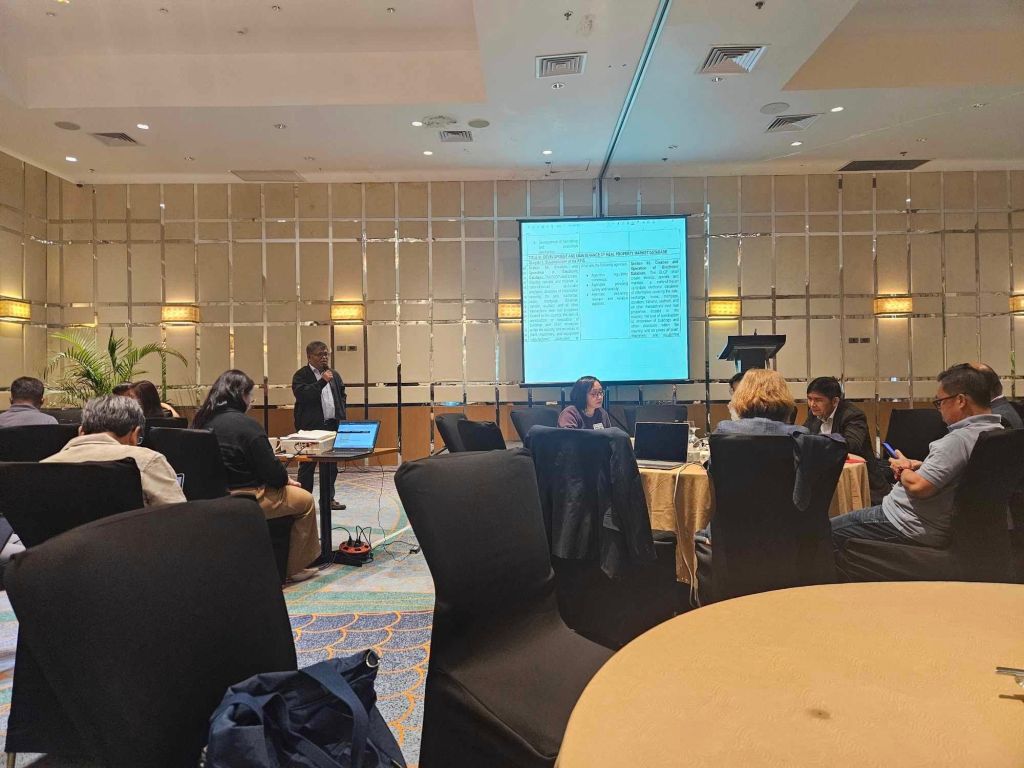
The Bureau of Local Government Finance (BLGF), a key agency responsible for overseeing local government revenue collection and fiscal policies, recently invited Gus Agosto, the President of the Society of Litigation Valuation Experts (SOLVE), to participate in a significant event aimed at shaping the future of property valuation in the Philippines. This event was the Workshop for the Implementing Rules and Regulations (IRR) of the Real Property Valuation and Reassessment Act (RPVRA), held from August 20 to 23, 2024 at Dusit Thani in Lapu-Lapu City, Cebu.

The workshop’s primary objective was to finalize the Implementing Rules and Regulations (IRR) for the RPVRA, a groundbreaking piece of legislation aimed at reforming real estate property valuation practices across the country. The RPVRA’s provisions are geared toward:

  • Standardizing real property valuation across Local Government Units (LGUs),
  • Strengthening the efficiency of property tax collection,
  • Enhancing transparency in government-led real estate transactions,
  • Establishing a National Valuation Database.

Given the far-reaching implications of the RPVRA, this workshop was crucial for ensuring that the IRR accurately reflected the spirit of the law while considering the practical realities of its implementation.

Prof. Gus Agosto, representing Group 1 in the discussions, played a central role in examining and debating key provisions of the RPVRA, particularly those affecting litigation-related valuation issues. His expertise as the President of SOLVE, an organization specializing in property valuation in legal disputes, added valuable insights into the drafting process. Group 1 likely focused on technical aspects of valuation practices, dispute resolution, and how to ensure the law’s provisions are consistently applied across regions.

His participation underscored the importance of collaboration between government bodies, private sector experts, and organizations such as SOLVE, as they worked to ensure that the IRR would be both legally sound and implementable at the local level.

The workshop was attended by a diverse group of stakeholders from the Visayas and Mindanao regions, representing both the public and private sectors:

  • Government Agencies:
    • Bureau of Local Government Finance (BLGF): Ensures local government revenue collection aligns with new valuation standards.

    • Bureau of Internal Revenue (BIR): Guides interactions of RPVRA with tax administration.

    • Philippine Tax Academy: Supports training for assessors and tax officers.

    • Local Government Assessors: Implement new valuation standards at local levels.

    • Phividec Industrial Authority: Focuses on how the new valuation law affects industrial property valuations.


      Private Sector:


    • Real estate practitioners, property developers, and valuation experts shared insights on the law’s impact on real estate and investments.

During the workshop, various provisions of the RPVRA were debated, including:

  1. Valuation Standards:
    • Ensuring uniformity in real property valuation across all LGUs, addressing long-standing issues with inconsistent property assessments in different regions.
  2. Creation of the National Valuation Database:
    • Discussing the technical requirements, privacy concerns, and the operational framework of the database, which would be central to transparent and reliable valuation practices.
  3. Periodic Revaluation Requirements:
    • The IRR’s requirement for LGUs to conduct regular updates to property valuations would address the issue of outdated valuations that impact fair taxation and public transactions.
  4. Appraisers’ and Assessors’ Qualifications:
    • Emphasis was placed on professionalizing the appraisal practice through standardized training and certification programs, with contributions from the Philippine Tax Academy.
  5. Litigation-Related Provisions: Mr. Agosto’s involvement focused on mechanisms for resolving valuation disputes, particularly in cases of eminent domain, where the government acquires private property for public use, and determining just compensation becomes critical.

The workshop was pivotal for finalizing the IRR, which would serve as the guiding document for the implementation of the RPVRA across the country. This collaborative effort between the government and the private sector aims to ensure that real estate valuation practices in the Philippines align with international standards, promote transparency, and support the fair and equitable taxation of real properties.

The participation of key government bodies such as the BIR and the BLGF, alongside valuation experts like Gus Agosto, ensures that the IRR addresses both the technical and practical aspects of real estate property valuation, enhancing the law’s chances of being effectively implemented across the country’s LGUs.

The Essential Role of Master Planning in Real Estate

Clients often want to explore what their properties can become, not just what they are worth today. Potential encompasses the possible future uses and developments that can enhance the value and utility of the property. Through master planning, we analyze various factors such as location, market trends, demographic shifts, and regional growth patterns to identify opportunities for development and improvement.

Maximal use refers to optimizing the utilization of a property to achieve its highest and best use. This involves detailed planning and strategic decision-making to ensure that the property is developed in a way that maximizes its value, functionality, and sustainability. We consider various scenarios and use cases, from residential and commercial developments to mixed-use projects, ensuring that every square meter of the property is used effectively.

In contrast to conventional master plans focused narrowly on technical and physical aspects, our approach is more expansive and inclusive. We go beyond traditional boundaries of architecture and engineering to incorporate rigorous analyses of market trends, legal, economic feasibility, environmental sustainability, and comprehensive risk management. This broader perspective ensures that our projects are not only viable but also resilient and adaptive to changing environments and challenges.

The Role of Master Planning

Our master planning services begin with a thorough analysis of the property, including its legal and physical characteristics, existing infrastructure, and environmental conditions. We also conduct market and feasibility studies to understand the economic viability of potential developments. This comprehensive analysis forms the foundation of our master plans, ensuring they are grounded in reality and aligned with market demands.

Master planning is about creating a strategic vision for the property’s future. We collaborate with our clients to understand their goals and aspirations, integrating their vision into the master plan. This strategic approach ensures that the plan not only addresses immediate needs but also sets a course for long-term growth and development.

Market Analysis

Market analysis is a cornerstone of effective master planning in real estate, providing essential insights into market trends, demand-supply dynamics, and consumer behavior. By conducting thorough analyses, master planners can identify opportunities, mitigate risks, and optimize strategies to enhance project feasibility and long-term success. Integrating market insights ensures that developments are not only responsive to current market conditions but also positioned for sustainable growth and resilience in the future.

Financial Analysis

Financial viability is a cornerstone of successful master planning. We conduct detailed financial analyses to assess the feasibility of proposed developments. This includes market analysis, financial modelling, cost estimation, revenue projections, and return on investment calculations. By evaluating the financial aspects thoroughly, we help clients make informed decisions and attract potential investors.

Economic Impact

Master planning also considers the broader economic impact of development projects. Economic analysis in real estate and investment decisions involves several key tools and techniques that guide investors and developers in making informed choices. We analyze how proposed developments can stimulate local economies, create job opportunities, and attract businesses and investments. This holistic view ensures that the development contributes positively to the economic vitality of the region.

Environmental Sustainability

Sustainable development is at the core of our planning process. We conduct comprehensive environmental impact assessments to understand and mitigate the ecological footprint of developments. This includes evaluating potential impacts on air and water quality, natural habitats, and biodiversity. Our plans incorporate green building practices, energy efficiency measures, and renewable energy solutions to minimize environmental impact.

Our master plans emphasize the integration of green spaces, parks, and recreational areas to enhance the quality of life for residents and promote environmental sustainability. These spaces not only provide aesthetic and health benefits but also contribute to the ecological balance of the area.

Legal and Regulatory Compliance

Legal due diligence and proactive management of ownership and legal barriers are integral to effective master planning in real estate. By verifying ownership, identifying legal barriers, and ensuring regulatory compliance, we mitigate risks, enhance project feasibility, and facilitate smooth implementation. We also ensure that all projects comply with local, regional, and national regulations. This includes zoning laws, building codes, environmental regulations, and land use policies. This proactive approach enhances project feasibility, mitigates risks, and facilitates smooth implementation

Risk management is integral to our master planning approach. We identify potential legal, financial, and environmental risks and develop strategies to mitigate them. This proactive approach ensures the long-term success and sustainability of our projects.

Conclusion

Our clients look to us for more than just property valuations; they seek insights into the potential and maximal use of their properties. Through our comprehensive master planning services, we provide the strategic vision, detailed analysis, and innovative solutions needed to unlock that potential and maximize use. By integrating financial viability, economic impact, environmental sustainability, and legal compliance, we ensure that our projects are sustainable, resilient, and successful.

This holistic approach not only enhances the value of the property but also ensures balanced growth that preserves natural resources, promotes community well-being, and fosters long-term economic vitality. Our expertise in master planning positions us to lead in nurturing and developing thriving communities that stand the test of time.