Green on Paper, Wet on the Ground: How Multiple-Use Zoning Shapes Cebu’s Flood Risk

The Cebu City Comprehensive Land Use Plan (CLUP) 2023–2032 is often defended on the ground that it significantly expands environmental protection because more than half of the city is now classified under the National Integrated Protected Areas System (NIPAS) Central Cebu Protected Landscape. On paper, the figures appear impressive. Forest land drops from 9,312.31 hectares, or 31.08 percent of the city’s land area in 2020, to just 2,892.91 hectares, or 9.65 percent, while a new category—NIPAS CCPL—suddenly expands to 15,102.10 hectares, or 50.40 percent. At first glance, this seems to suggest that forest loss has been offset by a dramatic increase in protected area coverage. In reality, this shift is largely a reclassification, not a conservation gain.

Forest Reduction and NIPAS CCPL Expansion under the Cebu City CLUP (2020 vs. 2023–2032)

Land Use Category2020 Area (ha)2020 Share of City (%)2023–2032 Area (ha)2023–2032 Share of City (%)Change (ha)Change (percentage points)
Forest9,312.3131.08%2,892.919.65%–6,419.40–21.43 pp
NIPAS CCPL15,102.1050.40%+15,102.10+50.40 pp

The crucial detail lies in how the NIPAS CCPL is treated internally under the CLUP and its implementing zoning ordinance. The protected landscape is not governed as a single protection category. It is subdivided into Strict Protection Sub-Zones and Multiple-Use Zones. These two sub-zones have radically different legal and ecological effects, yet they are collapsed into a single “NIPAS CCPL” figure in the comparative land-use table. This aggregation creates the impression of expanded protection while concealing a fundamental change in how large portions of the uplands are actually regulated.

Strict Protection Sub-Zones are designed to keep ecosystems intact. They prohibit roads, structures, utilities, and settlement, allowing only limited scientific or educational activity. By contrast, Multiple-Use Zones explicitly allow settlement, agriculture, agroforestry, infrastructure, utilities, livelihood activities, and even extractive uses, subject to conditions, variances, and environmental impact assessments. In practical terms, strict protection constrains development, while multiple use manages development. Treating both as equivalent under a single “protected area” label obscures this distinction.

The land-use data strongly suggest that much of what was previously classified simply as forest in 2020 did not become strictly protected. Instead, it was absorbed into the NIPAS CCPL category and then zoned as Multiple-Use Zone. Only a smaller core—typically the most intact, high-elevation, and least accessible forest blocks—could realistically have been placed under strict protection. Areas closer to barangays, with existing settlements, road access, or development pressure, could not have been placed in strict protection and were therefore zoned as multiple use. This includes large portions of the former forest cover at the urban–upland interface.

This permissive framework is further reinforced by the city ordinance’s treatment of socialized housing within the Multiple-Use Zone. Even within the protected landscape, the zoning ordinance allows socialized housing projects to proceed if they are deemed “essential” and are claimed to have minimal environmental impact. In such cases, the proponent is required to seek variances and exceptions from the Zoning Board, supported by an Environmental Impact Assessment and an Environmental Impact Statement, which must be presented prior to the issuance of an Environmental Compliance Certificate by the DENR–Environmental Management Bureau. The project must also be certified by the Department of Human Settlements and Urban Development as a socialized housing project. Where granted special authorization, development is limited to single-detached units on lots of at least 64 square meters and a maximum building height of seven meters.

While these conditions appear restrictive on paper, they underscore the deeper structural issue: land that is otherwise acknowledged as ecologically sensitive and disaster-prone is rendered negotiable through administrative discretion. The safeguards operate at the project level, not at the landscape or watershed level. They assume that environmental risk can be mitigated case by case, rather than avoided altogether through strict land-use exclusion. In a steep, erosion-prone watershed, even low-rise, low-density housing introduces roads, slope cuts, drainage alteration, and cumulative runoff effects that no project-specific EIA can fully neutralize. In this sense, the socialized housing exception does not soften the impact of Multiple-Use Zones—it institutionalizes it.

What Necessarily Went Into Multiple-Use Zones (MUZ)

MUZ is the only CCPL sub-zone where the zoning ordinance allows:

  • settlement and relocation sites,
  • agriculture and agroforestry,
  • infrastructure and utilities,
  • agro-industrial activities,
  • sale and disposition of titled land,
  • and even sand and gravel extraction, subject to EIA.

As a result, any part of the CCPL that:

  • already had settlements,
  • lay adjacent to barangays,
  • had road access,
  • or was earmarked for housing, utilities, or livelihood expansion,

could not have been placed in SPZ and was almost certainly zoned as MUZ.

The CLUP zoning maps explicitly identify CCPL Multiple-Use Zones (MUZ) in at least 22 upland barangays, including Adlawon, Agsungot, Babag, Buhisan, Guba, Sirao, Sudlon I and II, Tabunan, Taptap, Toong, and others. These are not peripheral areas. They are headwaters, slopes, and watershed interfaces directly influencing river systems that drain into Cebu City’s urban core.

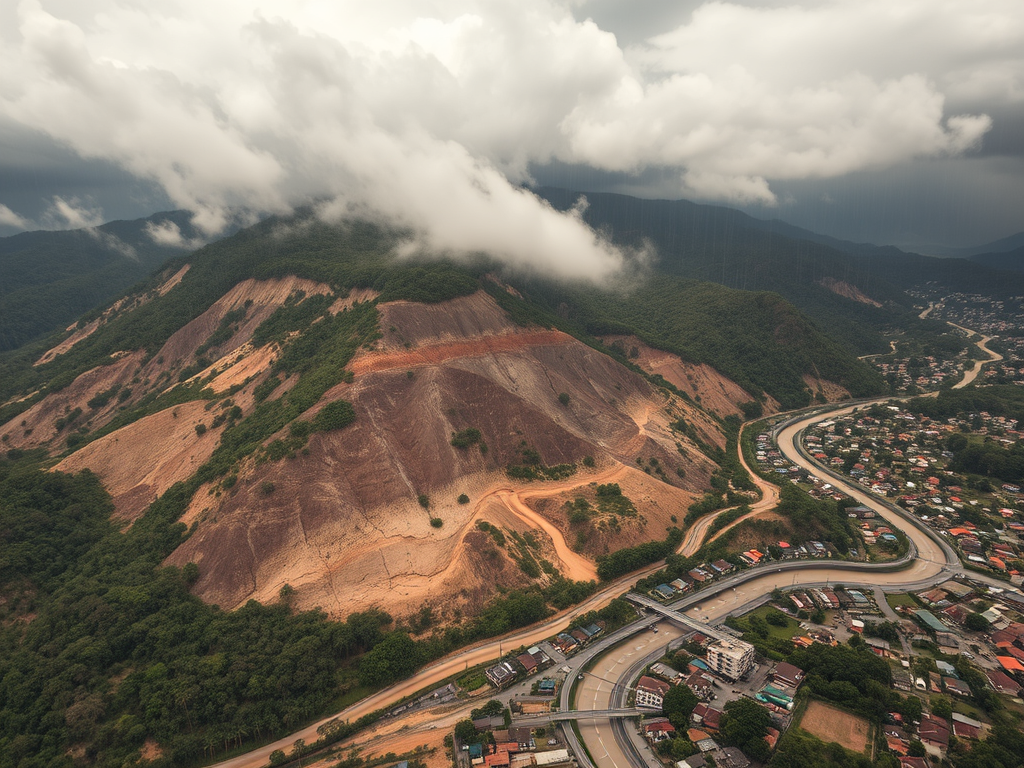
Functionally, this represents a downgrade in protection. Forest converted into strict protection retains its hydrological and ecological role. Forest converted into a multiple-use zone does not. Even if development is limited to 30 percent of the land area, that 30 percent often consists of roads, access cuts, building pads, and slope modification. These interventions fragment the remaining vegetation, reduce infiltration, increase runoff velocity, destabilize slopes, and raise sediment loads. Hydrologically, a multiple-use zone does not behave like a forest. The correct comparison, therefore, is not forest versus NIPAS, but forest and strict protection versus multiple use. Measured this way, the CLUP reflects a net weakening of upland and watershed protection.

This matters because the uplands of Central Cebu are not just scenic backdrops. They are natural flood infrastructure. Forested slopes slow rainfall, store water, stabilize soils, and regulate downstream flows. When zoning allows these functions to be negotiated away through settlement, roads, utilities, and extractive activities, flood risk is displaced downhill. The cost is borne by lowland communities that experience more frequent and more severe flooding, even as upland development is justified as “controlled” or “sustainable.”

The zoning ordinance itself makes the contrast unmistakable. In the Strict Protection Sub-Zone (SPZ), the City recognizes that certain upland areas must be treated as non-negotiable ecological infrastructure: no roads, no utilities, no structures, and no human activity beyond science and education, precisely because these areas are highly erodible, disaster-prone, and critical for soil, water, and flood regulation. Yet within the same protected landscape, the Multiple-Use Zone (MUZ) operates on the opposite logic. It allows settlement, roads, utilities, land disposition, and even extraction—subject only to conditions and approvals—on the premise that environmental risk can be managed rather than avoided. The contradiction is stark: SPZ accepts that some areas must be left alone to reduce flooding and disaster risk, while MUZ assumes that development in equally sensitive upland watersheds can be negotiated without consequence. Floodwaters, however, do not distinguish between zones. What is permitted in MUZ ultimately undermines what SPZ is meant to protect.

Question of Legal Authority

There is also a legal dimension to this shift that is often overlooked. NIPAS allows multiple-use zones only to the extent prescribed in the Protected Area Management Plan approved by the Protected Area Management Board. Local governments are required to align their plans with these prescriptions, not replace them with their own discretionary zoning regimes. By defining allowable uses, authorizing variances, and substituting zoning-board discretion and project-level environmental assessments for management-plan limits, the ordinance exceeds the authority delegated to the city under national law. In legal terms, this is an ultra vires act—an exercise of power beyond what the law allows. Environmental compliance certificates and impact assessments cannot cure this defect, because procedural safeguards do not legalize land-use policies that are unlawful at their core.

The implications extend beyond technical planning debates. When a land-use plan presents an apparent expansion of protected areas while quietly converting large portions of former forest into multiple-use zones, it creates an illusion of environmental progress. The label changes, but the watershed function deteriorates. In a city repeatedly hit by flooding, this distinction is not academic. It is the difference between treating the uplands as non-negotiable ecological infrastructure and treating them as a managed development frontier.

Ultimately, the question is not whether development should occur in Cebu, but where, how, and under whose authority. When forest protection is diluted under the banner of multiple use, the consequences do not stay in the uplands. They flow, quite literally, downhill.

A Message to All Cebuanos: The First Victory Is Here—Now Let’s Finish the Fight

In the aftermath of Typhoon Tino, we demanded answers.
We sought accountability.
We refused to accept that flooding, landslides, and danger were “normal.”

Through our collective effort—and through the letter we sent to the Cebu City Council, to the Mayor, and to the Vice Mayor—the City has taken notice.

Because of this united action, a proposed resolution has now been filed calling for a full, urgent review of the Comprehensive Land Use Plan (CLUP) and Zoning Ordinances (ZO) of Cebu City.

This is a direct response to your concerns, your pleas, your stories, and your courage to speak out.

This is our first victory.

But it is only the beginning.


We Need Every Cebuano Now to Push This to Completion

A proposed resolution is not yet an approved resolution.
It is a seed—planted because of our effort.
For it to grow, we must stand together, louder and stronger.

This CLUP/ZO review is critical for Cebu’s future.
It will shine light on:

  • Upland developments that altered natural slopes
  • Flood-prone subdivisions allowed in hazardous areas
  • Blocked rivers and ignored waterways
  • Environmental oversight failures
  • The outdated planning that failed to protect our communities

This is our chance to correct decades of harmful decisions and bring back safety, logic, and environmental balance to our city.


We Started the Ball Rolling—Now We Need You to Roll It Forward

We call on every Cebuano:

  • Homeowners and families
  • Professionals and students
  • Barangays and community leaders
  • Survivors of Typhoon Tino
  • Everyone who believes Cebu deserves a safer future

Stand with us.
Raise your voice.
Tell the City Council: Approve the resolution. Begin the review. Protect the people.

The government has heard us once.
Let’s make sure they hear us all the way to the finish line.


A United Cebu Is Stronger Than Any Storm

Typhoon Tino may have awakened our pain, but it also awakened our strength.

We showed that ordinary citizens can move City Hall.
Now let us show that we can move Cebu toward a safer, more sustainable, and more just future.

This is no longer just my cause, or your cause—
This is Cebu’s cause.

Let us finish what we have begun.

Padayon, Sugbo.
Dili ta mosurrender.
Dili ta magpabilin nga hilom.
Let us stand as one and demand the future that our people deserve.

—Gus Agosto
For a Safer, Smarter, and Sustainable Cebu

Link to Our Letter to the City Council and Officials: https://abagosto.com/urban-risk-and-governance-advisory/

Proposed City Council Resolution https://abagosto.com/2383-2/

Who Controls the Uplands? Cebu’s Extractive Landscape and Flood Vulnerability

The upland regions of Cebu represent the island’s watersheds, recharge zones, forests, limestone formations, and mineral deposits. These regions are the ecological backbone of the province. These areas perform critical hydrological functions, anchor biodiversity, and mitigate the worst impacts of storms, flooding, and extreme weather events. Yet, from a political economy perspective, the control, use, and allocation of upland spaces reveal deep asymmetries of power. There are persistent institutional weaknesses. Long-standing tensions exist between economic extraction and ecological stability. Understanding who controls the uplands is essential. Additionally, knowing how these controls shape risks and vulnerabilities is crucial. This knowledge helps explain why Cebu is increasingly prone to catastrophic flooding. Moreover, it explains the occurrences of slope failures.

Historically, Cebu’s uplands were governed under a fragmented regime of land classifications. These included forestlands, timberlands, alienable and disposable lands, ancestral domains, and protected areas. This system was established by national decrees and colonial land laws. Presidential Decree No. 705 (Revised Forestry Code) and Presidential Decree No. 1998 put most upland forests under State ownership. This pertains to lands with an eighteen percent slope or more in the provinces of Cebu and Benguet. However, weak enforcement gradually eroded these controls. Unregulated settlements and local political brokerage also contributed to this erosion.

In the 1980s and 1990s, selective logging, quarrying, and small-scale mineral extraction expanded. These activities were often facilitated by patronage ties. The growing political influence of local business groups also played a role. Super Typhoon Ruping (Typhoon Mike) struck in November 1990. It demolished 60% of Cebu’s buildings. Additionally, it displaced over 80,000 people in the province and sank 88 ships in Cebu Harbor. This should have been a watershed moment for upland governance. Yet despite the catastrophe, extractive pressures not only continued but also intensified. This occurred in the decades that followed. Quarrying and mining became intertwined with urban growth, cement production, and construction demand.

An examination of official records shows that Cebu’s uplands today are substantially shaped by the extractive sector. Based on the Directory of Operating Mines and Quarries (2024), the province has 81 active quarry and mining operators. They cover a total of 31,853.0599 hectares. This footprint exceeds the combined land areas of several Cebu municipalities. These operators extract a wide range of commodities. The commodities include limestone, shale, basalt, greywacke, clay, dolomite, and bentonite. They also extract sandstone, copper, gold, and silver.

Large-scale corporate players dominate, among them Republic Cement & Building Materials Inc. These include Solid Earth Development Corporation and Apo Land & Quarry Corporation. South Western Cement Corporation and Dolomite Mining Corporation also play a role. Additionally, there are Carmen Copper Corporation and JLR Construction & Aggregates Corporation. Their operations span from Asturias and Danao to Naga and Toledo. They also operate in Malabuyoc, San Fernando, Alcoy, Dalaguete, and Minglanilla. These operations cover vast sections of Cebu’s upland landscapes.

These companies hold long-term Mineral Production Sharing Agreements (MPSAs). Some of them extend into the year 2048. An example is the 607-hectare operation of Quarry Ventures Phils., Inc. The largest individual MPSAs include 2,551 hectares (Republic Cement – Danao & Carmen) and 2,383 hectares (Republic Cement – Asturias). Other significant MPSAs are 1,492 hectares for Solid Earth – San Fernando. 648 hectares are for Carmen Copper – Toledo. 524 hectares are for Dolomite Mining – Alcoy & Dalaguete. From a political economy standpoint, long-term control over upland spaces has significant implications. These mineral extraction regimes have locked in decades of upland land use patterns. This process effectively privileges corporate economic interests over watershed protection. It also undermines forest integrity and climate resilience.

This raises fundamental questions: Who benefits from the current upland configuration, and who suffers from its consequences? The primary beneficiaries are, unsurprisingly, the large corporations with long-term extraction rights. They benefit from mineral resources, cement production, and quarrying royalties. These corporations also gain from upland-to-lowland value chains. Local governments also generate revenues from extraction fees, business taxes, and employment opportunities, albeit often limited to short-term financial gains.

However, upland communities bear the environmental and social costs disproportionately. So do downstream barangays, riverine settlements, and informal households. Ultimately, the broader Cebuano public is affected as well. These populations endure increased flooding, faster runoff, declining groundwater recharge, degraded watershed capacity, and heightened risks of landslides and subsidence.

The pattern becomes even clearer when viewed against Cebu’s recent experience with disasters. In the last two decades, the province suffered recurrent catastrophic events. These include floods in Mandaue and Cebu City (2020, 2024), and multiple landslides. The deadly 2018 Naga City landslide killed at least 53 people. These events underscore a disturbing trajectory: hydrological systems strained by decades of upland extraction are progressively failing. Typhoon Kalmaegi (“Tino”) struck Cebu in November 2025. It caused some of the worst flooding in local history. Dozens were dead, thousands displaced, and the lowlands were submerged. This made the role of altered upland landscapes indisputable. And yet, the political economy driving upland control remains intact.

Super Typhoon Ruping serves as a historical anchor for understanding this trajectory. Ruping revealed, as early as 1990, the catastrophic vulnerability of Cebu’s built and ecological systems. The storm’s devastation was immense. It flattened structures, disabled utilities, and caused unparalleled maritime losses. These impacts were rooted in a combination of extreme climatic hazard and fragile landscape integrity. The subsequent “CEBOOM” era of reconstruction accelerated economic growth. However, it did not adequately address upland deforestation. There were also shortcomings in addressing watershed degradation and land-use mismanagement. What followed was a pattern in which Cebu’s economic expansion deepened its ecological vulnerability.

Thus, a political economy analysis of Cebu’s flooding problem is necessarily an analysis of upland control. State authority, corporate extraction, and local political networks are involved. Land use decisions and regulatory gaps play a role too. Together, they have produced a landscape where the uplands—meant to protect the island from hydrological extremes—have been systematically weakened. The result is a province increasingly exposed to the combined pressures of climate change, urban expansion, and ecological degradation.

Addressing Cebu’s flooding crisis requires engineering interventions and urban drainage upgrades. It also demands a structural rethinking of upland governance. This includes a reassessment of long-term extraction contracts, stricter enforcement of environmental laws, transparent land-use planning, and hazard-informed zoning. Additionally, public welfare must be prioritized over private extraction.

The question of who controls the uplands is not merely academic. It is central to Cebu’s survival in an era of intensifying climate risks.

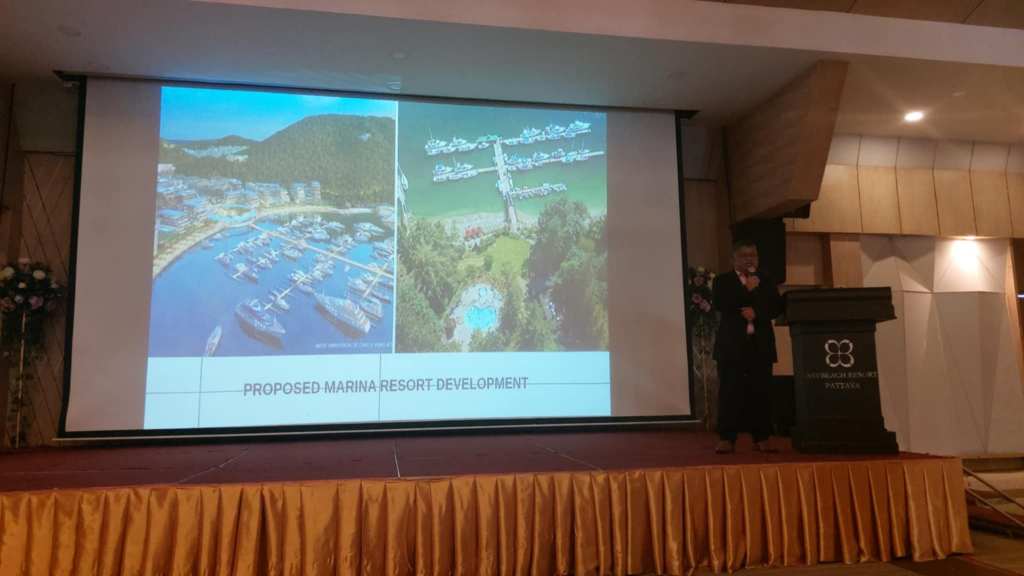
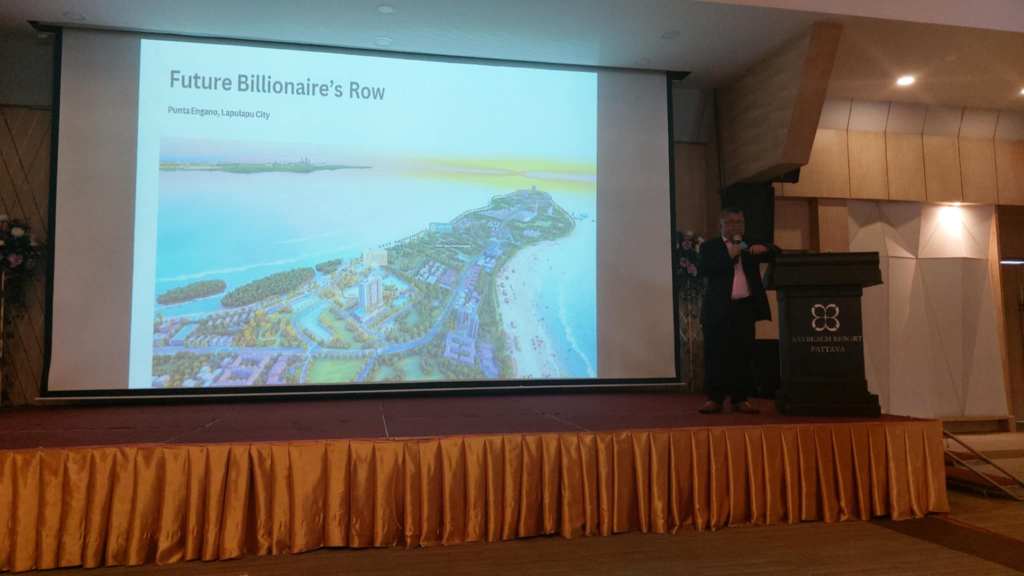
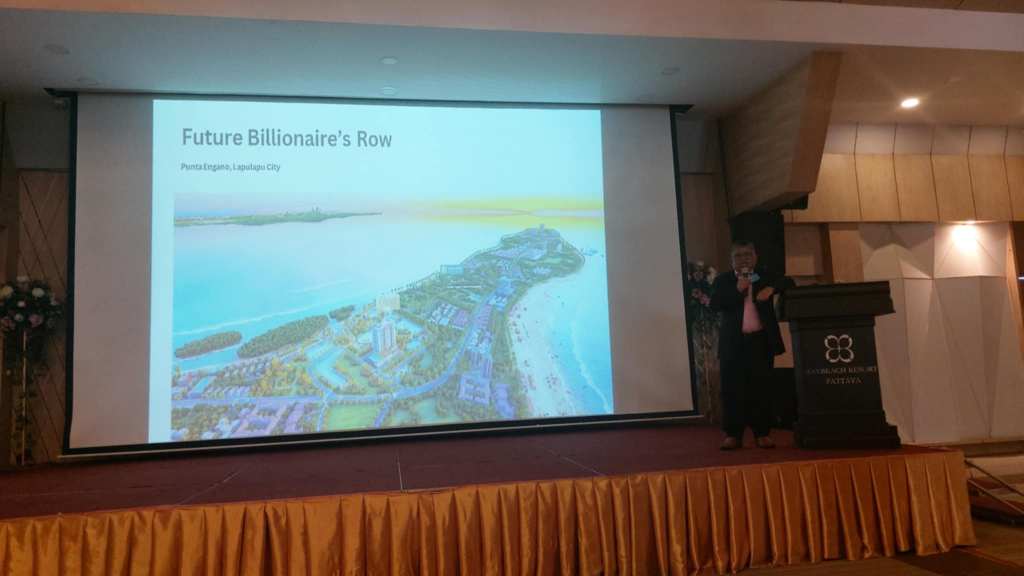
Consultant Gus Agosto at the World Congress of Resort Properties

Consultant Gus Agosto delivered an insightful presentation at the prestigious World Congress of Resort Properties held in Pattaya, Thailand. His talk focused on the integration of valuation and planning practices in the context of Lapulapu City, Philippines—a city renowned for its vibrant tourism and resort industry.

In his speech, Agosto emphasized the importance of leveraging advanced valuation methodologies to complement sustainable planning efforts. He remarked, “The exploitation of various methodologies in valuation, coupled with the principles of highest and best use and feasibility analysis, can yield more reliable estimations. These, in turn, align closely with the goals of sustainable and responsible urban planning.” His insights underscored the critical role of integrating economic, environmental, and social considerations in developing resort-based real estate projects.

The World Congress served as an invaluable platform for participants from around the globe to exchange experiences and insights into real estate practices focused on resorts and hotels. Agosto highlighted how both the indoor seminars and on-site study visits provided participants with hands-on learning opportunities. He noted that these activities offered a deeper understanding of innovative approaches and strategies in real estate development, which would significantly enhance the professional practices of attendees.

Pattaya, Thailand, was a fitting venue for the event, being globally recognized as a premier resort city. Its reputation as a hub of hospitality and tourism added a dynamic layer to the Congress, enriching discussions and case studies with real-world examples of successful resort property development. Agosto concluded that the knowledge shared at the event would undoubtedly elevate the standards of real estate practice among the participants, fostering innovation and collaboration in the global resort property sector.