“Work to Learn, Then Earn”: An Appraiser’s Story

An excerpt from an interview with Appraiser Gus Agosto

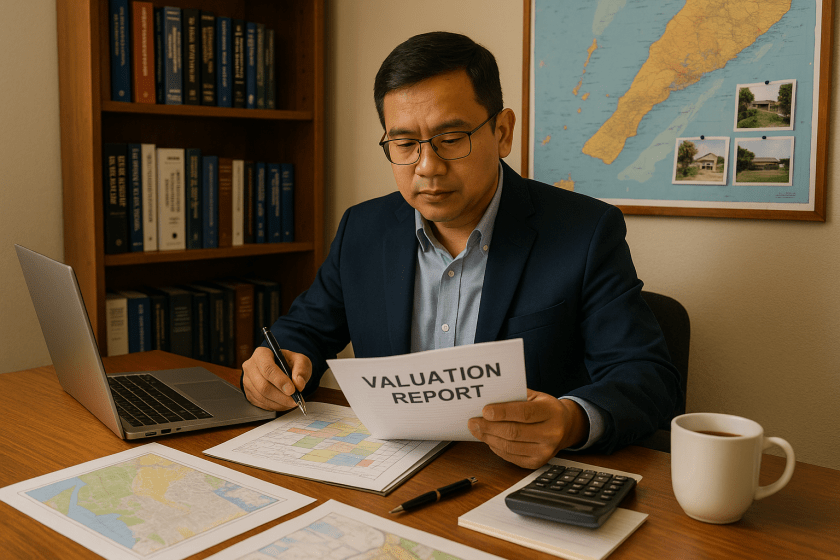
In this special feature, a Bachelor of Science in Real Estate Management (BSREM) student sits down with Appraiser Gus Agosto to learn about his early journey into the world of real estate appraisal. From his first spark of interest to navigating the challenges of starting, Appraiser Agosto shares how his background in economics, passion for learning, and hands-on experience shaped his professional path. This insightful conversation offers valuable lessons and inspiration for students and aspiring appraisers alike.

Interviewer:

Welcome, Appraiser Gus Agosto. We’re excited to learn more about your journey into the world of real estate valuation. Let’s begin with your early inspiration.

1. What initially drew you to the field of real estate appraisal, and can you recall the moment you decided to pursue it as a career?

Appraiser Gus Agosto:

My journey into appraisal began during my time as a real estate salesperson and property investment specialist. More than a decade has passed since then. One vivid memory stands out: I was in a developer’s office when I met a gentleman who was reviewing for the appraiser’s licensure exam. I watched him work through a complex mathematical problem and admired the analytical skill involved. That moment sparked a deep curiosity in me, one that never left.

Later, during my broker’s review, I began to understand the nuances of the different professions within real estate. Our lecturers were very encouraging, and I gravitated toward appraisal because of its close ties to economics and mathematics—two subjects I’ve always been passionate about. Given my background as a researcher, writer, and a graduate in economics, the transition felt natural. That’s when I firmly decided to pursue a career in real estate appraisal.

2. How did your educational background or early professional experiences prepare you for the demands of property valuation work?

Appraiser Gus Agosto:

I hold a degree in economics and spent several years engaged in research before entering real estate. I conducted studies on local economies, enterprises, and development trends—work that laid the groundwork for the analytical mindset essential in valuation.

My stint as a real estate salesperson further broadened my understanding. I was exposed to different types of properties and transactions, attended seminars, and got to know the real-world workings of the industry. Steve Jobs once said, “You can only connect the dots looking backward.” In my case, those dots connected my work as a researcher, writer, lecturer, and a real estate practitioner, all of which converged toward a solid foundation in appraisal.


3. What challenges did you face when you were just starting out as an appraiser, and how did you overcome them?

Appraiser Gus Agosto:

Like many beginners in the field, I faced the usual questions: Where do I begin? How do I get clients? One piece of advice from a lecturer stuck with me—start with your “KKK”: Kamag-anak, Kliyente, at Kakilala—your natural network. That became my launching pad.

At one professional association event, I met a fellow appraiser who owned an appraisal firm. She invited me to join their Cebu branch, and I accepted without hesitation. It was a valuable opportunity. The company had a structured system, an established client base, and a culture of mentorship. We focused on the core operations—site inspections, analysis, and report writing. Each report we submitted was reviewed by seasoned appraisers, turning every assignment into a learning experience.

Later on, I had the opportunity to work with another appraisal firm in Metro Manila whose clients included major banks and large corporations. There, I learned the discipline of working in a highly coordinated team with tight turnaround times—often just three days per report. The volume of work was intense, but it sharpened my ability to deliver accurate reports under pressure, without compromising quality.

When I returned to Cebu, I reconnected with mentors who were among the pioneering appraisers in Visayas and Mindanao—back when there were only about five of them in the region. They welcomed me into their practice without formal discussions about fees. For me, the priority was learning. I was exposed to a different side of the profession: that of the individual practitioner. Besides Cebu and nearby provinces, I handled assignments even in remote areas such as Kapatagan in Lanao del Norte, Ozamis, and Clarin. I also had the opportunity to appraise properties of prominent Cebuano families and large-scale developments. That phase lasted for at least two years and deepened my understanding of valuation beyond the corporate environment.

Eventually, a batchmate invited me to serve as an appraiser for a nationwide cooperative, marking the start of my independent practice. I traveled to various locations, encountered a wide range of property types and development conditions, met people from all walks of life, and balanced time in the field with desk work in the office. Those routines became the rhythm of my early appraisal career.

In those formative years, I worked with at least three appraisal firms and three respected individual appraisers. My guiding principle was simple: “Work to learn, and earning will follow.” I was driven by a deep eagerness to grow in the profession, more than anything else.

Looking back, my journey—from economic researcher to real estate salesperson to hands-on valuation—was a kind of “gestation period.” Each phase played a vital role in sharpening my skills and shaping my professional identity as a full-fledged appraiser.

4. Looking back at your first appraisal assignment, what lessons did you learn that still guide your practice today?

Appraiser Gus Agosto:

I’ll never forget my first assignment—it was a warehouse in Pagsabungan, Mandaue. My buddy and I were eager and nervous. We did everything manually—measuring the structure, crawling into tight spaces, and sweating through the inspection. It was tough, but also rewarding.

The biggest lesson I learned was about trust. Clients allow us into their private spaces and rely on our judgment to assign value to their property. That responsibility has always stayed with me. I make sure to explain to my clients how I arrived at the valuation and why it’s fair. For me, valuation is not just about figures—it’s about credibility, integrity, and professionalism. Trust is the foundation of our practice, and I continue to uphold that principle in every report I sign.

Advice to Aspiring Appraisers:

Appraiser Gus Agosto:

To those just starting: “Work to learn first, not just to earn.” Be open to guidance, surround yourself with mentors, and never stop asking questions. This profession is built not just on numbers, but on experience, trust, and continuous growth. Stay curious, stay humble, and stay committed.

Interviewer Wrap-Up:
Thank you, Appraiser Gus Agosto, for that inspiring and grounded look into your journey. Your story is not only a blueprint for aspiring appraisers but also a testament to how passion, persistence, and purpose can shape a meaningful career.


Just Compensation Starts with Just Valuation

The right to just compensation is a cornerstone of constitutional property protection in the Philippines. But just compensation cannot exist without just valuation—an objective, market-based assessment of property value that respects both legal mandates and professional standards. This is the essential promise of Republic Act No. 12001, or the Real Property Valuation and Assessment Reform Act (RPVARA), enacted in 2024.

RPVARA introduces a uniform, professional standard for property valuation throughout the country. It mandates the use of the Philippine Valuation Standards (PVS), a comprehensive set of guidelines based on internationally recognized valuation principles. These standards are no longer optional. They are now the legal benchmark for determining real property values in the Philippines.

This legislative mandate gives flesh to Article III, Section 9 of the 1987 Constitution, which states: “Private property shall not be taken for public use without just compensation.” In numerous decisions, the Supreme Court has clarified that “just compensation” means payment equivalent to the fair market value of the property at the time of taking. RPVARA enforces this principle by defining fair valuation through a standardized, transparent system.

For lawyers, this law is particularly relevant in cases involving land acquisition, expropriation, estate settlement, and taxation. It is no longer enough to rely on outdated zonal values or arbitrarily assessed figures. The Constitution guarantees the right to just compensation, and RPVARA operationalizes this by requiring property valuations to reflect prevailing market values. Lawyers who fail to understand and assert the application of the PVS risk failing in their fiduciary duty to clients, particularly in expropriation cases where compensation is the core issue.

Judges and court-appointed commissioners are equally bound. In the past, some courts and referees have resorted to averaging methods or used outdated assessments in determining compensation. RPVARA now provides a clear and binding legal standard—market value as defined and measured by the Philippine Valuation Standards. Ignoring these standards may not only result in injustice but may also constitute a legal error that undermines the integrity of court decisions.

Local assessors and government appraisers face a professional turning point. RPVARA tasks the Bureau of Local Government Finance (BLGF) to adopt, maintain, and enforce the PVS, ensuring that local government units implement the new standards consistently. All valuation professionals in the public sector are now required by law to comply with these standards. Section 13 mandates that “all appraisers and assessors in LGUs, and other entities conducting valuation, shall conform with international valuation standards.” Section 14 further states that “all real properties shall be valued or appraised based on prevailing market values… in conformity with the PVS.”

These provisions echo the broader mandate of Article II, Section 1 of the Constitution, which affirms the rule of law in all governmental actions. Likewise, Article XIII, Section 9, on urban land reform and housing, compels the State to respect the rights of small property owners—a promise that is only fulfilled when valuations are fair and legally grounded.

Non-compliance is not a mere technical oversight. RPVARA imposes administrative and even criminal liability on public officials or appraisers who deliberately disregard its mandates. This is reinforced by Sections 23 and 24 of the law, which provide for penalties in cases of violation. It also complements provisions in the Local Government Code of 1991 (RA 7160), such as Sections 201 and 212, which require local governments to prepare schedules of fair market values—now understood to mean values determined through PVS-compliant methods.

The significance of RPVARA extends beyond legal compliance. It helps create a transparent and reliable valuation system that supports fair taxation, equitable compensation, and investor confidence. For property owners, this means more credible valuations in expropriation, taxation, and real estate transactions. For local governments, it means a more reliable source of revenue, better planning, and improved public services.

This reform also aligns the Philippines with global best practices, supporting responsible urbanization and land use policy. A valuation system based on internationally aligned standards helps attract investment, reduce disputes, and enhance the efficiency of public infrastructure projects.

RPVARA is more than a technical law. It is a vital instrument for ensuring fairness in property-related processes, whether in taxation, compensation, or estate administration. Understanding this law—and putting it into practice—is not just the responsibility of appraisers or assessors. It is a shared duty of lawyers, judges, government officials, and landowners alike.

Now is the time to become familiar with the Philippine Valuation Standards. By doing so, we uphold constitutional rights, professional integrity, and the rule of law.

Why Effective Report Writing Adds Value

In the practice of real estate appraisal, much emphasis is often placed on the technical process of valuation—data collection, market analysis, and the application of valuation approaches. However, as Mr. Gus Agosto emphasized in a recent lecture on Appraisal Report Writing, one of the most overlooked yet indispensable components of the appraisal process is the ability to clearly and effectively communicate its outcome. Effective appraisal, as he asserts, means effective reporting.

Drawing from over a decade of experience in the field, Mr. Agosto highlighted that writing an appraisal report is not merely a clerical task or an afterthought to technical valuation. It is the final product—the formal articulation of an appraiser’s professional opinion of value. This report must not only present data but must also comply with standards, reflect sound judgment, and demonstrate adherence to the legal and ethical expectations of the profession.

Some appraisal reports currently in circulation—particularly those used as templates—were created prior to the passage of Republic Act No. 9646, known as the Real Estate Service Act of the Philippines (RESA Law). Others are adapted from international formats that may not fully conform to Philippine legal and regulatory requirements. While these templates may serve as useful starting points, Mr. Agosto stressed that they are insufficient if not updated to reflect local laws and contemporary standards. Over the past decade, numerous laws and administrative issuances have been enacted, including the Philippine Valuation Standards (PVS), Data Privacy Act, Electronic Commerce Act, Anti-Money Laundering Act, updates to BIR Revenue Regulations, and court procedural rules, which must now be reflected in appraisal report writing.

Under Section 3(g) of the RESA Law, a real estate appraiser is legally defined as a professional who “performs or renders, or offers to perform services in estimating and arriving at an opinion of or acts as an expert on real estate values,” and whose services “shall be finally rendered by the preparation of the report in acceptable written form.” This statutory requirement emphasizes that the report is not a mere formality; it is the legal expression of the appraiser’s findings and professional responsibility.

Further, Section 5(c) of the Implementing Rules and Regulations (IRR) of R.A. 9646 mandates that licensed appraisers shall “prepare, sign, and issue a real estate appraisal report” in accordance with accepted principles and standards prescribed by the Board and the Professional Regulation Commission (PRC). The PVS, aligns with the International Valuation Standards (IVS) but is tailored to Philippine law and practice. Reports must demonstrate transparency in methodology, accuracy in assumptions, and consistency in legal compliance.

Mr. Agosto also pointed out that appraisal reports are not generic in nature. They must be purpose-specific, as each type of valuation engagement—litigation, insurance, sales, taxation, lease, or expropriation—carries distinct reporting requirements, legal standards, and evidentiary burdens. Moreover, Mr. Agosto emphasized that the appraiser’s ability to communicate effectively, through proper grammar, structure, and clarity, is just as important as analytical rigor. A report written in poor language or filled with jargon may undermine its credibility, even if technically correct. Thus, he encourages appraisers to continually upskill in both technical and language proficiency, utilize digital tools, apply peer review, and align with style guides that enhance report readability and presentation.

Appraisal reports serve as vital documents in court cases, bank financing, taxation, and public policy. Thus, Mr. Agosto explained, they must be credible, compliant, and defensible. This requires not only legal and technical knowledge, but also proficiency in professional communication. The appraiser must be able to clearly convey complex data, defend conclusions logically, and eliminate ambiguity through proper grammar, sentence structure, and vocabulary. In an era where reports are often read by legal, financial, and lay audiences alike, the precision and clarity of language can determine whether the report is useful—or even admissible.

Hence, appraisal report writing is not just a skill—it is a professional obligation grounded in law, ethics, and service to the public good. It transforms raw valuation data into a structured, credible, and actionable opinion of value. As Mr. Agosto aptly concluded: “Your report is your professional signature. It must speak with competence, integrity, and purpose long after you’ve signed it.”

One Hat at a Time: Ethical and Legal Boundaries in Real Estate Practice

In Philippine real estate practice, a professional may wear multiple hats: appraiser, broker, consultant, or assessor. With these roles come distinct legal obligations and ethical expectations. Among the most critical distinctions is the contrast between the appraiser’s duty of independence and the broker’s duty of agency. Understanding this distinction—and reconciling it—is essential to preserving public trust and professional credibility in the real estate industry. This article explores how the ethical and legal foundations of real estate practice, as rooted in the Civil Code, the Revised Penal Code, and the Real Estate Service Act of the Philippines (R.A. 9646), guide practitioners in navigating these complex but complementary roles.

A real estate appraiser is a professional whose primary obligation is to render an independent, objective, and evidence-based opinion of value. The appraiser must act with impartiality, applying market data, sound valuation methodology, and professional judgment. The role demands a non-advocacy stance—the appraiser is not to promote the interests of any party, even the client. By contrast, a real estate broker functions under a legal agency relationship. As an agent, the broker owes a fiduciary duty to the client, which includes loyalty, obedience, diligence, full disclosure, confidentiality, and accountability. A broker is expected to promote and protect the client’s interests, even as they observe fairness and ethical conduct in dealings with others.

These differing roles raise a central ethical concern: how can a real estate professional reconcile the objectivity demanded of an appraiser and the loyalty expected of a broker, especially when licensed to perform both? The answer lies in the principle of professional role separation and ethical discipline. Each role must be exercised independently, with clear disclosure and without overlap that compromises impartiality or fiduciary duty. When acting as an appraiser, the practitioner must distance themselves from any client advocacy. When acting as a broker, they must zealously represent their client, but always within the bounds of the law and truthfulness. This ethical discipline—“wearing one hat at a time”—is crucial to maintaining credibility, avoiding conflict of interest, and upholding public trust.

First and foremost, the Real Estate Service Act of 2009 (R.A. 9646)  formalizes the ethical obligations of appraisers, brokers, and other real estate professionals. Section 39 mandates that all practitioners be guided by a Code of Ethics and Responsibilities as adopted by the Professional Regulatory Board of Real Estate Service. This affirms the legal requirement to observe integrity, objectivity, confidentiality, transparency, and public accountability in all aspects of professional practice. Violations of these ethical mandates can result in administrative sanctions such as license suspension or revocation, in addition to possible civil or criminal liability.

The ethical standards expected of real estate professionals are enshrined further in Philippine civil law. Chapter 2, Book I of the Civil Code, on Human Relations, provides the normative foundation for conduct in both personal and professional spheres. Article 19 mandates that “every person must, in the exercise of his rights and the performance of his duties, act with justice, give everyone his due, and observe honesty and good faith.” This provision is the cornerstone of professional ethics, requiring appraisers and brokers to act not merely within legal bounds, but with moral integrity, fairness, and honesty. Article 20 states that “every person who, contrary to law, willfully or negligently causes damage to another shall indemnify the latter for the same.” A real estate professional may thus be held civilly liable for losses caused by misrepresentation, bias, or negligence, such as inflated valuations or failure to disclose material facts. Furthermore, Article 21 provides that “any person who willfully causes loss or injury to another in a manner that is contrary to morals, good customs or public policy shall compensate the latter for the damage.” Even in the absence of a specific law or contract violation, acts against professional ethics or public trust may be actionable under this general clause on moral damages.

The Revised Penal Code supplements civil liabilities with criminal sanctions for unethical conduct that involves deceit, falsification, or breach of public trust. Article 171 on falsification of public documents and Article 172 on falsification by private individuals provide penalties for those who falsify data, signatures, or reports, particularly when such documents are submitted to government agencies for purposes such as taxation, loan application, or litigation. A real estate professional, acting dishonestly in the preparation or authentication of a report, may thus face criminal liability. Similarly, Articles 315 and 318, which address estafa and other deceits, penalize professionals who mislead clients or third parties for financial gain. This includes concealing defects, inflating values, or misrepresenting the true nature of a property transaction. These laws underscore that professional misconduct is not merely unethical—it can be criminal.

The real estate profession is grounded not only in technical competence but also in ethical clarity and legal responsibility. The roles of appraiser and broker may be different, but both demand honesty, fairness, and accountability. Whether providing an objective valuation or advocating for a client in a sale, the real estate professional must be guided by the legal duty to act with justice, good faith, and respect for others’ rights. Ultimately, the integrity of real estate transactions—and of the profession itself—depends on each practitioner’s ability to uphold their role with clear boundaries and an unwavering commitment to ethical conduct. In doing so, they not only comply with the law but also protect the public, the profession, and the value of their word.

Housing Paradox

In recent months, news reports have painted a troubling picture of Metro Manila’s condominium market. The oversupply of residential units has reached concerning levels, raising questions about market stability and prompting analysts to propose various recommendations. While analysts focus on strategies to address the oversupply, there has been little to no effort to connect this phenomenon with the broader issue of unmet housing needs. This creates a puzzling paradox -on one side of the real estate spectrum, developers are grappling with excessive inventory in urban centers. On the other side, millions of Filipinos still lack access to adequate, affordable housing.

The stark imbalance highlights a deeper, systemic problem within the housing sector: a misalignment between supply and demand, where the needs of the population are not being met despite the abundance of residential units.

Currently, the oversupply in the condominium market translates to about 34 months of inventory at the current sales pace—nearly three times the ideal benchmark of a 12-month supply. Urban centers like Quezon City, Ortigas, and Pasay are particularly affected, with thousands of unsold units. For example, Quezon City alone has 18,500 available units, followed by Ortigas with 13,500 and Pasay’s Bay Area with 10,500. Meanwhile, high-end areas like Makati and Bonifacio Global City maintain lower inventories, reflecting steadier demand in the luxury segment.

The reasons behind this oversupply are multifaceted. High interest rates, external economic pressures, and shifting consumer preferences towards single-detached homes in suburban areas have all played a role. Developers, driven by the high returns in the mid- to high-tier condominium market, have focused on urban centers, inadvertently creating a bubble of excess inventory in certain locations.

On the other side of this paradox lies the staggering national housing backlog of 6.5 million units. This deficit primarily affects low- to middle-income families who cannot afford the properties being developed. In Central Visayas alone, the housing need is over half a million units, and while government programs like the Pambansang Pabahay para sa Pilipino Program (4PH) aim to address the backlog, progress has been slow. For instance, in Central Visayas, the Department of Human Settlements and Urban Development (DHSUD) has set a modest target of 13,000 housing units under 4PH—far from the region’s actual needs.

This paradox underscores a severe mismatch between the type of housing being supplied and the housing people need. The oversupply is concentrated in mid- to high-tier condominiums in urban areas, which are unaffordable to most Filipinos. Meanwhile, the housing backlog affects families who struggle to find even basic, affordable shelter. Rapid urbanization has driven developers to focus on city centers, where demand for high-end properties has slowed, while the needs of provincial and low-income communities remain unmet.

This misalignment has wide-ranging implications. Developers face financial losses as unsold inventories pile up, while families without access to affordable housing continue to live in substandard conditions. The situation also affects the broader economy, as stagnation in urban property markets and inadequate housing solutions limit economic mobility and growth.

To address this complex challenge, a coordinated effort is needed. Policymakers, developers, and stakeholders must work together to realign the market. Incentivizing developers to prioritize affordable housing, particularly in areas with high backlogs, is essential. Improving transportation infrastructure to make suburban housing more accessible can also help ease the concentration of developments in urban areas. Additionally, accessible financing options for low- to middle-income families, public-private partnerships, and stricter regulations to prevent future oversupply are crucial steps.

The coexistence of housing oversupply and a massive backlog highlights fundamental flaws in the Philippine real estate market. Solving this paradox requires a shift in priorities—from catering mainly to profit-driven urban developments to addressing the genuine housing needs of the majority. By doing so, the sector can foster sustainable growth, improve living conditions, and create a more equitable future for all Filipinos.

The solution to the Philippine housing paradox lies not in shifting the focus of condominium developments to other regions but in prioritizing the unmet demand for affordable housing. The fundamental issue is not merely the geographic concentration of real estate projects but the failure to align supply with the genuine needs of the population. Addressing this misalignment is key to resolving both the oversupply and the housing backlog.

Augusto B. Agosto is a passionate blogger, economist, a university professor and thought leader in real estate and urban development. With extensive experience in analyzing economic trends and real estate dynamics, he offers insightful perspectives on pressing issues such as housing, land use, and property market trends in the Philippines.

BLGF Invites Prof. Agosto in RPVRA IRR Workshop

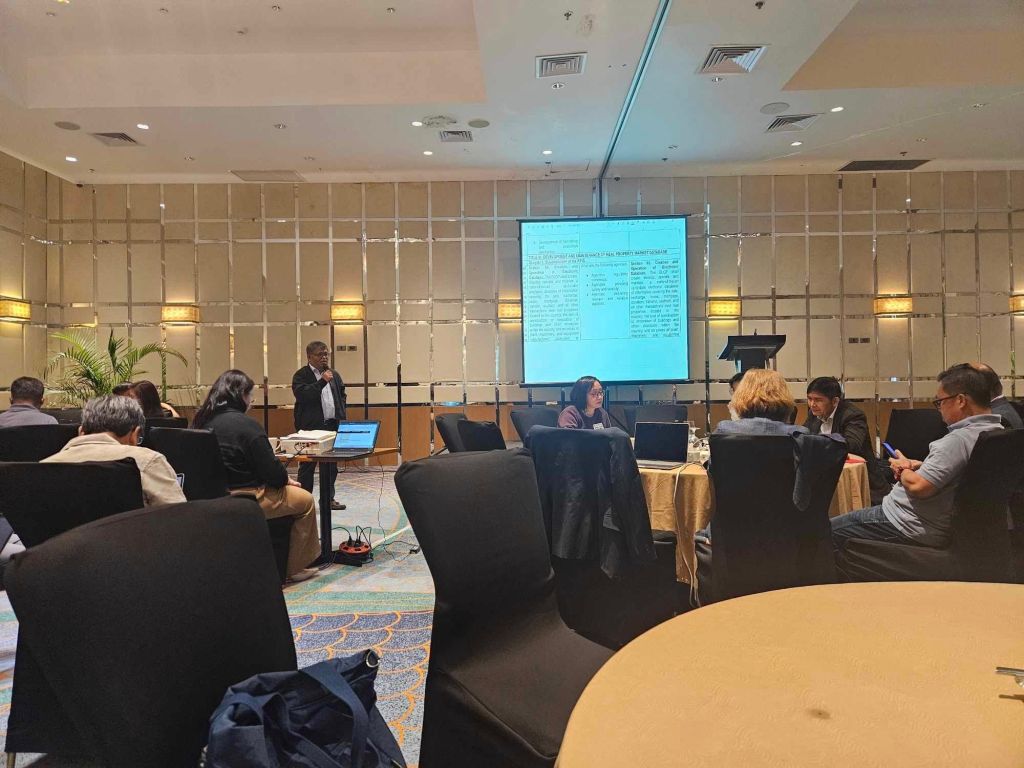
The Bureau of Local Government Finance (BLGF), a key agency responsible for overseeing local government revenue collection and fiscal policies, recently invited Gus Agosto, the President of the Society of Litigation Valuation Experts (SOLVE), to participate in a significant event aimed at shaping the future of property valuation in the Philippines. This event was the Workshop for the Implementing Rules and Regulations (IRR) of the Real Property Valuation and Reassessment Act (RPVRA), held from August 20 to 23, 2024 at Dusit Thani in Lapu-Lapu City, Cebu.

The workshop’s primary objective was to finalize the Implementing Rules and Regulations (IRR) for the RPVRA, a groundbreaking piece of legislation aimed at reforming real estate property valuation practices across the country. The RPVRA’s provisions are geared toward:

  • Standardizing real property valuation across Local Government Units (LGUs),
  • Strengthening the efficiency of property tax collection,
  • Enhancing transparency in government-led real estate transactions,
  • Establishing a National Valuation Database.

Given the far-reaching implications of the RPVRA, this workshop was crucial for ensuring that the IRR accurately reflected the spirit of the law while considering the practical realities of its implementation.

Prof. Gus Agosto, representing Group 1 in the discussions, played a central role in examining and debating key provisions of the RPVRA, particularly those affecting litigation-related valuation issues. His expertise as the President of SOLVE, an organization specializing in property valuation in legal disputes, added valuable insights into the drafting process. Group 1 likely focused on technical aspects of valuation practices, dispute resolution, and how to ensure the law’s provisions are consistently applied across regions.

His participation underscored the importance of collaboration between government bodies, private sector experts, and organizations such as SOLVE, as they worked to ensure that the IRR would be both legally sound and implementable at the local level.

The workshop was attended by a diverse group of stakeholders from the Visayas and Mindanao regions, representing both the public and private sectors:

  • Government Agencies:
    • Bureau of Local Government Finance (BLGF): Ensures local government revenue collection aligns with new valuation standards.

    • Bureau of Internal Revenue (BIR): Guides interactions of RPVRA with tax administration.

    • Philippine Tax Academy: Supports training for assessors and tax officers.

    • Local Government Assessors: Implement new valuation standards at local levels.

    • Phividec Industrial Authority: Focuses on how the new valuation law affects industrial property valuations.


      Private Sector:


    • Real estate practitioners, property developers, and valuation experts shared insights on the law’s impact on real estate and investments.

During the workshop, various provisions of the RPVRA were debated, including:

  1. Valuation Standards:
    • Ensuring uniformity in real property valuation across all LGUs, addressing long-standing issues with inconsistent property assessments in different regions.
  2. Creation of the National Valuation Database:
    • Discussing the technical requirements, privacy concerns, and the operational framework of the database, which would be central to transparent and reliable valuation practices.
  3. Periodic Revaluation Requirements:
    • The IRR’s requirement for LGUs to conduct regular updates to property valuations would address the issue of outdated valuations that impact fair taxation and public transactions.
  4. Appraisers’ and Assessors’ Qualifications:
    • Emphasis was placed on professionalizing the appraisal practice through standardized training and certification programs, with contributions from the Philippine Tax Academy.
  5. Litigation-Related Provisions: Mr. Agosto’s involvement focused on mechanisms for resolving valuation disputes, particularly in cases of eminent domain, where the government acquires private property for public use, and determining just compensation becomes critical.

The workshop was pivotal for finalizing the IRR, which would serve as the guiding document for the implementation of the RPVRA across the country. This collaborative effort between the government and the private sector aims to ensure that real estate valuation practices in the Philippines align with international standards, promote transparency, and support the fair and equitable taxation of real properties.

The participation of key government bodies such as the BIR and the BLGF, alongside valuation experts like Gus Agosto, ensures that the IRR addresses both the technical and practical aspects of real estate property valuation, enhancing the law’s chances of being effectively implemented across the country’s LGUs.

Prof. Agosto Invited to Speak at International Forum on Real Estate

Prof. Gus Agosto, president of the Society of Litigation Valuation Experts (SOLVE), was invited as one of the speakers at the International Forum on Real Estate held from August 28 to September 1, 2024, in Bangkok, Thailand. The prestigious event brought together top industry leaders, policymakers, and real estate professionals to discuss the latest trends, challenges, and innovations in global real estate markets.

Agosto, known for his expertise in real estate appraisal and litigation valuation, addressed key issues such as the evolving role of government regulation, the importance of professional accreditation, and best practices for real estate valuation. Drawing from his extensive experience in shaping industry reforms, including his participation in issues such as the Proposed Professional Guidelines, and the Real Property Valuation Reform Act (RPVRA), Agosto emphasized the need for transparency and high standards in real estate practices.

His participation in the forum underscored his commitment to advancing professional standards in the industry and contributing to a more sustainable and equitable real estate market not only in the country but also around the world.