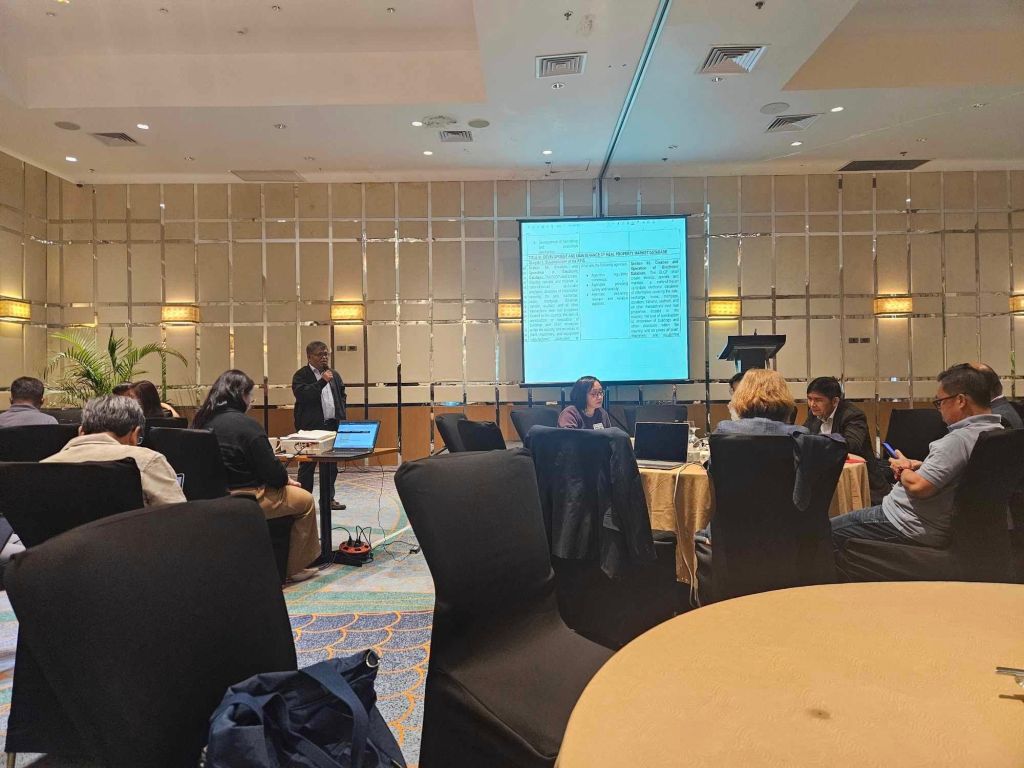
On BBM’s Right of Way Policy Proposition

President BBM’s recent proposition to return to a previous system for handling right-of-way issues, where the government would pay only 15 percent of the property value upfront and resolve any subsequent valuation disputes in court, has significant implications not only for landowners but also for the general public.

Key infrastructure flagship projects currently facing right of way (ROW) issues include the Cagayan de Oro Diversion Road Extension, the Davao City Bypass Construction Project, the Samal Island-Davao City Connector Bridge, the Light Rail Transit-1 Cavite Extension Project, and the EDSA Greenways Project.

One of the primary motivations behind President BBM’s proposal is to expedite infrastructure projects. Projects could proceed without delay by taking possession of the property with an initial 15 percent payment and allowing valuation disputes to be settled later. This could lead to quicker completion of essential infrastructure such as roads, bridges, and public utilities, benefiting the public by improving transportation, connectivity, and access to services.

However, this expedited process might come at a cost. The reliance on courts to resolve valuation disputes can increase the judicial system’s burden, potentially causing delays in other legal proceedings. Additionally, the cost of prolonged litigation could ultimately be borne by taxpayers, increasing public expenditure.

The public perception of the government’s commitment to fair and just practices could be affected. If the policy unfairly favors infrastructure development at the expense of property owner’s rights, it could lead to public dissent and erode trust in government institutions. Ensuring a transparent and fair process is crucial for maintaining public confidence.

Efficient and timely infrastructure development can have positive economic impacts, such as stimulating investment, creating jobs, and boosting economic growth. Improved infrastructure enhances the overall business environment, making it easier for companies to operate and expand. However, if the process is perceived as unjust, it might deter investment, particularly in real estate and property development sectors, due to concerns about property rights and fair compensation.

The rapid acquisition of property for infrastructure projects can lead to community displacement. This has social implications, as displaced families and communities may face significant challenges in finding new homes, and jobs, and adjusting to new environments. Ensuring displaced individuals are adequately compensated and supported through the transition is essential to mitigate these impacts.

A system that prioritizes quick project completion over fair compensation may disproportionately affect vulnerable populations. Lower initial compensation could exacerbate the financial instability of low-income families and marginalized communities. Ensuring equitable treatment for all property owners, regardless of their socio-economic status, is critical for social justice.

Therefore, President BBM’s proposal to modify the right-of-way process has the potential to accelerate infrastructure development, benefiting the public through improved services and economic growth. However, it also raises significant concerns about legal and financial burdens, public trust, social impacts, and equity. A balanced approach that maintains fairness, transparency, and support for affected individuals is essential to ensure that the benefits of infrastructure projects are realized without compromising the rights and welfare of property owners and the broader community.

The Essential Role of Master Planning in Real Estate

Clients often want to explore what their properties can become, not just what they are worth today. Potential encompasses the possible future uses and developments that can enhance the value and utility of the property. Through master planning, we analyze various factors such as location, market trends, demographic shifts, and regional growth patterns to identify opportunities for development and improvement.

Maximal use refers to optimizing the utilization of a property to achieve its highest and best use. This involves detailed planning and strategic decision-making to ensure that the property is developed in a way that maximizes its value, functionality, and sustainability. We consider various scenarios and use cases, from residential and commercial developments to mixed-use projects, ensuring that every square meter of the property is used effectively.

In contrast to conventional master plans focused narrowly on technical and physical aspects, our approach is more expansive and inclusive. We go beyond traditional boundaries of architecture and engineering to incorporate rigorous analyses of market trends, legal, economic feasibility, environmental sustainability, and comprehensive risk management. This broader perspective ensures that our projects are not only viable but also resilient and adaptive to changing environments and challenges.

The Role of Master Planning

Our master planning services begin with a thorough analysis of the property, including its legal and physical characteristics, existing infrastructure, and environmental conditions. We also conduct market and feasibility studies to understand the economic viability of potential developments. This comprehensive analysis forms the foundation of our master plans, ensuring they are grounded in reality and aligned with market demands.

Master planning is about creating a strategic vision for the property’s future. We collaborate with our clients to understand their goals and aspirations, integrating their vision into the master plan. This strategic approach ensures that the plan not only addresses immediate needs but also sets a course for long-term growth and development.

Market Analysis

Market analysis is a cornerstone of effective master planning in real estate, providing essential insights into market trends, demand-supply dynamics, and consumer behavior. By conducting thorough analyses, master planners can identify opportunities, mitigate risks, and optimize strategies to enhance project feasibility and long-term success. Integrating market insights ensures that developments are not only responsive to current market conditions but also positioned for sustainable growth and resilience in the future.

Financial Analysis

Financial viability is a cornerstone of successful master planning. We conduct detailed financial analyses to assess the feasibility of proposed developments. This includes market analysis, financial modelling, cost estimation, revenue projections, and return on investment calculations. By evaluating the financial aspects thoroughly, we help clients make informed decisions and attract potential investors.

Economic Impact

Master planning also considers the broader economic impact of development projects. Economic analysis in real estate and investment decisions involves several key tools and techniques that guide investors and developers in making informed choices. We analyze how proposed developments can stimulate local economies, create job opportunities, and attract businesses and investments. This holistic view ensures that the development contributes positively to the economic vitality of the region.

Environmental Sustainability

Sustainable development is at the core of our planning process. We conduct comprehensive environmental impact assessments to understand and mitigate the ecological footprint of developments. This includes evaluating potential impacts on air and water quality, natural habitats, and biodiversity. Our plans incorporate green building practices, energy efficiency measures, and renewable energy solutions to minimize environmental impact.

Our master plans emphasize the integration of green spaces, parks, and recreational areas to enhance the quality of life for residents and promote environmental sustainability. These spaces not only provide aesthetic and health benefits but also contribute to the ecological balance of the area.

Legal and Regulatory Compliance

Legal due diligence and proactive management of ownership and legal barriers are integral to effective master planning in real estate. By verifying ownership, identifying legal barriers, and ensuring regulatory compliance, we mitigate risks, enhance project feasibility, and facilitate smooth implementation. We also ensure that all projects comply with local, regional, and national regulations. This includes zoning laws, building codes, environmental regulations, and land use policies. This proactive approach enhances project feasibility, mitigates risks, and facilitates smooth implementation

Risk management is integral to our master planning approach. We identify potential legal, financial, and environmental risks and develop strategies to mitigate them. This proactive approach ensures the long-term success and sustainability of our projects.

Conclusion

Our clients look to us for more than just property valuations; they seek insights into the potential and maximal use of their properties. Through our comprehensive master planning services, we provide the strategic vision, detailed analysis, and innovative solutions needed to unlock that potential and maximize use. By integrating financial viability, economic impact, environmental sustainability, and legal compliance, we ensure that our projects are sustainable, resilient, and successful.

This holistic approach not only enhances the value of the property but also ensures balanced growth that preserves natural resources, promotes community well-being, and fosters long-term economic vitality. Our expertise in master planning positions us to lead in nurturing and developing thriving communities that stand the test of time.

Valuation Expert Distinguishes Roles of Expert Witnesses and Court Commissioners

In a recent hearing at the Cebu City Regional Trial Court, Valuation Expert Gus Agosto helped in shedding light on the distinct roles of expert witnesses and court commissioners, providing valuable insights into their functions within the expropriation proceeding.

During the proceedings, Expropriation Expert manifested to the court, emphasizing the critical differences between expert witnesses and court commissioners. Expert witnesses, under the Rules on Evidence, Gus Agosto explained, offering specialized knowledge, skills, and experience in specific fields relevant to the case at hand. Their testimony aids judges  in understanding complex matters, contributing to informed decision-making.

He referred to Rule 130, Section 49 of the Rules of Evidence, which states, “The opinion of a witness on a matter requiring special knowledge, skill, experience, or training which he is shown to possess, may be received in evidence.” This provision underscores the importance of expert testimony in matters where specialized expertise is necessary.

On the other hand, under Rule 32 of the Rules of Court, court commissioners are appointed by the court to play a pivotal role as officers of the court, particularly in matters related to property valuation or just compensation. Mr. Agosto underscored the importance of competence and expertise among court commissioners, highlighting their role in evaluating factors to determine just compensation for properties subject to acquisition or eminent domain.

In cases requiring property valuation, the court typically appoints three competent individuals as commissioners. These commissioners are tasked with conducting impartial assessments to ascertain the fair value of the property being acquired, ensuring that property owners receive just compensation for their properties.

Additionally, Mr. Agosto touched upon the court’s jurisdiction to interpret whether simple or compound interest should apply in the computation of just compensation in expropriation proceedings dating back to 1995. He emphasized, ‘The interest rate matter is a question of law, which is best interpreted and decided by the court.’ While leaving the interpretation to the court, Consultant Agosto underscored the significance of this decision in ensuring fair and equitable compensation for affected parties.

Consultant Agosto’s clarification of the roles of expert witnesses and court commissioners serves to enhance understanding within the legal community and among courtroom participants. By providing clarity on these essential distinctions, Consultant Agosto contributes to the integrity and fairness of legal proceedings and underscores the importance of competent professionals in facilitating justice.

AB Agosto was named to the Environmental Impact Assessment Review Committee

In a significant development, Gus Agosto has been listed as a member of the newly established Environmental Impact Assessment (EIA) Review Committee in Region 7. The EIA process, aimed at foreseeing the environmental impact of a development, involves the preparation of an Environmental Impact Statement (EIS). This document, submitted by the project proponent or EIA consultant, serves as the application for an environmental compliance certificate (ECC).

“I am deeply honored and humbled by the appointment to serve in the EIA Review Committee. The importance of responsible and sustainable development cannot be overstated, and I am committed to contributing my expertise to ensure that development projects in our region align with environmental standards,” commented the Environmental Planner.

The ECC is granted based on a comprehensive study of a project’s significant impacts on the environment and the proposed environmental management plan. Agosto’s role in the committee involves contributing to the thorough analysis required during the review of EIS. This analysis includes evaluating data accuracy, the soundness of analysis, and the appropriateness of proposed mitigation measures.

According to DENR Administrative Order 2003-30, the Environmental Management Bureau (EMB) is entrusted with implementing the Philippine Environmental Impact Statement System (PEISS). The EMB can commission independent professionals, academic experts, and representatives from relevant government agencies as members of the EIA Review Committee (EIARC).

The EIARC, a body of independent technical experts and professionals of known probity from various fields, evaluates EIA reports and provides recommendations on the issuance or non-issuance of an ECC. It plays a crucial role in ensuring the environmental sustainability of development projects.

Project proponents are mandated to secure an ECC before commencing any development initiative. The issuance of this certificate is contingent upon a positive review of the EIS by the EIARC, highlighting the significance of this committee in upholding environmental standards in development projects.

“I believe that fostering a balance between development and environmental preservation is crucial for the well-being of our communities,” Mr. Agosto concluded.

AA Consultants Expands Reach with Strategic Housing and Infras Development Engagements

AA+ Appraisal & Consultancy proudly announces the completion of its real estate consulting in Dipolog City and Batangas. The consultancy firm has been commissioned to conduct comprehensive studies on projects in Cebu, Dipolog City, Bohol, Leyte, Lapulapu City, and Batangas, demonstrating a proactive approach to addressing various challenges within the real estate sector.

A significant milestone for AA Consultants is their recent engagement as development consultants for an expansive housing project covering Dipolog City, Zamboanga del Norte. This upcoming 2.8-hectare development is strategically positioned to evolve into a vital subdivision, serving both urban and provincial populations due to its proximity to the city center. The consultancy firm has diligently undertaken feasibility and economic viability studies, laying the groundwork for a successful venture.

Recall that AA+ Appraisal & Consultancy was hired by the Japan International Cooperation Agency through its local counterpart to provide consulting services for the 19.8-kilometer Marawi City Ring Road -SP7. This project, which connects several towns in the province of Lanao del Sur, focuses primarily on residential and agricultural areas along the Marawi City Ring Road (SP7).

Gus Agosto, President, and Chief Executive Officer of AA+ Appraisal & Consultancy, expressed his enthusiasm about this new endeavor, stating, “We are truly excited to add yet another magnificent project to our portfolio of development consulting opportunities.”

Prior to this achievement, AA Consultants conducted a comprehensive feasibility study for a 50-hectare Agro-Industrial Farm in South Cebu, showcasing their commitment to diverse and impactful projects. Furthermore, the consultancy firm played a pivotal role in proposed subdivision developments in Batangas, Lapulapu City, Bohol, and Maasin, Southern Leyte, conducting highest and best-use studies and marketability studies to optimize the potential of these areas.

Beyond real estate, AA Consultants has extended its expertise to other crucial sectors, providing invaluable consultancy services for a water treatment facility delivering 20 million liters of water daily to the Metropolitan Cebu Water District. Additionally, the firm collaborated with the largest waste management company in Cebu, underscoring its commitment to contributing to sustainable and efficient solutions.

With these recent accomplishments, AA Consultants solidifies its position as a leading force in development consulting, showcasing versatility and excellence across various projects that positively impact communities and industries alike.

“AA+ Appraisal & Consultancy, along with its development consulting team, is driven by its purpose in nation-building, aiming to play a pivotal role in fostering sustainable development and progress across the country. AA+ Consultancy stands as a trusted and versatile partner, uniquely positioned to offer end-to-end solutions for a wide spectrum of development projects. Our development consulting work promotes sustainable, inclusive, and economically vibrant communities,” concluded Consultant Economist Agosto.

AB Agosto Renews Membership in the Prestigious Philippine Economic Society (PES)

At the forefront of the economic landscape in the Philippines, AB Agosto recently renewed his membership in the esteemed Philippine Economic Society (PES). As the country’s largest network of economists, PES holds a pivotal role in bringing together professionals from academia, government, and the business sector. Established in 1962, PES has become a cornerstone in the international community of professional economic associations, holding the distinction of being a founding member of the Federation of ASEAN Economic Associations.

Being part of PES is not merely a membership renewal for Agosto; it signifies a connection to a rich tradition of economic scholarship and a commitment to advancing the economic well-being of the nation. In the context of PES’s international recognition, Agosto’s fifth renewal underscores the interconnectedness of Philippine economic thought with the global discourse, reinforcing the country’s presence in the Federation of ASEAN Economic Associations.

ABA Economic Consulting Set to Redefine the Consulting Practice in VisMin Regions

In a strategic leap towards enhancing its service spectrum in the VisMin (Visayas and Mindanao) region, ABA Economics Consulting is poised to reshape the consulting paradigm. The unveiling of a pioneering Economics consulting practice marks a transformative milestone for the firm, with AB Agosto, a seasoned economist, steering this groundbreaking initiative.

Agosto’s wealth of expertise, derived from practical applications of economics across diverse industries, positions him as a dynamic leader for this venture. His notable contributions as a consultant for the Asian Development Bank (ADB), coupled with his policy consulting engagements for the Cebu Chamber of Commerce and comprehensive analysis for a Mindanao real estate developer, underscore his ability to translate economic theories into tangible strategies.

Headquartered in Cebu, the newly established Economics practice aims to elevate ABA Economics Consulting’s capabilities, focusing on economic analysis within the domains of economics and urban planning. Key services encompass policy advisory assessments, valuations, cost and benefits analysis, demand analysis, property taxation, public finance, and investment analysis.

This strategic expansion solidifies ABA’s commitment to delivering holistic solutions in the VisMin region. Under the astute leadership of AB Agosto, the Economics consulting practice signifies a pivotal shift in the firm’s trajectory, ensuring its continued prominence in delivering impactful and tailored services across various economic sectors.

“The development of an Economics practice is the next step in the firm’s exciting growth journey and further widens our service offering in the dispute resolution space,” expressed AB Agosto, emphasizing the strategic importance of this innovative endeavor.

As the lead of this transformative practice, Agosto’s dynamic leadership is expected to play a central role in positioning ABA Economics Consulting as the go-to partner for clients seeking expertise in economic analysis and comprehensive dispute resolution solutions. The launch of the Economics consulting practice is poised to redefine consulting standards in the VisMin region, ushering in unparalleled insights and strategies for a diverse clientele.

RBH No. 6’s Impact on Philippine Urban Economics

As an urban economist scrutinizing the proposed Resolution of Both Houses (RBH) No. 6 in the Philippines, which aims to amend economic provisions, particularly in foreign ownership restrictions, my analysis delves into the intricate interplay between policy shifts, land dynamics, and the urban economic landscape.

RBH No. 6 seeks to introduce a clause, “unless provided by law,” particularly targeting the easing of limitations on foreign ownership of industries, including public utilities, currently adhering to a 60% Filipino – 40% foreign ownership rule. This proposed change has sparked concerns and discussions surrounding its potential impact on land prices, speculation, and housing dynamics.

With the nation’s total land area officially designated at 30 million hectares, featuring 14.2 million hectares of alienable and disposable land and 15.8 million hectares classified as forestland, RBH No. 6 introduces a crucial clause, “unless provided by law,” indicating a strategic move to ease restrictions on foreign ownership, notably in public utilities.

From an urban economic standpoint, the proposal is a harbinger of potential shifts in the demand and supply dynamics of the real estate market. The envisioned increased access to land ownership by foreign entities is anticipated to stimulate demand, particularly in prime urban locations or areas ripe for development. This surge in demand, coupled with heightened competition for available land, is poised to exert upward pressure on land prices, creating a complex economic environment.

Historically, rising land prices have been a catalyst for speculative activities in real estate markets. Local and foreign investors may strategically position themselves, acquiring land not for immediate utilization but with an eye on future profit margins. The resultant speculation poses challenges to the principles of efficient urban economic markets and warrants careful consideration in the broader economic landscape.

In the field of urban planning, the proposed changes present both opportunities and challenges. Increased foreign capital may translate into a wave of urban development projects, shaping the physical and economic landscape of cities. This influx of investment has the potential to bring innovation, modern infrastructure, and sustainable practices to the forefront of urban planning initiatives, aligning with contemporary economic paradigms.

However, the lens of an urban economist also necessitates a nuanced understanding of potential pitfalls. Gentrification, a potential byproduct of increased foreign investment in select urban areas, raises concerns about the equitable distribution of economic benefits. As property values rise and the cost of living increases, the risk of displacement for existing communities becomes a significant urban economic consideration.

Navigating the economic implications of RBH No. 6 requires adept policy responses. Effective government intervention, characterized by judicious regulation and strategic urban planning, is essential to harness the positive economic forces while mitigating potential negatives. Measures such as targeted taxation, zoning regulations, and policies to safeguard affordable housing are paramount.

As RBH No. 6 continues to be a focal point of discourse, urban economists emphasize the need for a holistic approach. Rigorous economic analyses, coupled with an understanding of urban dynamics, are imperative to inform policymakers on how to balance the influx of foreign investment with the preservation of economic equity, sustainable urban development, and the overarching economic resilience of the Philippines.

Assessing the Complexities and Implications of Proposed Property Tax Reforms in Cebu City

Download a copy of the proposed ordinance. Here is a link: