From MEPZ III to SM Arena: What the South Road Properties Tell Us About the Philippine Economy

Yesterday, while driving home from southern Cebu, I found myself caught in an unusually heavy traffic buildup along the South Road Properties (SRP). At first, I wondered what was causing the congestion. Moments later, I realized that people were making their way to the grand opening of SM Arena Seaside Cebu.

The Arena is an impressive addition to Cebu’s urban landscape—a 19,000–square-meter indoor events venue with a seating capacity of up to 25,000, placing it among the largest event venues in the country. Its opening symbolizes how investment priorities in SRP have shifted over the past three decades—from an industrial growth strategy toward one centered on commerce, tourism, entertainment, institutional uses, and other service-oriented activities.

Continue reading “From MEPZ III to SM Arena: What the South Road Properties Tell Us About the Philippine Economy”

Beyond the Hotel: Complex Hospitality Valuation in Rehabilitation Proceedings

Open hotel appraisal report showing property overview and financial metrics

One of the privileges of professional practice is the opportunity to work on assignments that challenge not only technical competence but also one’s understanding of economics, law, and property rights.

Our team had the opportunity to undertake two major hospitality valuation assignments in support of corporate rehabilitation proceedings. While confidentiality prevents disclosure of the parties, the engagements involved substantial hospitality assets in Zambales and Tagaytay. They required the application of appraisal principles beyond conventional real estate valuation.

One assignment involved a hospitality development consisting of two five-storey hotel buildings, together with a clubhouse, basement parking, swimming pool, landscaped amenities, function facilities, and more than one hundred individually titled accommodation and commercial units. The complexity of the property required careful analysis of both the physical assets and the legal interests represented by numerous condominium titles.

The second assignment involved another large-scale hospitality village developed on approximately four hectares of land. The property consisted of three multi-storey villa buildings with a combined gross floor area approaching 16,000 square meters, complemented by recreational facilities including a clubhouse, swimming pool, tennis court, landscaped parking areas, and other resort amenities. Unlike the first assignment, however, the underlying land was held under a long-term government lease, requiring the valuation to distinguish between the leasehold interest over the land and the ownership of the buildings and improvements.

These engagements reinforced an important realization.

In complex litigation and rehabilitation proceedings, valuation is no longer about estimating what a property could sell for. It is about understanding what legal rights exist, what economic opportunities those rights create, and how those rights influence value.

Two hotels may appear similar in terms of buildings, rooms, and operations. Yet they may have materially different market values because the underlying property rights differ.

This is precisely why our consulting practice has continued to develop what we refer to as the Evidence-Based Valuation Framework.

Rather than beginning solely with comparable sales, the framework first identifies the property rights involved before systematically examining physical, legal, planning, economic, and market evidence. The final opinion of value is therefore not simply an estimate—it is the conclusion supported by a comprehensive body of evidence.

Assignments such as these demonstrate the expanding role of modern valuation practice. Today’s appraiser is expected not only to measure value but also to explain the legal and economic foundations upon which that value rests. This is particularly important in rehabilitation proceedings, where valuation evidence assists the court, creditors, rehabilitation receivers, and other stakeholders in making informed decisions regarding financially distressed assets.

For us, every engagement is an opportunity to demonstrate that valuation is more than determining a number.

It is the disciplined application of economics, property law, planning, and market evidence to arrive at an opinion that is credible, transparent, and capable of withstanding professional and judicial scrutiny.

The future of valuation lies not merely in producing credible numbers, but in presenting credible evidence.

When One Property Has Three Possible Futures

Insights from Practice

Reflections from a Development Advisory Engagement

Every property has a story.

Some stories are about families preserving generations of ownership. Others involve investors searching for opportunities or businesses planning their next expansion. Occasionally, a property presents something more challenging — not because of what it is today, but because of what it could become.

One such engagement brought me to Batangas.

Every consulting engagement begins long before the first client meeting. Thus, whenever I receive an inquiry, I make it a point to review any available information before meeting with the client. Property titles, tax declarations, zoning certifications, planning documents, location maps, aerial imagery, and publicly available information often provide valuable context about the assignment. This preliminary review allows me to understand not only the property itself, but also the questions that are likely to shape the engagement.

Continue reading “When One Property Has Three Possible Futures”

Beyond Appraisal and Feasibility: Why Economics Should Be at the Core of Real Estate Consulting

Real estate consulting has traditionally been siloed into distinct professional disciplines. Appraisers determine market value; environmental planners prepare land use maps; engineers design infrastructure; lawyers resolve regulatory and title issues; and financial analysts evaluate internal rates of return. Each profession performs an indispensable function within the development lifecycle.

Yet, despite the technical competence of these individual disciplines, a fundamental question often remains unanswered: What development decision creates the greatest long-term economic value?

This question cannot be answered by valuation alone, nor can it be resolved by engineering, planning, law, or finance acting independently. It requires economics.

Continue reading “Beyond Appraisal and Feasibility: Why Economics Should Be at the Core of Real Estate Consulting”

Ten Questions to Ask Before Accepting an Expropriation Assignment

By Augusto B. Agosto, REA, REC, REB, EnP, JD

This morning, a newly licensed appraiser asked me a question:

“How do I start an expropriation appraisal assignment?”

Many appraisers immediately think about comparable sales, market data, or valuation methodology. While these are important, I believe the first steps occur long before the valuation process begins.

Expropriation is not a simple and ordinary appraisal assignment. It is a judicial proceeding involving property rights, public interest, legal procedures, and the constitutional requirement of just compensation. An appraiser appointed by the court, whether as Commissioner or member of a Board of Commissioners, carries a responsibility that extends beyond determining market value.

Over the years, I have developed a series of questions that I ask myself before accepting an expropriation assignment.

1. Am I a Disinterested Person?

The first document I request from the client is a copy of the Complaint.

Before discussing value, I want to know:

  • Who are the parties?
  • What property is involved?
  • What is the nature of the taking?
  • Do I have any relationship with the parties?

This allows me to determine whether there is any actual or perceived conflict of interest.

The Rules of Court require a Commissioner to be a disinterested and competent person. Independence is therefore not merely an ethical consideration—it is a legal requirement.

2. Am I Competent to Accept This Assignment?

The next question is equally important.

Do I possess the competence required by the Court for this particular case?

Expropriation requires more than valuation knowledge. An appraiser must understand the legal framework governing the proceeding.

Among the important laws and rules that should be familiar to an expropriation appraiser are:

  • Rule 67 of the Rules of Court (Expropriation)
  • Rule 32 of the Rules of Court (Commissioners)
  • RA No. 8974 and its amendments
  • RA No. 12001 RPVARA
  • The ARROW Act and its Implementing Rules
  • Comprehensive Agrarian Reform Law
  • Local Government Code
  • Relevant jurisprudence on just compensation and property rights

Understanding these laws allows the appraiser to appreciate the broader litigation process, the role of the parties, the duties of the commissioners, and the standards by which the court evaluates evidence.

3. Who Is the Expropriating Authority?

Another important question is:

Who is exercising the power of eminent domain?

Is it:

  • A national government agency?
  • A government-owned or controlled corporation?
  • A local government unit?
  • A utility company exercising delegated eminent domain powers?
  • Another entity authorized by law?

The answer helps determine the applicable legal framework, the procedures involved, the source of funding, and the nature of the project.

For example, national government infrastructure projects may involve RA No. 8974, RA No. 12001, the ARROW Act, and related regulations. Local government expropriations may involve different statutory requirements under the Local Government Code. Utility companies and government corporations may likewise operate under special laws.

Before determining value, the appraiser must first understand who is taking the property and under what authority such taking is being exercised.

4. What Property Right Is Being Taken?

One of the most common mistakes is assuming that every expropriation involves the acquisition of full ownership.

Not all takings are the same.

The government may acquire:

  • Fee simple ownership
  • Right-of-way
  • Easement
  • Transmission line corridor
  • Temporary construction easement
  • Access rights
  • Portions of improvements

Before value can be determined, the property right being acquired must first be identified.

You cannot value what you have not properly defined.

5. What is the Time of Taking?

One of the most important questions in any expropriation assignment is:

What is the legally recognized date of taking?

Many appraisers mistakenly assume that valuation is always based on the current value of the property or that the date of taking is uniform across all compulsory acquisitions. In reality, the applicable valuation date often depends on the governing law, the nature of the acquisition, and the circumstances of the case.

For example, infrastructure right-of-way acquisitions, traditional expropriation proceedings under Rule 67, and agrarian reform acquisitions may involve different legal frameworks and different approaches in determining the relevant date for valuation.

In agrarian reform cases, the issuance of a Notice of Coverage does not automatically constitute the date of taking. While it marks the commencement of the acquisition process, jurisprudence has recognized that the determination of the date of taking requires an examination of when the landowner was effectively deprived of ownership rights, possession, use, enjoyment, or economic benefits of the property, as contemplated by the governing agrarian laws.

Similarly, in infrastructure and right-of-way acquisitions, the legally relevant date may be influenced by statutory provisions governing possession, entry, deposits, negotiated acquisition, and expropriation proceedings.

The valuation date is not merely a procedural matter. It is often one of the most significant legal issues in the determination of just compensation. A difference of several years between the date of taking and the date of appraisal can substantially affect the value conclusion and the amount ultimately awarded by the court.

Before determining value, the appraiser must first determine the applicable law, identify the legally relevant date of taking, and understand the jurisprudence governing that acquisition.

The question is not:

“What is the property worth today?”

The more important question is:

“What was the property worth on the date recognized by law for purposes of determining just compensation?”

6. What Standard of Value Is Required?

Many appraisers immediately think in terms of market value.

However, the court is often concerned with just compensation.

The two concepts are related but not always identical.

An appraiser must understand:

  • Market value
  • Just compensation
  • Consequential damages
  • Consequential benefits
  • Compensation for improvements
  • Compensation for crops and other affected interests

Understanding the applicable legal standard is essential.

7. What Evidence Supports My Opinion?

The first question should not be:

“What comparables are available?”

The better question is:

“What evidence is available?”

Comparable sales are important, but they are only one form of evidence.

The appraiser must also examine:

  • Property characteristics
  • Property rights
  • Legal conditions
  • Planning evidence
  • Economic evidence
  • Market evidence

A valuation that relies solely on comparable sales may fail to capture the broader realities affecting value.

8. How will I personally inspect the Property?

No amount of documentation can replace actual inspection.

Titles, plans, and tax declarations provide information.

Site inspection provides understanding.

Actual inspection often reveals:

  • Existing access
  • Physical conditions
  • Occupation
  • Improvements
  • Constraints
  • Opportunities

Many critical valuation issues are discovered only in the field.

9. Can the Judge Understand My Report?

One of the purposes of a Commissioner’s Report is to assist the court.

A technically correct report that cannot be understood by the judge has failed in one of its essential functions.

The appraiser must be able to explain:

  • The facts
  • The evidence
  • The reasoning
  • The conclusions

in a clear and understandable manner.

10. Can I Defend My Opinion Under Oath?

Every valuation submitted to the court will be examined, questioned, and challenged.

Ask yourself:

  • Are my comparables defensible?
  • Are my adjustments supported?
  • Is the highest and best use justified?
  • Have I verified the title?
  • Have I disclosed limitations and assumptions?

A report should be prepared with the expectation that it will be scrutinized by lawyers, judges, and other experts.

Before submitting any report, I ask myself one final question: If I am placed on the witness stand tomorrow, can I confidently explain every assumption, adjustment, conclusion, and recommendation contained in this report?

If the answer is no, more work is required.

The report is not yet ready.

Conclusion

Expropriation appraisal is not merely an exercise in determining value.

It is the process of assisting the court in determining just compensation for the taking of private property.

The appraiser’s role therefore extends beyond market analysis. It requires competence in property rights, valuation, evidence, legal procedure, and professional judgment.

In my experience, the most important question is not:

“Can I determine value?”

The more important question is:

“Can my valuation withstand the scrutiny of the court?”

That is where expropriation appraisal truly begins.

Easement Right of Way: Who Captures the Value Created by Property Rights?

Property Rights, Access, and the Allocation of Economic Benefits

By Augusto B. Agosto, REA, REC, REB, EnP, JD

In a previous article, I discussed how an easement right-of-way can unlock millions of pesos in property value. A narrow access corridor may occupy only a sliver of land, yet the right it creates can transform an isolated, landlocked parcel into a marketable, developable, and economically productive asset. The lesson was straightforward: property rights create value.

That observation leads to a harder question, and one that the law does not always answer cleanly.

If property rights create value, who actually captures it?

The answer is rarely the same as the answer to “who owns the land.” More often than not, value flows to whoever holds the right, not whoever holds the title — and the gap between those two positions is where most property disputes are born.

Looking Beyond Ownership

Property law has always organized itself around ownership. Who owns the property? Who possesses it? Who has the better right of the two? These remain foundational questions, and no analysis of property can proceed without them.

But many disputes continue well after ownership has been settled — which tells us that ownership alone does not explain how economic benefit is distributed. A property right may create value for one party while quietly imposing a cost on another:

  • A zoning amendment may lift land values for an entire neighborhood, while the rezoned parcel’s immediate neighbor absorbs the shadow, the traffic, or the loss of privacy.
  • A new highway may open up an entire district, while the families along its path lose their homes to acquisition.
  • A protected-area designation may safeguard a watershed for the whole province, while the farmer whose land sits inside the boundary loses the right to develop it.
  • An easement may unlock the full potential of an interior lot, while the lot it crosses absorbs a permanent restriction.

In every one of these cases, the live dispute is no longer about who owns what. It is about who created the value, who is allowed to keep it, and who is left holding the cost.

Property Rights as Economic Instruments

It is tempting to treat property rights as purely legal categories — defined in the Civil Code, registered with the Registry of Deeds, litigated in court. In practice, they function as economic instruments. A property right determines who may use a resource, who may exclude others from it, who may develop it, and who is entitled to whatever income or appreciation results.

Change the right, and you change the value — even if the physical land underneath never moves an inch.

  • Creating an access right turns a landlocked lot into a buildable one.
  • Granting a water right allows an industrial facility to operate at all.
  • Issuing a development permit converts raw agricultural land into an income-producing asset.
  • Imposing a height restriction protects — and often raises — the value of the property next door.

The soil does not change. The bundle of rights attached to it does. And value follows the bundle, not the boundary survey.

Who Actually Creates the Value?

One of the most overlooked questions in property analysis is where the value came from in the first place. The common assumption is that ownership alone creates value — that the landowner, simply by holding title, is responsible for whatever the land is later worth. In reality, value is almost always the joint product of several actors working independently of one another:

  1. Government builds the road, the bridge, or the drainage system that makes a parcel accessible.
  2. Planning authorities set the zoning and density rules that determine what may legally be built.
  3. Private investors bring in the capital and economic activity that creates demand for the area.
  4. The legal system defines the rights — easements, permits, titles — that make development possible at all.
  5. The landowner contributes the land itself, along with whatever capital and risk they choose to put into it.

Value, in other words, is rarely the product of a single actor. It is closer to a collaboration — usually an unintentional one, among parties who never coordinated with each other. Yet only one party typically captures the resulting gain. This mismatch, between who created the value and who captures it, is where most property conflict actually originates. A landowner who benefits from a government-funded road did nothing to build it. A government that rezones a barrio into a commercial district captures no direct share of the windfall it just handed to private landowners. Neither outcome is inherently wrong — but neither is automatically fair, either.

Value Capture: Naming the Mechanism

Economists and urban planners have a name for the deliberate effort to recover some of this jointly created value for the public that helped create it: value capture. It is not a single tool but a family of mechanisms, several of which already exist, in some form, in Philippine law and local practice:

  • Special assessments / betterment levies — a charge imposed on landowners whose property value rises measurably because of a specific public improvement, such as a new road or drainage system, allowing the local government to recover part of the cost it financed.
  • Transfer of development rights (TDR) — allowing a landowner who is restricted from developing (for heritage, environmental, or zoning reasons) to sell their unused development potential to a landowner elsewhere who can use it.
  • Exactions and impact fees — requiring a developer who benefits from a rezoning or permit to fund a proportionate share of the infrastructure the new development will require.
  • Negotiated easements and joint development agreements — where the owner of the servient estate is compensated not merely for the land physically affected, but for a share of the value the easement unlocks on the dominant estate.
  • Land value taxation — taxing the unimproved value of land more heavily than the improvements built on it, on the theory that land value increases are largely a product of surrounding public investment rather than the owner’s own effort.

None of these tools is perfect, and each carries its own administrative and political cost. But they share a common premise: if value is created jointly, perhaps it should also be shared, rather than defaulting entirely to whoever happens to hold the title at the moment the value materializes.

Who Bears the Burden?

Every right that creates value for one party tends to impose a burden on another, and the law has long recognized this pairing:

  • The dominant estate benefits from an easement; the servient estate bears its weight.
  • The public benefits from infrastructure; specific landowners along its path bear the cost of acquisition.
  • Society benefits from environmental protection; the landowners inside the protected boundary bear the restriction on use.

These burdens are not inherently unjust. The law often imposes them deliberately, in service of broader social and economic goals that no individual transaction could achieve on its own. The real question is narrower, and more uncomfortable: is the allocation between benefit and burden proportionate? Or has one party been asked to absorb a cost that is disproportionate to the gain everyone else receives?

The Question of Compensation

This is where the value-capture lens becomes practically important, particularly in expropriation and right-of-way cases.

Philippine expropriation law already gestures toward this idea, even if it rarely uses the language of “value capture.” When government takes private property for public use, the law does not look only at the value of what was taken — it also instructs the appointed commissioners to weigh the consequential damages the remaining property suffers against the consequential benefits the same remaining property gains from the project. In principle, just compensation is meant to be a net figure, not a gross one.

In practice, this net-and-benefit calculus is applied narrowly — almost always to the remainder of the same parcel that was partially taken, and almost never to the wider universe of neighboring properties that may see far larger gains from the very same project. A two-lane road extension might take fifty square meters from one landowner, who is compensated for that loss net of whatever benefit the road brings to his remaining lot. Meanwhile, the landowner three properties down — whose previously landlocked parcel is now road-fronting and instantly worth several times more — receives nothing, contributes nothing, and is asked no questions at all.

Return to the right-of-way example that started this discussion. A 300-square-meter access strip, valued at the prevailing rate for raw access land, might be acquired or negotiated for a modest sum. Yet that same right of way can turn a 2,000-square-meter interior lot — previously unmarketable because it had no or limited legal access — into a fully developable, road-connected property worth many times its prior value. The right that changed hands occupied a fraction of the land. The value it created was anything but small. Whether the party granting that access captures any share of the upside it created, beyond the price of the strip itself, is almost entirely a matter of negotiation — not of legal entitlement.

Toward a Value Allocation Framework

This suggests that property disputes — easements, expropriation, zoning changes, development permits, water rights, protected areas — are better analyzed through four questions, asked in sequence, rather than through the single question of ownership:

  1. Who created the value? Was it the landowner’s own investment, or largely the product of public infrastructure, planning decisions, and surrounding private activity?
  2. Who currently captures the value? Is it the party who created it, or a party who simply happened to hold the right when the value materialized?
  3. Who bears the burden? Who absorbed the cost, restriction, or risk that made the value possible in the first place?
  4. Who is entitled to compensation — and is that compensation measured against the burden alone, or against the value actually created?

For landowners and developers, this framework is a negotiating tool: it identifies, before a deal is signed, whether the value being created is proportionate to the price being asked or offered. For local governments, it is a revenue tool: it identifies where betterment levies, exactions, or TDR schemes might recover public investment that would otherwise become a private windfall. For courts and appraisers, it is an equity check: a reminder that “just compensation” was never meant to ignore the benefits a project confers, only the burdens it imposes.

The AA+ Solution: Built on Rights-Based Experience

At AA+ Appraisal & Consultancy, Inc., we believe most property disputes are not, at their core, valuation problems. They are property rights problems. Before a number can be defended, the rights behind it have to be understood — and that understanding comes from having negotiated these rights before, not just from having studied them.

We have advised on engagements involving:

  • Right-of-way and access easement negotiations between adjoining landowners
  • Transfer of development rights (TDR) structurings
  • Joint venture and joint development agreements between landowners and developers

Across these engagements, one pattern repeats more than any other: the landowner who holds the stronger position — the one whose land the project actually needs — is often the party who captures the least value, simply because the burden on their land was priced, and the value their right unlocked elsewhere was not.

Before we finalize a number, we map the rights. That means applying four questions to every engagement:

  • Who owns the value?
  • Who captures the value?
  • Who bears the burden?
  • Who is entitled to compensation?

This is the difference between a valuation that prices what was taken, and one that accounts for what was created.

In one assignment, the proposed easement affected only a relatively small strip of land. Yet the access right it created would unlock the economic utility of an interior property valued at approximately Php126 million. The law focused on compensating for the burden imposed upon the servient estate. The assignment, however, raised a different question: when a property right creates substantial value for one party while imposing a burden upon another, should the analysis stop at the area occupied, or should it also examine the value created by the right itself?

Why It Matters to You

If you’re a landowner granting access, transferring development rights, or entering a joint venture: the gap between a burden-only price and a value-based price is where most deals quietly go wrong — and it’s rarely visible until after the contract is signed.

If you’re a developer negotiating those same rights: the same analysis works in your favor. Knowing precisely how much value a right unlocks lets you structure a deal that’s fair, defensible, and fast to close — rather than one that gets challenged or renegotiated later.

That’s the question we help landowners and developers answer before the deal is signed, not after.

Conclusion

The most important property question may no longer be who owns the land. A more useful question, especially in a rapidly urbanizing economy, is who captures the value created by the rights attached to that land.

Ownership remains foundational — it always will. But ownership alone does not explain how value is created, transferred, restricted, or shared. The rights attached to land do that work. Understanding those rights, and the economic forces that flow through them, is no longer a niche concern for litigators. It is essential knowledge for landowners negotiating an easement, developers structuring a joint venture, governments planning infrastructure, and investors pricing risk.

Because in the end, property rights were never only about land. They are, and have always been, about value — and about who is positioned to capture it.

Property rights allocate value; ownership merely identifies where those rights begin.

When an Easement Right-of-Way Creates Millions in Value: The Hidden Power of Property Rights

Most people think property value comes from land area, location, or improvements. While these factors are important, one of the most overlooked drivers of value is the existence—or absence—of property rights.

A recent property rights assignment involving an interior urban property illustrates this principle.

The assignment initially appeared straightforward. The property itself was an interior parcel located within an established urban area. At first glance, the issue seemed to involve only a narrow access corridor used for ingress and egress. The physical area involved was relatively small compared to the overall property.

Yet as the investigation progressed, it became apparent that the dispute was not really about land.

It was about rights.

For many years, neighboring property owners had relied on a shared access arrangement that allowed vehicles and pedestrians to reach the interior property. The arrangement had existed for so long that it became part of the ordinary use of the area. Access was rarely questioned because it was always available.

Over time, however, questions emerged regarding the legal basis of the access. Could the arrangement continue? Was the right enforceable? Could it be withdrawn? If access were restricted, what would happen to the value and utility of the property behind it?

At first glance, these appear to be legal questions.

In reality, they are also valuation questions.

Because the moment access becomes uncertain, the economic character of a property changes.

A parcel of land may remain in the same location. Its boundaries may remain unchanged. Its area may remain exactly the same. Yet the usefulness, marketability, financing potential, and development opportunities associated with that property may increase or decrease dramatically depending on the rights attached to it.

This is a reality often overlooked in conventional real estate analysis.

Many valuation discussions focus on square meters, comparable sales, and market trends. These are important considerations. However, some of the most valuable attributes of a property are not visible on the ground. They exist in the form of property rights.

A right-of-way.

An easement.

A development permit.

A zoning entitlement.

A water right.

A development restriction.

Each of these rights can significantly influence value without changing the physical characteristics of the property.

As our analysis progressed, it became evident that the access corridor was doing something extraordinary.

It was unlocking the economic potential of an entire property.

Without secure access, the property’s utility would be substantially impaired. Marketability would decline. Financing options could become limited. Development opportunities would be constrained.

With access, however, the property could fully participate in the market.

The difference in value was measured not merely in terms of land area, but in terms of economic opportunity.

The assignment reinforced a lesson that I have repeatedly encountered throughout my professional career.

Whether dealing with easements, expropriation, water rights, development restrictions, estate settlements, or land use planning, the most important issue is often not the land itself.

The real issue is the bundle of rights attached to the land.

Who owns those rights?

Who may exercise them?

Who benefits from them?

Who bears the burden?

And ultimately, who captures the value they create?

These questions are becoming increasingly important as infrastructure projects, urban development, environmental regulations, and land use policies continue to reshape the economic landscape.

At AA+ Appraisal & Consultancy, Inc., we believe that before value can be measured, rights must first be understood.

This is why our work extends beyond traditional appraisal.

We examine ownership rights, access rights, development rights, planning constraints, legal restrictions, and economic opportunities. We seek to understand not only what a property is worth, but why it is worth that amount.

Because in many cases, the most valuable part of a property is not the land.

It is the rights attached to it.

And when those rights are properly understood, protected, and analyzed, hidden value often becomes visible.

That is where meaningful property advice begins.


Value is created by rights, not merely by land.

Evidence-Based Valuation: Reconciling Property, Planning, Economic, and Market Evidence

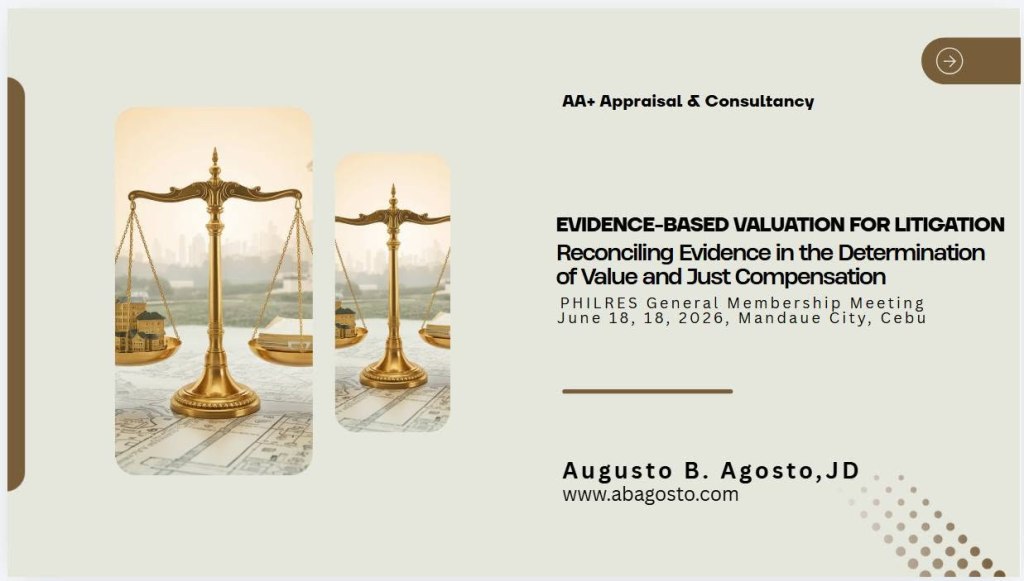
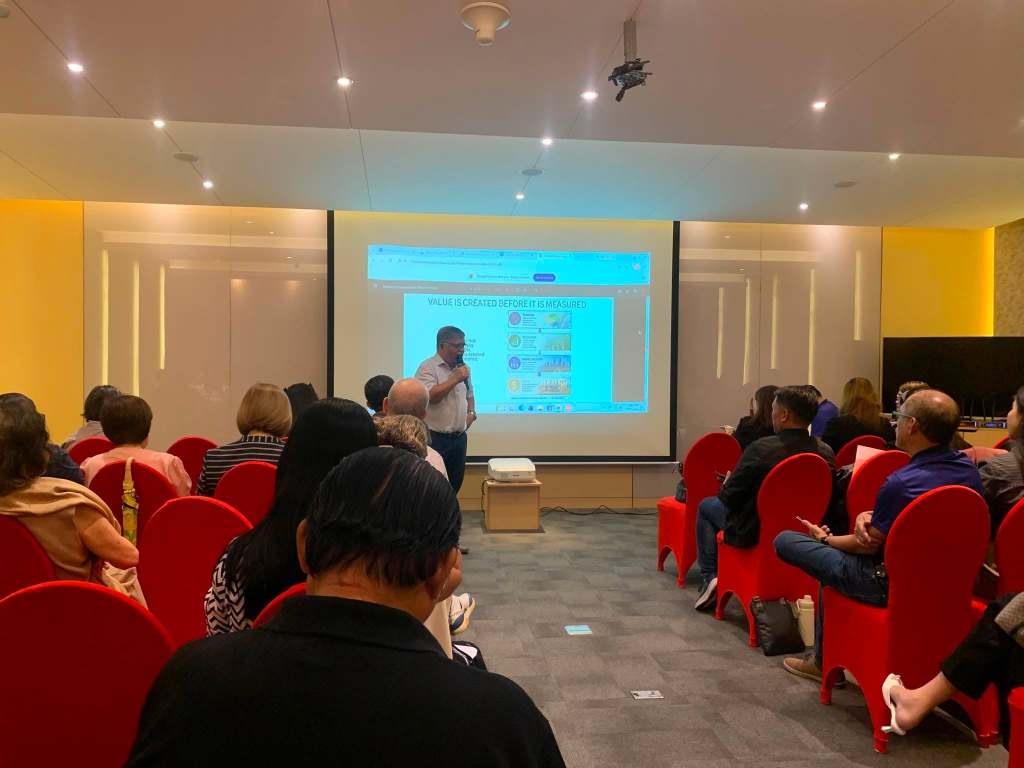
On June 18, 2026, I had the privilege of speaking before the members of the Philippine Real Estate Service Practitioners, Inc. (PhilRES) – Mandaue City Chapter during its 6th General Membership Meeting held at Mandani Bay, Mandaue City. My presentation focused on a subject that has occupied much of my professional work in recent years: Evidence-Based Valuation (EBV) for Litigation, Expropriation, and Just Compensation.

For decades, real estate valuation has relied heavily on the Sales Comparison Approach. Comparable sales remain an important source of market evidence and continue to be one of the most widely accepted methods of determining value. However, in many assignments—particularly expropriation cases, litigation matters, infrastructure projects, and complex property disputes—the question often arises: Is market evidence alone sufficient to explain value?

The traditional appraisal process frequently emphasizes numerical adjustments derived from comparable transactions. While mathematically sound, such an approach may not fully capture the broader factors that influence value. Infrastructure investments, zoning regulations, land use policies, economic growth, scarcity, accessibility, environmental conditions, and development potential all contribute to the creation of value long before they are reflected in actual market transactions.

This observation led to the development of a framework I refer to as Evidence-Based Valuation (EBV).

The central premise of EBV is straightforward: value conclusions should not rely solely on comparable sales but should be supported by the reconciliation of multiple forms of evidence. These include:

Property Evidence – the physical characteristics of the property such as location, area, shape, topography, accessibility, improvements, and development potential.

Planning Evidence – land use plans, zoning classifications, infrastructure projects, government policies, and regulatory controls that influence future utility and development.

Economic Evidence – demand and supply conditions, growth trends, scarcity, investment activity, income potential, and broader economic drivers.

Market Evidence – comparable sales, listings, market transactions, and investor behavior.

These forms of evidence are not independent of one another. Rather, they interact to influence the highest and best use of a property, which ultimately forms the basis of value.

The concept is equally relevant in both ordinary valuation assignments and special-purpose engagements. Evidence-Based Valuation strengthens the foundation of value conclusions by integrating multiple forms of evidence beyond comparable sales alone. Even in ordinary market valuations, appraisers are expected to provide conclusions that are not only supported by comparable sales but also grounded in a thorough understanding of the property’s characteristics, planning context, and economic environment. Courts are often asked to determine compensation that is fair not only to the government but also to the property owner. In such situations, the challenge is not merely selecting a comparable sale but reconciling all available evidence to arrive at a value conclusion that is credible, transparent, and defensible.

Evidence-Based Valuation does not seek to replace established valuation approaches. Instead, it seeks to strengthen them by expanding the evidentiary foundation upon which value conclusions are formed. Comparable sales remain important, but they should be viewed as one component of a broader evidentiary framework rather than the sole determinant of value.

As valuation professionals, we are increasingly called upon to explain not only what a property is worth, but also why it is worth that amount. This requires a deeper examination of the factors that create, sustain, and influence value.

The EBV framework remains a continuing work in progress. Future developments will explore its application to litigation valuation, water rights valuation, infrastructure projects, feasibility studies, market analysis, and just compensation determinations. The objective is not to create complexity for its own sake, but to improve transparency, strengthen professional judgment, and provide decision-makers with more defensible valuation conclusions.

Ultimately, valuation is not merely a mathematical exercise. It is the process of evaluating evidence, reconciling competing perspectives, and arriving at a reasoned conclusion. In that sense, evidence is not an alternative to valuation—it is the foundation upon which valuation rests.

Value is created before it is measured.

Beyond Land and Infrastructure: Rethinking the Valuation of Water-Dependent Enterprises

By Augusto B. Agosto, JD, EnP, Economist, Consultant

When most people think of property valuation, they picture land, buildings, machinery, and infrastructure—tangible assets that can be easily inspected, measured, and compared in the marketplace. For water-dependent enterprises, however, a more fundamental question often arises: What is the value of the resource that makes the entire enterprise possible?

A water treatment plant without water has little utility; pipelines without water cannot generate revenue; and reservoirs without water are merely empty storage facilities. Yet, traditional valuation approaches often focus heavily on physical assets while giving limited attention to the underlying resource and the legal rights that govern access to it.

Recent professional engagements involving bulk water supply systems, utility infrastructure, and water-related enterprises prompted me to revisit a question that sits precisely at the intersection of law, economics, environmental planning, and valuation: Can the value of a water enterprise be fully explained by land and physical improvements alone? The answer is considerably more complex than conventional appraisal practice suggests.

Who Owns the Water?

The starting point of any discussion on water rights in the Philippines is the Regalian Doctrine. Under Article XII, Section 2 of the Constitution, all natural resources—including waters—belong to the State. The Water Code of the Philippines (Presidential Decree No. 1067) further reinforces this by declaring that private entities may acquire only the right to appropriate and utilize water, subject to strict state regulation.

This distinction is critical for valuation professionals: private entities generally do not own the water itself. Instead, they acquire the legal authority to access, extract, treat, distribute, and utilize water for beneficial purposes. While a water permit is merely an administrative authorization from a legal perspective, from an economic perspective, that authorization represents a monumental source of value.

Water Rights as Economic Assets

Economics teaches us that value arises from scarcity. Although the Philippines is traditionally viewed as an island nation rich in water resources, many regions face acute water stress driven by population growth, rapid urbanization, watershed degradation, groundwater depletion, and climate-induced seasonal variability. As access to reliable water becomes premium, the economic significance of water rights increases proportionally.

Water rights act as economic catalysts by providing:

  • Access to a Scarce Resource: Guaranteed entry into a restricted natural market.
  • Security of Supply & Legal Certainty: Risk mitigation against operational disruptions and litigation.
  • Priority of Use & Investment Opportunities: The baseline confidence required to deploy heavy capital for infrastructure development.

In effect, water rights serve as the operational bridge that converts unpriced natural resources into productive, revenue-generating economic assets.

Lessons from Practice: Beyond Tangible Assets

Several recent valuation assignments involving watershed-based bulk water supply systems and utility infrastructure projects forced a departure from standard real estate appraisal. These engagements required an evaluation that looked beyond physical infrastructure to assess raw water sources, regulatory authorizations, off-take contractual arrangements, and long-term hydrological sustainability.

One particular assignment involving a watershed-based bulk water supply system raised several non-traditional questions:

  • What precise portion of enterprise value is truly attributable to land versus physical improvements?
  • How should the raw, productive capacity of the surrounding watershed be quantified?
  • What is the isolated economic value of the right to abstract and distribute water?
  • How does the long-term reliability of the water source impact overall enterprise risk and value?
  • To what extent do administrative permits and contractual off-take agreements contribute to the ongoing economic viability of the operation?

Answering these questions required moving past conventional property appraisal and venturing into resource economics, institutional rights, environmental planning, and natural capital accounting. The valuation ultimately demonstrated that the economic performance of the enterprise could not be explained solely by its tangible assets. A massive portion of its utility and income-generating capacity was inherently tied to the underlying water resource and the institutional frameworks safeguarding access to it.

Two Paths to Water Production

Observation of water enterprises in Cebu reveals an interesting operational dichotomy. Different enterprises produce marketable water through completely different asset profiles:

Production TypologyResource ReliancePrimary Value Driver
Natural Capital-DependentWatersheds, springs, and deep groundwater systems.High reliance on natural replenishment and ecological health.
Technology-DependentDesalination plants and advanced treatment systems converting seawater or brackish water.High reliance on produced capital, energy inputs, and technological investments.

While both typologies generate revenue by delivering the same end product, their underlying asset structures differ fundamentally. One depends heavily on natural ecosystems; the other depends on engineered physical infrastructure. Yet, both share the same economic reality: without access to the baseline water resource (whether raw fresh water or raw seawater), neither infrastructure nor technology can generate revenue.

Natural Capital and Water Resources

The emerging field of natural capital accounting provides a precise framework for modernizing valuation practice. Natural capital refers to natural assets capable of generating flow-of-resource economic benefits. In this context, it encompasses:

  • Watersheds, aquifers, and natural springs.
  • Rivers, recharge areas, and critical forest ecosystems that regulate hydrological cycles.

Without healthy watersheds and functioning hydrological systems, physical water supply infrastructure loses its utility. Consequently, the comprehensive valuation of water enterprises demands that we look upstream at the sustainability and ecological health of the resource provider.

Beyond Valuation: Understanding How Water Creates Economic Value

The appraisal of water-dependent enterprises often begins as a valuation exercise. However, the analysis quickly extends beyond traditional questions of market value and into a broader examination of how value is created.

Water enterprises derive their economic significance not merely from land, infrastructure, or equipment, but from the interaction of natural resources, institutions, and markets. Watersheds generate water resources. Legal and regulatory systems allocate access through water rights and permits. Infrastructure transforms the resource into a usable product. Markets create demand. Together, these elements produce economic value.

Viewed from this perspective, water rights valuation is not simply an appraisal problem. It is fundamentally an economic inquiry into how natural capital is transformed into productive capital through institutional arrangements and investment.

The valuation question therefore becomes a gateway to a broader understanding of resource economics, natural capital, and economic development.

Recent developments—including the enactment of the Philippine Ecosystem and Natural Capital Accounting System (PENCAS), the Philippine Statistics Authority’s Water Accounts, and ongoing national water resource assessments—reflect a growing recognition that natural resources are not merely environmental assets but fundamental contributors to economic development and national wealth.

These initiatives have significantly advanced the measurement of water resources, ecosystem services, and natural capital. However, an important gap remains. Much of the existing literature focuses on water availability, water use, allocation, pricing, and conservation. Far less attention has been devoted to understanding how water resources create economic value and how institutional arrangements governing access to those resources influence investment, enterprise development, and wealth creation.

In particular, limited research has examined the role of water rights as institutional mechanisms that transform water resources into productive economic assets. The interaction between natural capital, legal entitlements, infrastructure investment, and economic production remains largely unexplored in the Philippine context. Understanding this relationship is increasingly important as water scarcity, climate risks, and competing resource demands place greater emphasis on the economic significance of water resources.

These questions form the foundation of the author’s ongoing research, which seeks to examine how scarcity, institutions, and water rights interact to create economic value within water-dependent enterprises and, more broadly, within the Philippine economy.

Conclusion

The discussion on water rights ultimately leads to a broader question than valuation itself. While appraisal seeks to measure value, economics seeks to understand how value is created. In the case of water-dependent enterprises, the answer extends beyond land, buildings, treatment facilities, and infrastructure.

The experience of examining bulk water systems suggests that economic value originates from the interaction of natural capital, institutions, and investment. Watersheds, aquifers, springs, and other water resources provide the physical foundation. The State, through the Regalian Doctrine and the Water Code, establishes the institutional framework governing access and allocation. Water rights and permits create certainty, enabling investment in infrastructure, treatment systems, and distribution networks that transform natural resources into economic output.

Viewed from this perspective, water rights are more than regulatory instruments. They serve as institutional mechanisms that connect natural capital to economic production. Understanding their role requires moving beyond traditional discussions of water use and toward a deeper examination of how water resources contribute to enterprise value, regional development, and national wealth.

Recent initiatives such as PENCAS, the PSA Water Accounts, and national water resource assessments signal a growing recognition of the economic importance of natural assets. Yet important questions remain. How do watersheds create economic value? How do institutions influence the allocation of scarce water resources? How do water rights support investment, productivity, and long-term development? These questions remain largely unexplored within Philippine literature and present opportunities for future research.

The inquiry that began as a valuation problem has therefore evolved into a broader economic question: how does a water resource become economic value? Exploring that question may not only improve valuation practice but also contribute to a deeper understanding of water governance, natural capital, and sustainable development in the Philippines. As water scarcity and climate-related challenges become increasingly significant, the ability to understand and account for the value created by water resources may prove essential to both economic policy and resource management in the decades ahead.

Southern Leyte: A Province Between the Sea, the Mountains, and Opportunity

When investors discuss opportunities in Eastern Visayas, attention often gravitates toward Tacloban City, Leyte, and Samar. Yet beyond the region’s established centers lies a province quietly positioning itself for future growth—Southern Leyte.

Traditionally viewed as an agricultural province, Southern Leyte is increasingly emerging as a strategic growth corridor driven by transportation connectivity, tourism development, public infrastructure investments, and its unique position as the gateway between the Visayas and Mindanao.

While it may not yet command the same level of investment attention as larger provinces, many of the ingredients necessary for long-term economic expansion are already in place.

Strategic Location: The Province’s Strongest Asset

Geography often determines economic destiny.

Southern Leyte occupies a critical location at the southern end of Leyte Island, serving as the principal land and sea connection between Eastern Visayas and Northeastern Mindanao. The Liloan–Surigao route is one of the busiest inter-island transport links in the country, facilitating the movement of passengers, agricultural products, consumer goods, and commercial cargo.

This strategic position provides Southern Leyte with a natural competitive advantage in logistics, transportation, warehousing, and trade-related activities. As national infrastructure programs continue to improve roads, ports, and digital connectivity, the province stands to benefit from increased regional integration and economic mobility.

A Multi-Centered Provincial Economy

Unlike provinces dominated by a single urban center, Southern Leyte is developing through multiple growth nodes.

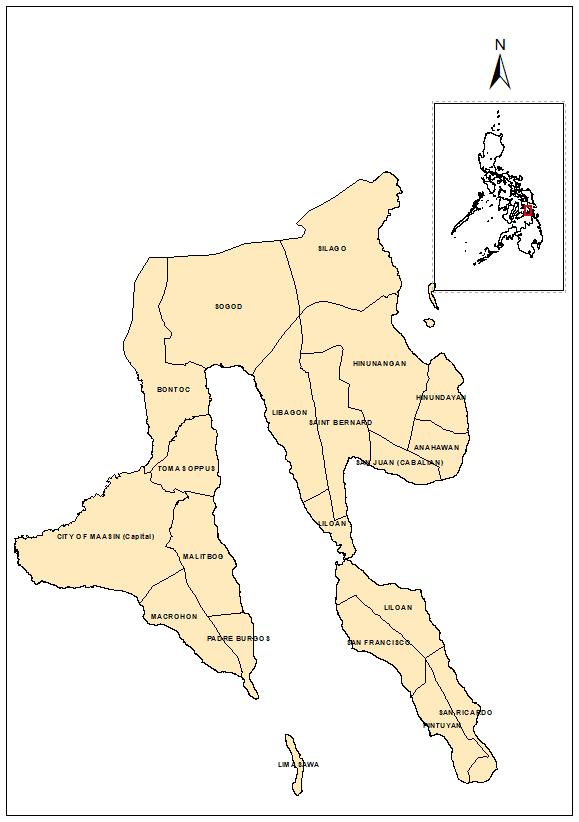
As the provincial capital, Maasin City functions as the center of government, education, healthcare, finance, and commerce. It serves as the primary urban market for the province and remains the focal point for public and private investments.

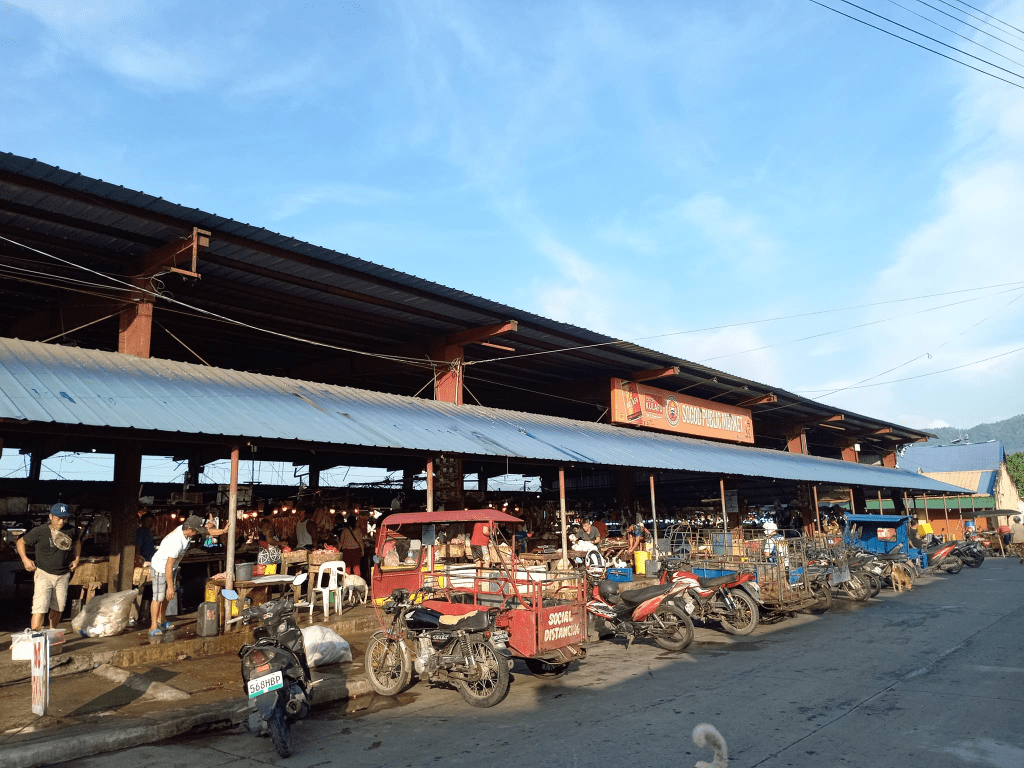
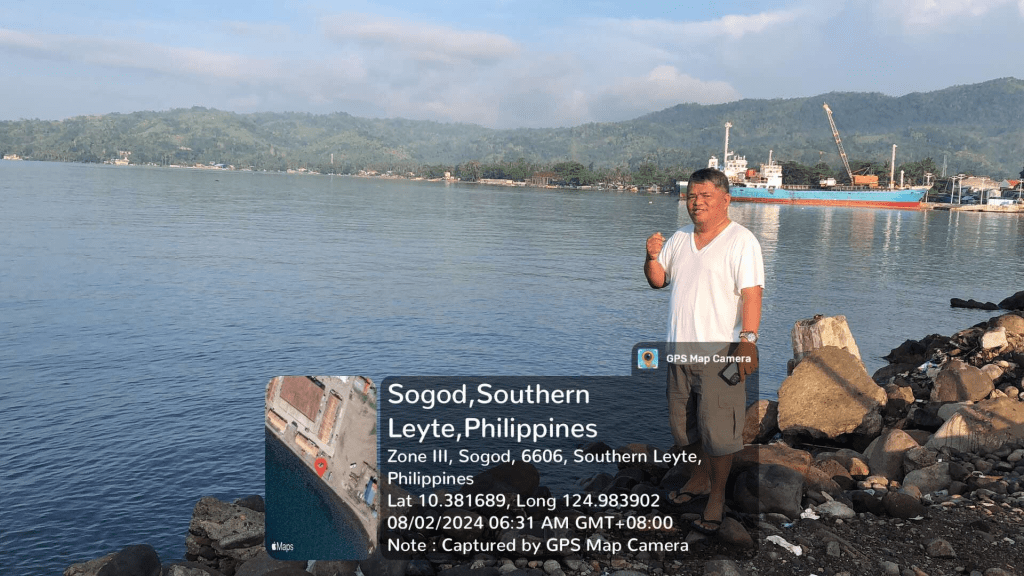
Sogod, the province’s only first-class municipality, has become an important commercial and transportation hub. Located along the Sogod Bay area, it serves as a crossroads connecting various municipalities and facilitating regional trade.

Hinunangan and neighboring municipalities provide agricultural production, fisheries resources, and growing commercial activity that contribute significantly to the provincial economy.

Together, these centers create a more resilient economic structure by distributing opportunities across the province rather than concentrating development in a single location.

Competitive Advantage and Economic Driver

While agriculture is often viewed as a traditional sector, it continues to provide Southern Leyte with a strong economic foundation.

The province’s major products include:

  • Coconut
  • Rice
  • Abaca
  • Fisheries products
  • Fruits and vegetables

Among these, abaca deserves special attention. As global industries increasingly seek sustainable and natural fibers, abaca presents opportunities for value-added processing, manufacturing, and export-oriented enterprises.

The challenge moving forward is not simply increasing production but strengthening agricultural value chains through processing facilities, logistics systems, market access, and technology adoption.

Southern Leyte possesses one of the most underappreciated tourism portfolios in the country.

Its attractions include:

  • Sogod Bay’s marine ecosystems
  • Whale shark encounters
  • Diving destinations
  • Limasawa Island, recognized as the site of the first recorded Easter Mass in the Philippines
  • Waterfalls, caves, and mountain landscapes
  • Coastal ecotourism destinations

Unlike highly urbanized tourism centers that face congestion and environmental pressures, Southern Leyte still enjoys the advantage of relatively intact natural resources.

This creates opportunities for sustainable tourism investments, including:

  • Eco-resorts
  • Dive tourism facilities
  • Adventure tourism
  • Community-based tourism enterprises
  • Heritage tourism development

As global tourism trends increasingly favor authentic and environmentally responsible experiences, Southern Leyte is well-positioned to compete.

Compared with highly urbanized markets, land values in many parts of Southern Leyte remain relatively affordable, creating opportunities for long-term investors willing to take a strategic view of future growth.

The province’s demographic expansion, infrastructure improvements, and economic diversification suggest that urban land demand is likely to increase over time.

Infrastructure as a Growth Catalyst

Infrastructure development continues to transform the province’s economic landscape.

Key assets include:

  • Pan-Philippine Highway connectivity
  • Maasin Port
  • Liloan Port
  • Roll-on/Roll-off ferry facilities
  • Expanding telecommunications infrastructure
  • Ongoing road improvement projects

These investments reduce transportation costs, improve market accessibility, and increase the attractiveness of the province for private investment.

Infrastructure not only supports economic activity—it also shapes future land values and development patterns.

Southern Leyte may not yet be considered a major investment destination, but many indicators suggest that its trajectory is changing.

Its strategic location, agricultural strengths, tourism assets, growing infrastructure network, and relatively affordable land base provide a foundation for long-term economic development.

My trip to Sogod, Southern Leyte.